The main sections of this page
- What Is Strain Theory?
- Why Strain Theory Matters to Sociology
- Merton and the American Dream
- From Durkheim to Merton: Two Versions of Anomie
- The Five Adaptations to Strain
- Evidence to Support Merton
- Evaluating Merton’s Strain Theory
- Summary
| Key Terms |
| Deviance: behaviour that breaks a social norm, and is disapproved of by most members of a society. |
| Anomie (Merton‘s sense): a state in which a society sets goals that many of its members cannot reach through approved routes. |
| Cultural goals: the aims a society teaches its members to value, such as wealth or status. |
| Institutionalised means: the approved, legitimate routes society provides for reaching its cultural goals, such as education or steady employment. |
| Strain: the pressure felt when a person accepts a cultural goal but cannot reach it through legitimate means. |
| American Dream: the belief that anyone in the United States can achieve wealth and success through hard work, regardless of their starting point. |
In July 2026, research for Suffolk Building Society found that 64% of first-time buyers in the UK had taken on a side hustle, extra shifts or a second job specifically to boost their house deposit. Most estimated it would otherwise take two to five years longer to buy.
This is a very ordinary story. Nobody in it has broken the law. But it captures exactly the gap Robert Merton built his theory around. It is a widely shared goal, owning a home, or more broadly, getting on, that legitimate, approved routes no longer deliver quickly or reliably for everyone who wants it.
Merton‘s strain theory asks what happens next. Some people respond exactly as the first-time buyers above did: they work harder within the rules. Others respond very differently, and this page (and the workbook) sets out why.
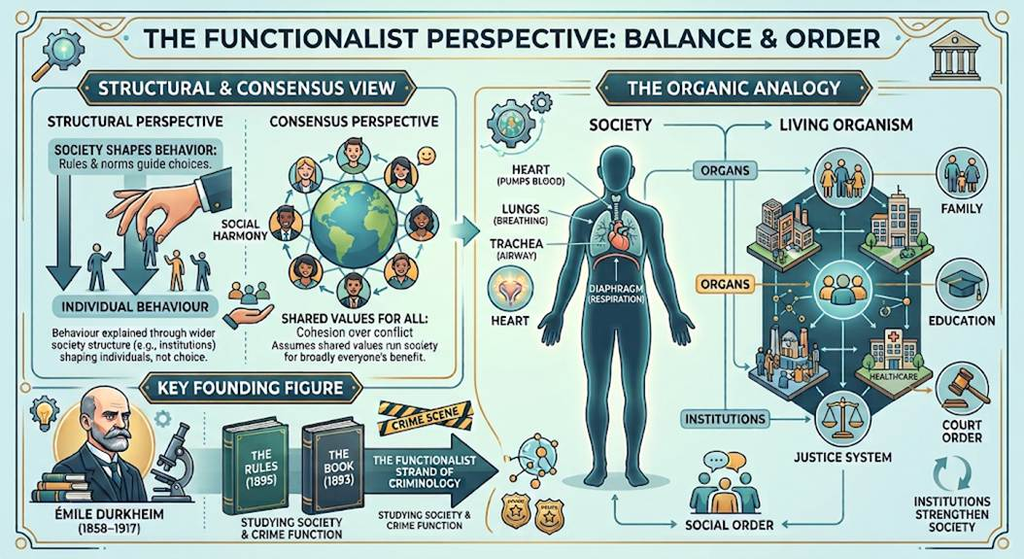
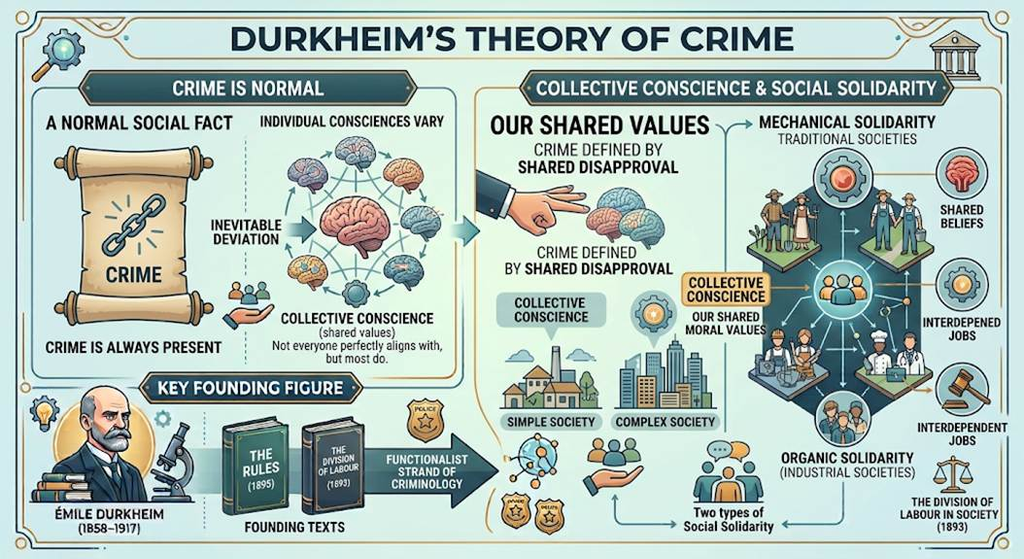
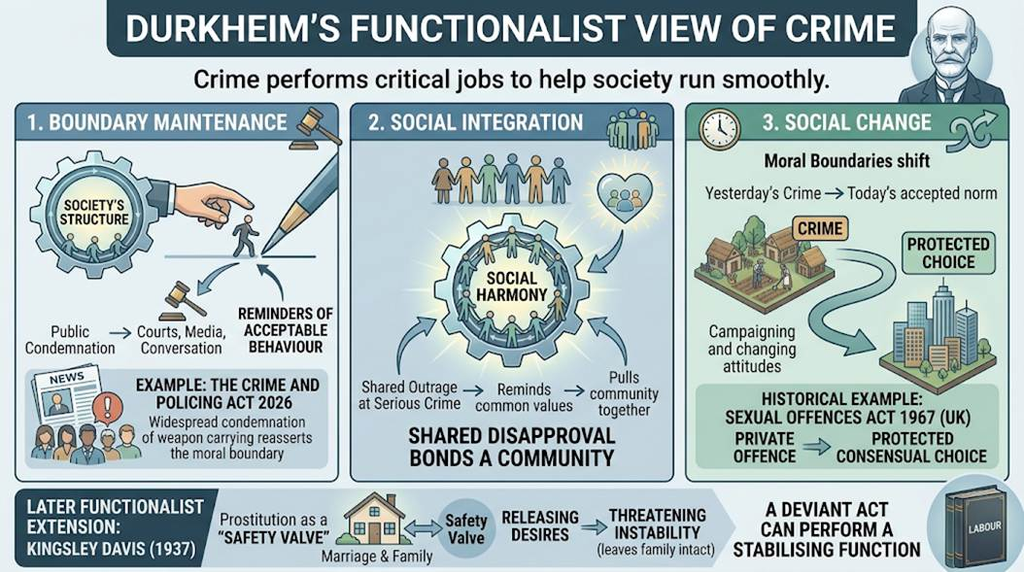
This is the second of three pages/workbooks applying functionalism to crime and deviance.
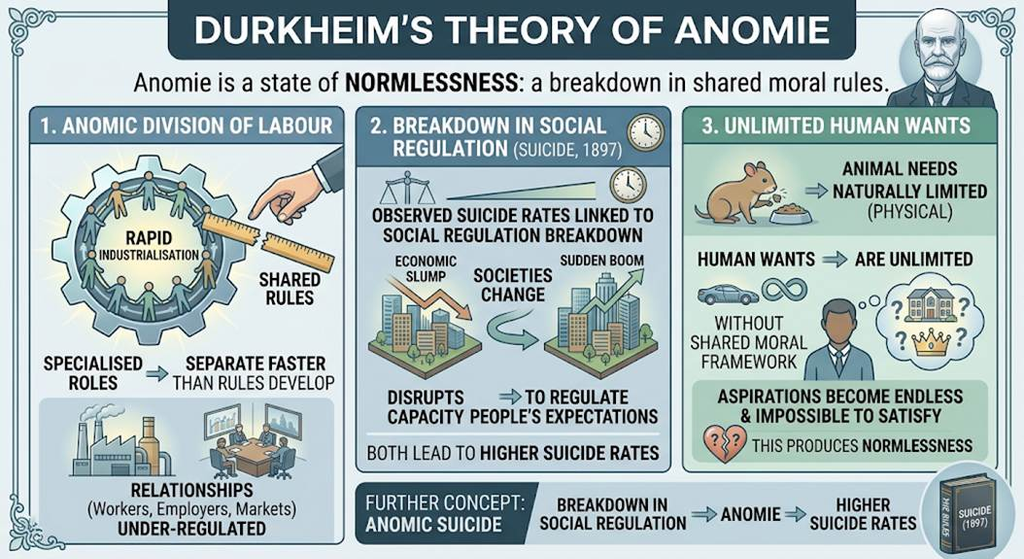
The first page/workbook set out Émile Durkheim‘s foundational argument that crime is inevitable and can be functional, and introduced his concept of anomie.
This page/workbook turns to Robert Merton‘s development of that idea into a typology of strain, showing how the same blocked opportunity can push different people towards very different responses.
A third page/workbook will then examine subcultural theories: Albert Cohen‘s status frustration theory, and Cloward and Ohlin‘s illegitimate opportunity structure, which develop Merton‘s ideas into explanations of group, rather than individual, offending.
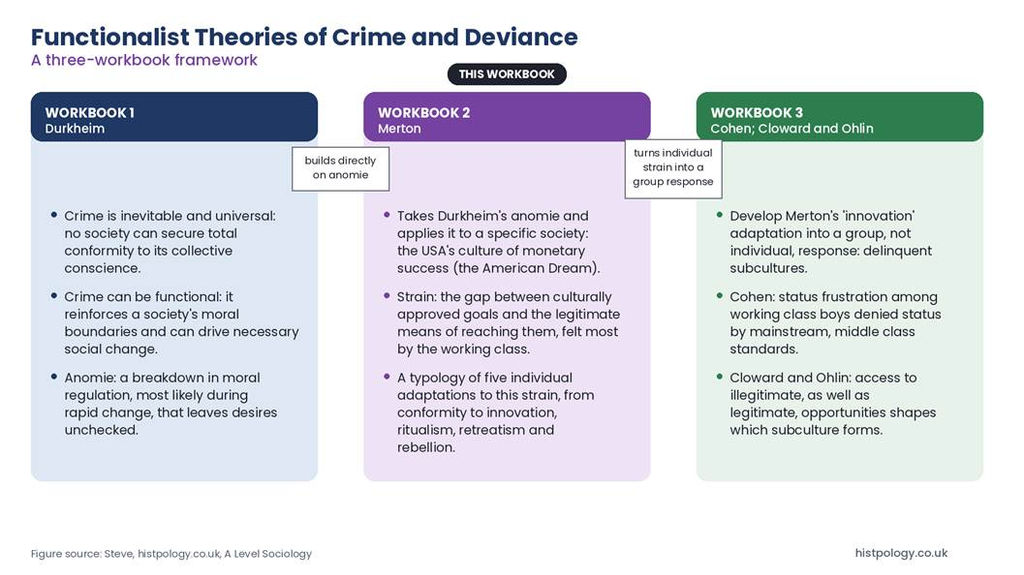
Figure 1: how the three functionalist workbooks in this series fit together.
What Is Strain Theory?
Strain theory is Robert Merton‘s explanation of why the amount and type of deviance varies between societies, and between groups within the same society. Merton (1910 to 2003) was an American sociologist working at Columbia University, and he first set out the theory in his 1938 article Social Structure and Anomie.
Merton argued that every society sets cultural goals, the things it teaches its members to want, such as wealth, status or success. Every society also sets institutionalised means, the approved routes for reaching those goals, such as education, training and steady employment.
In a well-balanced society, Merton argued, most people can reach the goals through the approved means. Strain appears when this balance breaks down: when a society keeps promoting a goal but does not distribute fair access to the legitimate means of reaching it.
Merton called this imbalance anomie, borrowing Durkheim‘s term but giving it a new, more specific meaning, covered in full later in this workbook.
Why Strain Theory Matters to Sociology
Durkheim‘s theory, covered in the previous workbook, explains why crime exists in every society. It does not explain why particular individuals or groups turn to crime rather than others. Merton‘s project was to close exactly that gap.
Merton wanted to explain why deviance arises in the first place, at the level of the individual, rather than simply why it is present at the level of society as a whole. His answer located the cause firmly in social structure, not in individual flaws or personality, which was a genuinely new move for its time.
This matters because it set the template for almost everything that follows in this part of the specification. Subcultural theories, covered in the next workbook, take Merton‘s logic and apply it to groups rather than individuals. Left realism, covered much later in the course, still uses a version of relative deprivation that owes a direct debt to Merton‘s strain.
Merton and the American Dream

Merton‘s theory only makes full sense in the context he was writing in. He was describing the United States of the 1930s and 1940s. This was a society built on a strongly meritocratic ideology, the American Dream: the belief that anyone can achieve wealth and success through hard work, whatever their starting point.
American culture, Merton argued, placed unusually heavy emphasis on the goal of monetary success itself, almost regardless of how it was achieved. At the same time, access to the legitimate means of achieving it, quality education, secure employment, capital, was not shared out equally.
This combination, a goal pushed hard on everyone but a means available fully only to some, is specific to the society Merton was studying. Later sociologists have developed this point further. Steven Messner and Richard Rosenfeld‘s institutional anomie theory argues that American culture is unusually vulnerable to this kind of strain. This is because its economic institutions dominate family, education and political institutions more than in other developed nations.
This is worth being precise about, because it shapes how far the theory travels. A theory built around one country’s specific culture and economic history needs testing carefully before it is applied elsewhere, a point developed further in the evaluation section below.
From Durkheim to Merton: Two Versions of Anomie
Both Durkheim and Merton use the word anomie, and it is easy to blur the two meanings together. They are related, but distinct, and A-level exam questions often reward students who can tell them apart clearly.
| Durkheim’s anomie | Merton’s anomie | |
| What breaks down | Moral regulation in general: society’s rules stop clearly guiding behaviour. | The fit between one specific goal and the legitimate means of reaching it. |
| When it appears | During rapid social change, such as sudden economic booms or slumps. | As a fairly constant feature of a society with a strong success goal and unequal access to means. |
| What it explains | Why crime and suicide rates rise during periods of disruption. | Why deviance is patterned by social class, and takes different forms. |
Table 1: Durkheim’s and Merton’s uses of anomie, compared.
Durkheim‘s anomie is about a breakdown in regulation itself. Merton‘s anomie is about a mismatch between one particular goal and the means available to reach it, even in a society that is otherwise stable and orderly.
This is why Merton‘s theory can explain patterns that Durkheim‘s cannot reach. It offers a reason why deviance clusters more heavily among some social groups than others, rather than simply being a background feature of every society.
The Five Adaptations to Strain
Merton did not argue that everyone under strain turns to crime. Instead, he set out a typology (a classification system) of five possible adaptations. Each one depends on whether a person accepts or rejects the cultural goal, and whether they accept or reject the legitimate means of reaching it.
Figure 2 summarises all five. Only conformity is not a form of deviance: it is the response of the majority, most of the time, and Merton included it precisely to show that strain does not automatically produce crime.
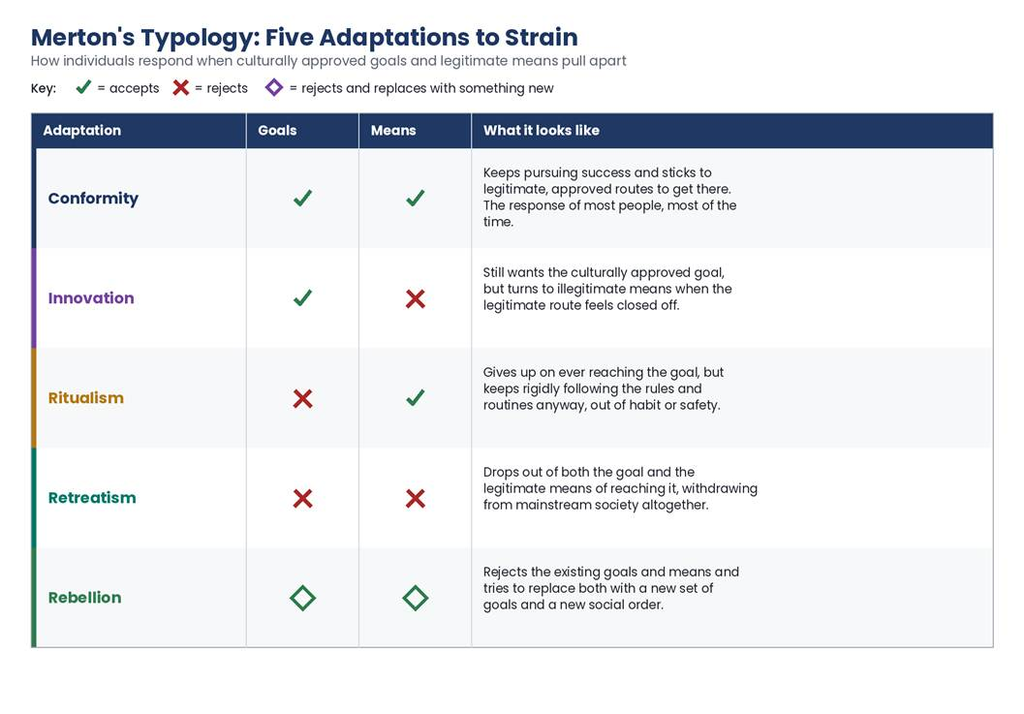
Figure 2: Merton’s typology of five adaptations to strain (Merton, 1938).
Innovation is the adaptation most often linked to acquisitive crime (crime committed for material gain, such as theft or fraud): the goal is kept, but the means used to reach it are illegitimate. Ritualism keeps the person inside the rules but drains the ambition out of them, a pattern sometimes linked to routine, low-status work. Retreatism describes a more complete withdrawal from mainstream society, and rebellion describes an active attempt to build a different set of goals and means altogether, rather than simply opting out.
| Activity 1: Which Adaptation? (answers at bottom of page) |
| Read Scenarios A to E below. For each one, decide which of Merton‘s five adaptations it best illustrates, and write one sentence explaining your choice using the goals/means language from Figure 2. Answers are given in the appendix at the end of this workbook. |
| Scenario A: In July 2026, research found that 64% of first-time buyers had taken on extra shifts, a second job or a side hustle to boost their mortgage deposit. Most said it would otherwise take two to five years longer to buy a home. |
| Scenario B: Government figures published in May 2026 estimated that fraudulent benefit claims cost £6.8 billion in the year to April 2026, around 2.2% of total benefit spending. |
| Scenario C: A February 2025 survey found that 19% of UK employees were doing only the bare minimum required of them at work, largely because they felt their skills were not being recognised or used. |
| Scenario D: A February 2026 report found that a record 4,793 people were sleeping rough on a single night in autumn 2025, with 54% of them reporting a substance misuse need in the previous year. |
| Scenario E: Several Just Stop Oil activists were jailed in 2025 for climbing gantries above the M25 motorway in November 2022, part of a campaign to force radical change to UK climate policy through direct action. |
Evidence to Support Merton
Merton‘s theory is a structural argument about a whole society, so it is harder to test directly than a small-scale study. Even so, several later studies have looked for evidence of the pattern he described.
Eric Baumer and Regan Gustafson (2007) analysed data across hundreds of American communities. They found that instrumental crime, crime committed for material gain, was highest in areas combining a strong cultural commitment to monetary success with a weak commitment to legitimate means of achieving it. This is close to a direct test of Merton‘s central claim.
Philippe Bourgois‘s ethnographic study of crack cocaine dealers in New York, published as In Search of Respect (1995), found that many dealers had fully internalised mainstream success goals. They wanted the same money, status and respect as anyone else, but had turned to an illegitimate market to get it, which fits Merton‘s innovation adaptation closely.
UK crime statistics offer a looser kind of support. Acquisitive crime such as theft and burglary has long been more heavily concentrated in areas of high deprivation, which is broadly consistent with Merton‘s logic even though he was not describing the UK directly.
| ANALYSIS – AO2 | EVALUATION – AO3 |
| • Baumer and Gustafson‘s community-level data gives Merton‘s theory a genuine empirical test, rather than relying only on individual case studies. | • Both studies are American, so they support Merton‘s account of the society he was actually describing more strongly than they support any general claim about strain in every society. |
| • Bourgois shows the mechanism working in practice: shared goals, blocked means, and a switch to illegitimate means. | • Neither study explains why some people under identical strain choose conformity or ritualism instead of innovation, a gap covered further in the next section. |
Evaluating Merton’s Strain Theory
Strain theory improved on Durkheim by explaining why deviance is patterned by social class and social group, rather than treating it as a general feature of all societies. It also usefully separates cultural goals from institutionalised means, giving sociologists a clear structural explanation for several very different forms of behaviour, from theft to withdrawal to protest, within one framework.
Even so, the theory faces serious criticism. It cannot explain why most people under strain choose conformity rather than deviance, and Merton offers little account of why one individual innovates while another, facing very similar pressure, becomes a ritualist instead.
Albert Cohen, covered in the next workbook, argued Merton‘s typology is too individualistic. Cohen pointed out that much youth crime happens in groups, and is about status among peers, not simply about reaching for money on one’s own, a criticism that leads directly into subcultural theory.
Marxist sociologists argue Merton fails to ask a more basic question: why capitalist societies set up a success goal that structurally cannot be reached by everyone in the first place. For Marxists, strain is not an unfortunate side effect but a built-in feature of an unequal economic system, which Merton‘s theory does not challenge.
Feminist sociologists note that Merton‘s typology was built almost entirely around men’s experience of blocked opportunity in paid work. It says very little about the strains women face, particularly around unpaid domestic labour and caring roles.
Merton also relies heavily on official crime statistics, which are known to under-record white-collar and corporate crime. This means his theory may understate how much innovation happens among wealthier groups, whose deviance is less likely to be recorded as crime at all.
Analysis: Merton‘s central mechanism, a gap between goals and means producing strain, has proved durable. Later theorists, including Messner and Rosenfeld‘s institutional anomie theory and left realism‘s relative deprivation, still build on it today.
Evaluation: The theory works best as an explanation of why deviance is unevenly distributed across a society. It works less well as a full account of why any one individual chooses one adaptation over another, a limit its critics have consistently returned to.
Summary
This workbook opened with UK first-time buyers taking on side hustles to save for a house deposit. It is an ordinary, entirely legal example of Merton‘s conformity: the goal of homeownership held onto, legitimate means kept, even under real strain.
Tested against the four other scenarios in Activity 1, Merton‘s typology holds up well as a way of sorting very different responses to blocked opportunity into one clear framework. It also travels reasonably well beyond the 1930s and 1940s America it was built to describe, at least as a general logic, even where the specific culture of the American Dream does not transfer directly.
What it does not fully explain is why one person under strain ends up in one box of the typology rather than another. That question, and the further step of explaining group rather than individual deviance, is picked up directly in the next workbook, on Albert Cohen and on Cloward and Ohlin.
Reaching a Judgement
- Case for: strain theory explains a genuinely wide range of behaviour, from crime to withdrawal to protest, within a single structural framework, and later theorists still build directly on its core mechanism.
- Case against: it cannot explain why individuals facing similar strain choose different adaptations. Later perspectives (Marxism, feminism, subcultural theory) directly challenge either its assumption of one shared goal or its focus on the individual rather than the group.
| ANALYSIS – AO2 | EVALUATION – AO3 |
| • Merton‘s typology remains a genuinely useful sorting tool: Activity 1 above shows five very different, verifiable, present-day UK stories all mapping cleanly onto one framework. | • Its explanatory power runs out exactly where subcultural theory, covered next, picks up: why deviant adaptations often happen in groups, and why particular individuals choose one adaptation over another. |
| Key Takeaways |
| Merton‘s strain is a gap between a society’s cultural goals and its institutionalised (legitimate) means of reaching them, not a general breakdown in regulation like Durkheim‘s anomie. |
| Merton was describing 1930s and 1940s America specifically, a society built around the American Dream, so his theory needs care when applied outside that context. |
| The five adaptations are conformity, innovation, ritualism, retreatism and rebellion, sorted by whether goals and means are each accepted or rejected. |
| Conformity, not crime, is the response of most people under strain, which is exactly why Merton included it in his typology. |
| Baumer and Gustafson (2007) and Bourgois (1995) both found evidence consistent with Merton‘s mechanism, but both studies were American. |
| Merton‘s biggest weakness is explaining why people facing similar strain end up in different adaptations, a gap Cohen, and Cloward and Ohlin, try to close in the next workbook. |
| In Your Own Time – Check Your Understanding |
| 1. What is the difference between Durkheim‘s anomie and Merton‘s anomie? You could: go back to Table 1 and use its three rows (what breaks down, when it appears, what it explains) to structure your answer. |
| 2. Explain, using one example, why conformity counts as an adaptation to strain even though it is not a form of deviance. You could: use the house deposit example from the opening of this workbook, or build your own example of someone under strain who sticks to legitimate means. |
| 3. ‘Merton‘s strain theory remains a useful explanation of crime and deviance today.’ To what extent do you agree? You should: state a clear claim, use evidence both for (Baumer and Gustafson, Bourgois, Activity 1) and against (the criticisms in the evaluation section), and close with your own reasoned judgement. |
Key Terms Checklist
Tick off each term once you are confident you can define it and give an example without looking back through this workbook.
- Deviance
- Anomie (Merton‘s sense)
- Cultural goals
- Institutionalised means
- Strain
- American Dream
- Conformity
- Innovation
- Ritualism
- Retreatism
- Rebellion
Specification Links
- AQA 7192, 3.3.1 Crime and Deviance: the social distribution of crime, deviance, victimisation and control in contemporary society by ethnicity, gender and social class. Functionalist explanations of crime and deviance.
- AQA 7192, 3.3.1 Crime and Deviance: theories of crime, deviance, social order and social control, including strain theory and the concept of anomie.
- AQA 7192, core themes: this topic connects to social differentiation, power and stratification, since strain theory explains why deviance is patterned by social class.
APPENDIX – Activity Answers
Activity 1: Which Adaptation?
Scenario A (side hustles for a deposit)
Conformity. The goal of homeownership is kept, and the means used (extra legitimate work) are entirely legitimate. This is strain met without any deviance at all.
Scenario B (benefit fraud)
Innovation. The underlying goal, financial security, is a widely shared cultural goal. Fraud is an illegitimate means of reaching it, which is the defining feature of innovation.
Scenario C (quiet quitting)
Ritualism. Employees keep turning up and following workplace rules (the means), but have given up on the goal of advancement or recognition, exactly Merton‘s ritualism pattern.
Scenario D (rough sleeping and substance misuse)
Retreatism. Both the mainstream goal and the legitimate means of reaching it have been abandoned, alongside a wider withdrawal from mainstream society.
Scenario E (Just Stop Oil)
Rebellion. The protesters reject mainstream economic goals and conventional legitimate means of achieving change, and replace both with a new set of goals (radical climate action) and new means (direct action).