

A 5-minute read | the looking-glass self and symbolic interactionism, condensed
Full study notes: The Self and Identity — The Looking-Glass Self and Symbolic Interactionist Approaches
In 2018, the dermatologists Rajanala, Maymone and Vashi coined the term “Snapchat dysmorphia”. Cosmetic surgeons reported a sharp rise in patients bringing in filtered selfies and asking to be made to look like the picture, not like themselves. By 2018, 55% of surveyed surgeons had received this request, up from 42% just three years earlier.
Some patients were not chasing a celebrity’s face. They were chasing an edited, idealised version of their own reflection, exactly what this page’s theories try to explain.
In a nutshell
The self is a person’s ongoing, conscious sense of who they are, different from identity (the specific social positions and statuses attached to a person). Sociologists agree the self is built through contact with other people, not present at birth, but disagree over how much of that building is done by social structure, and how much by the individual themselves.
Cooley (1902) argued the self develops through a looking-glass process: we imagine how we appear to others, imagine their judgement of that appearance, then feel pride or shame as a result. Mead (1934) went further, arguing the self develops through role-taking, building towards a generalised other (the internalised attitude of a whole community), and splitting the self into a spontaneous “I” and a socially shaped “me”.
Later interactionists pushed this further still. Goffman (1959) compared everyday life to a theatrical performance, with a front stage and a back stage. Becker (1963) argued deviance is created by labelling, not by the act itself, and that a deviant label can become a master status (Hughes, 1945).
| Key terms |
| The self: a person’s ongoing, conscious sense of who they are, built up through interaction with other people. |
| Looking-glass self: Cooley‘s (1902) idea that the self develops from imagining how we appear to others, imagining their judgement, then feeling pride or shame as a result. |
| Symbolic interactionism: Blumer‘s (1969) term for the idea that people act toward things based on the meaning those things hold for them, a meaning built through interaction. |
| Generalised other: Mead‘s (1934) term for the internalised attitude of a whole community, built up during the game stage of role-taking. |
| Master status: a status so powerful it becomes the main way a person is defined by others, overriding all their other statuses (Hughes, 1945). |
| Perspective | View on the self | Key thinker | Main criticism |
| Functionalism | The self is the internalisation of socially useful roles that meet the needs of society. | Parsons (1951) | Too deterministic; presents an “oversocialised” self with little real choice. |
| Marxism and neo-Marxism | The self is shaped by ideology to serve a capitalist ruling class, hailing individuals into ready-made positions. | Althusser (1971) | Gives individuals almost no genuine agency. |
| Feminism | The self is shaped by patriarchal structures and gendered socialisation from birth. | Oakley (1972) | Can understate how people actively negotiate or resist gendered expectations. |
| Interactionism | The self is built moment to moment through symbolic interaction and role-taking; it’s never finished. | Mead (1934); Cooley (1902) | Says little about why some groups have more power to make their self-definitions stick. |
| Late modernity | The self becomes a “reflexive project”, continually chosen, monitored and revised. | Giddens (1991) | Assumes a level of freedom, money and information not everyone has. |
| Postmodernism | The self is constructed from media images so thoroughly that no stable “authentic” self remains. | Baudrillard (1981) | Hard to test empirically; may treat identity as too fluid to explain patterns like gender or class. |
Table 1: Six perspectives on the self, condensed from the full page’s Perspectives table.
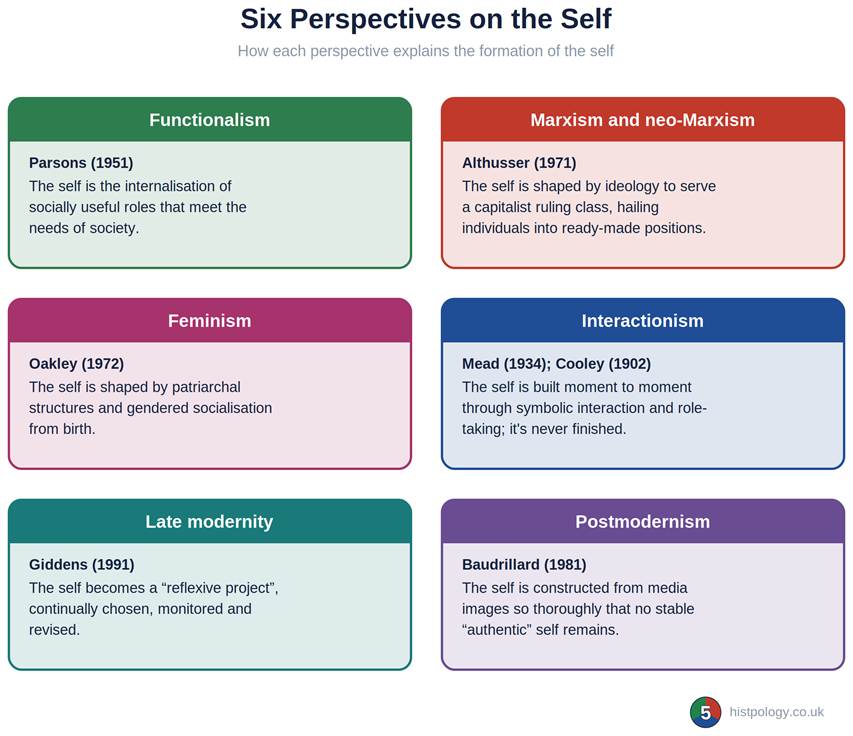
Figure 1: Six perspectives on the self, compared at a glance.
Evaluating the self, fast
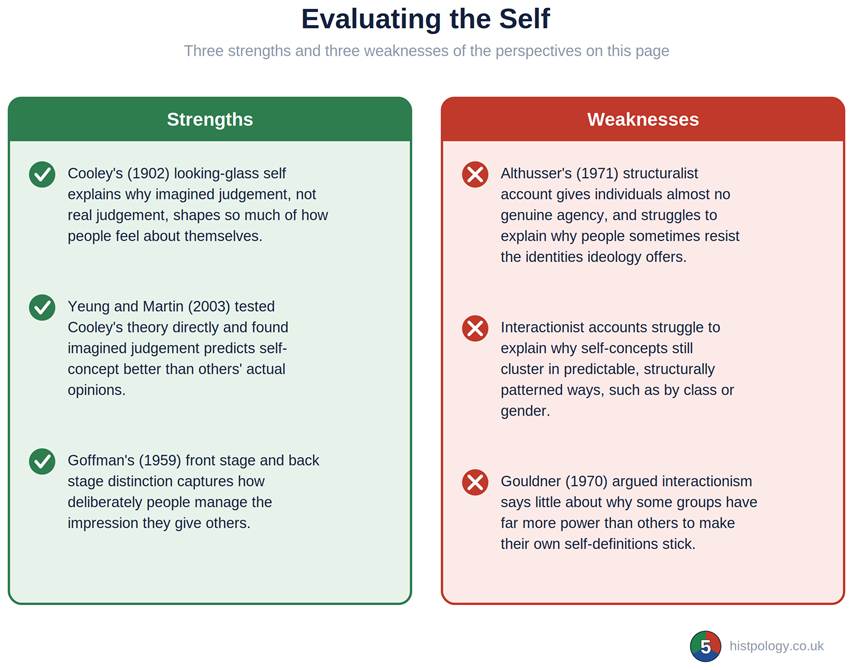
Figure 2: Three strengths and three weaknesses of these perspectives, at a glance.
| ANALYSIS — AO2 | EVALUATION — AO3 |
| Structuralist theories explain why self-formation follows broad, repeated patterns across a whole society. Interactionist theories explain the fine detail of how any single self gets built, moment to moment, inside those patterns. | The strongest position is that structure and action work together, rather than compete. Even a case as individual as Snapchat dysmorphia only makes full sense once placed inside a wider structure: a media and cosmetic surgery industry profits from selling both the filtered image and the surgery needed to match it. |
| Key Takeaways |
| The self is a person’s inner, felt sense of who they are, distinct from identity (their social positions and statuses). |
| Cooley‘s (1902) looking-glass self has three steps: imagining how we appear, imagining others’ judgement, then feeling pride or shame. |
| Mead (1934) split the self into a spontaneous “I” and a socially shaped “me”, built through role-taking towards a generalised other. |
| Structure and action work together: structuralist theories explain broad patterns, interactionist theories explain moment-to-moment detail. |
| Check your understanding |
| 1. Explain, using Cooley‘s (1902) three steps, how the looking-glass self works. You could: describe each step in order, then give one original example of your own, different from the ones used on this page. |
| 2. Evaluate the claim that the internet has made the looking-glass self more powerful, not less. You should: define what “more powerful” would mean, use at least two pieces of evidence from this page, and reach an explicit final judgement. |
Quick Quiz
Ten quick-recall questions to test yourself on this page, before moving on to the fuller check your understanding questions above.
| Quick Quiz |
| 1. What is “the self”, and how does it differ from “identity”? |
| 2. What are Cooley‘s (1902) three steps in the looking-glass self? |
| 3. What did Mead (1934) call the internalised attitude of a whole community? |
| 4. What is the difference between Mead‘s “I” and “me”? |
| 5. What did Goffman (1959) call treating social life as if it were a theatrical performance? |
| 6. What is the difference between a “discredited” and a “discreditable” stigma (Goffman, 1963)? |
| 7. Which sociologist argued deviance is created by labelling, not by the act itself? |
| 8. What did Althusser (1971) call the process by which ideology “hails” individuals into ready-made identities? |
| 9. What phenomenon, named in 2018, opened this page? |
| 10. What did Giddens (1991) call the self once it becomes continually chosen, monitored and revised? |
Specification links: AQA 7192 3.2.1 (Culture and Identity). Also links to Theory and Methods (3.1.3 and 3.3.2).