

A 5-minute read | socialisation, identity and free will, condensed
Full study notes: Culture, Socialisation and the Formation of Identity
In November 1938, a six-year-old girl known as Isabelle was discovered in Ohio, having spent almost her whole life shut away with her deaf and mute mother. She could not speak, and doctors first suspected she was profoundly disabled. Within two years of intensive teaching, she had learned to speak, read and mix normally with other children her own age.
Her rapid recovery raises the central question of this page: how much of who we are comes from socialisation, rather than simply growing up on our own?
In a nutshell
Socialisation is the lifelong process through which people learn the norms, values and wider culture of their society. Sociologists split it into two stages. Primary socialisation happens first, within the family, before school. Secondary socialisation continues afterwards, through agencies such as education, the peer group, the media, religion and the workplace.
Parsons and Bales (1955) argued the family works as a “personality factory”, building the basic personality a child needs to fit into wider society. Oakley (1972) showed this includes gender itself: she identified four processes, manipulation, canalisation, verbal appellation and differential activity exposure, through which children learn to be masculine or feminine.
Not everyone agrees socialisation works this smoothly. Wrong (1961) argued this “oversocialised” picture leaves no real room for choice. Willis‘s (1977) “lads” actively built a counter-school culture rather than simply absorbing the hidden curriculum (Bowles and Gintis, 1976), showing people can resist, even if that resistance can still lead back to a predictable outcome.
| Key terms |
| Socialisation: the lifelong process through which people learn the norms, values and wider culture of their society. |
| Primary socialisation: the early, intense socialisation that takes place within the family, usually before a child starts school. |
| Secondary socialisation: the socialisation that takes place outside the family, through agencies such as education, the peer group and the media. |
| Identity: a person’s sense of who they are, and which groups they belong to. |
| Master status: a status so powerful it becomes the main way a person is defined by others, overriding all their other statuses (Hughes, 1945). |
| Perspective | View on socialisation and identity | Key thinker | Main criticism |
| Functionalism | Socialisation builds value consensus, mainly via the family and education. | Parsons and Bales (1955) | Assumes too much shared agreement on values. |
| Marxism and neo-Marxism | Socialisation, especially education, transmits ruling-class ideology and prepares workers to accept exploitation. | Bowles and Gintis (1976) | Underestimates people’s ability to resist, as Willis‘s “lads” show. |
| Feminism | Socialisation teaches children narrow, patriarchal gender roles. | Oakley (1972) | Gender roles taught at home have loosened since the 1970s. |
| The New Right | Traditional two-parent families give children the most effective moral socialisation. | Murray (1984) | Blames family structure for problems really caused by inequality. |
| Interactionism | Identity is actively built through everyday interaction, not just imposed by structure. | Cooley (1902); Mead (1934) | Says little about structural inequalities shaping whose interactions matter most. |
| Postmodernism | Identity is a “pick and mix” performance built from consumer choices. | Baudrillard (1981) | May underestimate how money still limits real identity choice. |
| Late modernity | Individuals now reflexively construct their own identity, with new risk. | Giddens (1991); Bauman (2000) | May overstate how much choice ordinary people really have. |
Table 1: Seven perspectives on socialisation and identity, condensed from the full page’s Perspectives table.
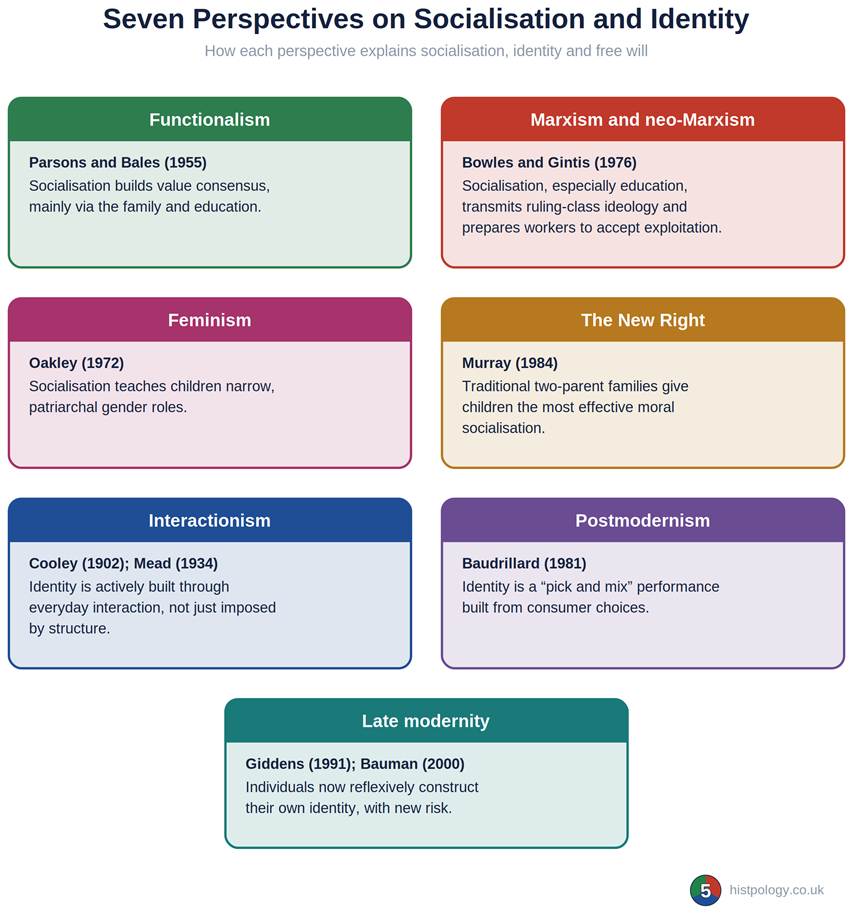
Figure 1: Seven perspectives on socialisation and identity, compared at a glance.
Evaluating socialisation and identity, fast
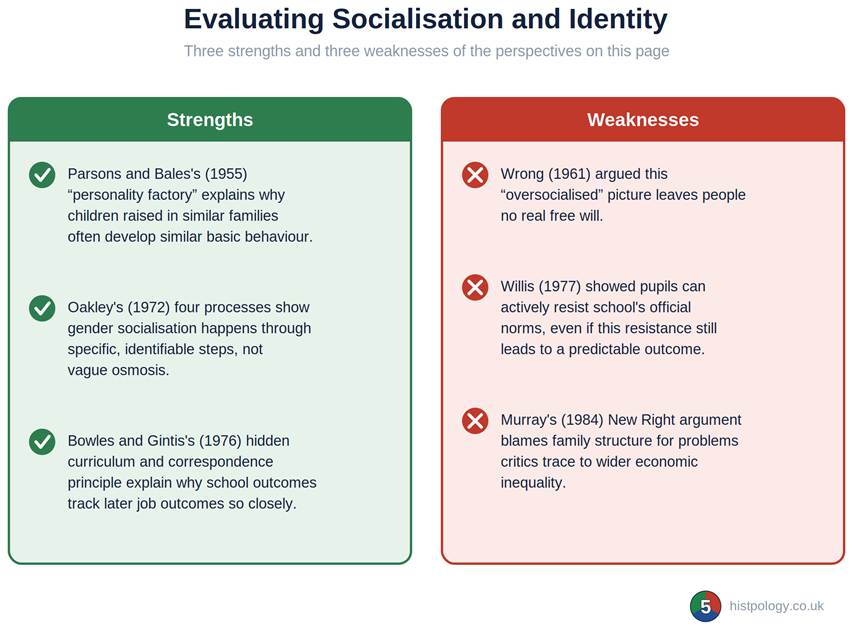
Figure 2: Three strengths and three weaknesses of these perspectives, at a glance.
| ANALYSIS — AO2 | EVALUATION — AO3 |
| Parsons and Bales (1955) and Wrong (1961) sit at opposite ends of this debate. Parsons treats socialisation as a smooth, structuring process; Wrong argues real people actively negotiate and sometimes resist it. | The most convincing position sits between these extremes. Socialisation is a powerful structuring force, but Willis (1977) shows it operates through people who retain some genuine, if limited, room for choice. |
| Key Takeaways |
| Socialisation is the lifelong process of learning a society’s norms, values and wider culture. |
| Primary socialisation happens within the family; secondary socialisation happens afterwards, through wider agencies. |
| Identity is a person’s sense of who they are, built gradually through socialisation rather than fixed at birth. |
| Wrong (1961) and Willis (1977) both show people retain some genuine ability to resist or reinterpret socialisation. |
| Check your understanding |
| 1. Explain the difference between primary and secondary socialisation, using one named example of each. You could: define both terms, then choose one concrete example of each from this page, such as learning to speak within the family and learning the hidden curriculum at school. |
| 2. “Socialisation leaves people with little genuine free will.” To what extent do sociologists agree with this view? You should: use Parsons and Bales (1955) or Bowles and Gintis (1976) to support the claim and Wrong’s (1961) free will critique to challenge it, before reaching a judgement. |
Quick Quiz
Ten quick-recall questions to test yourself on this page, before moving on to the fuller check your understanding questions above.
| Quick Quiz |
| 1. What is “primary socialisation”? |
| 2. What is “secondary socialisation”? |
| 3. Which functionalist sociologists called the family a “personality factory”? |
| 4. Name one of Oakley‘s (1972) four processes of gender socialisation. |
| 5. What is the “hidden curriculum”? |
| 6. Which sociologist studied “the lads” and their counter-school culture? |
| 7. What did Hughes (1945) call a status so powerful it overrides every other status a person holds? |
| 8. Who coined the term “oversocialised conception of man”? |
| 9. Which child’s rapid recovery after isolation opened this page, and in which year was she discovered? |
| 10. What is the sociological definition of “identity”? |
Specification links: AQA 7192 3.2.1 (Culture and Identity). Also links to Theory and Methods (3.1.3 and 3.3.2).