

A 5-minute read | subculture, multiculturalism and hybridity, condensed
Full study notes: Cultural Diversity, Subculture and Cultural Hybridity
In January 1959, the activist Claudia Jones organised an indoor Caribbean carnival at St Pancras Town Hall in London, partly in response to violent race riots in Notting Hill the previous year. Today, Notting Hill Carnival attracts an estimated two million visitors each August, the world’s second-largest street carnival.
Its growth raises the central question of this page: what happens when different cultures share the same society, and sometimes blend into something new?
In a nutshell
Cultural diversity means many different cultures, or subcultures, exist within one society, rather than a single shared way of life. A subculture is a smaller group whose norms and values differ, in some ways, from the dominant culture, while still following its laws. Hebdige (1979) argued subcultures use style, clothing, music and slang, as a symbolic form of resistance.
Societies respond to this diversity in different ways. Multiculturalism recognises and supports several cultures living alongside one another; Parekh (2000) argued this still needs a shared political community to hold together. Cultural hybridity goes further: Bhabha (1994) argued that when cultures meet, something genuinely new is created in a “third space”, rather than one culture simply replacing another.
Not everyone agrees diversity is straightforwardly good for social cohesion. Goodhart (2017) argued rapid, unmanaged diversity can leave settled “Somewheres” feeling their own culture is overlooked. Hall et al. (1978) countered that anxiety about cultural change is often unfairly racialised, blaming minority cultures for problems with deeper economic causes.
| Key terms |
| Cultural diversity: the presence of many different cultures, or subcultures, within a single society, rather than one shared way of life. |
| Subculture: a smaller group within a wider society, whose members share norms and values that differ, in at least some ways, from the dominant culture. |
| Multiculturalism: a society, or policy, that recognises and supports several different cultures living alongside one another. |
| Cultural pluralism: the coexistence of several distinct cultures within one society, each keeping its own separate identity. |
| Cultural hybridity: the process by which elements from two or more cultures blend together to create new, mixed cultural forms and identities. |
| Perspective | View on diversity and hybridity | Key thinker | Main criticism |
| Functionalism | Too much cultural diversity risks weakening the value consensus society needs. | Durkheim (1893) | Assumes diversity is necessarily a threat, when many diverse societies stay stable. |
| Marxism and neo-Marxism | Anxiety about cultural change is often racialised, distracting from the real economic causes of inequality. | Hall et al. (1978) | Can overstate how far prejudice is purely economically driven. |
| Feminism | Classic subcultural theory overlooked girls’ and women’s experience of subculture. | McRobbie and Garber (1975) | More recent subcultures may already be more gender-balanced. |
| The New Right | Rapid, unmanaged diversity can leave settled communities feeling their culture is overlooked. | Goodhart (2017) | Risks treating minority cultures as the cause of division. |
| Interactionism | Labelling certain subcultures as dangerous can itself amplify how deviant they appear. | Cohen (1972) | Says little about why some subcultures are labelled more heavily than others. |
| Postmodernism | Identity is a fluid, hybrid mixture, freely assembled from more than one culture. | Bhabha (1994) | May overstate how much freedom people have to blend identity. |
| Late modernity | Globalisation produces more cosmopolitan identities, alongside continuing local ties. | Beck (2006) | May overstate how cosmopolitan most people’s everyday lives really are. |
Table 1: Seven perspectives on cultural diversity and hybridity, condensed from the full page’s Perspectives table.
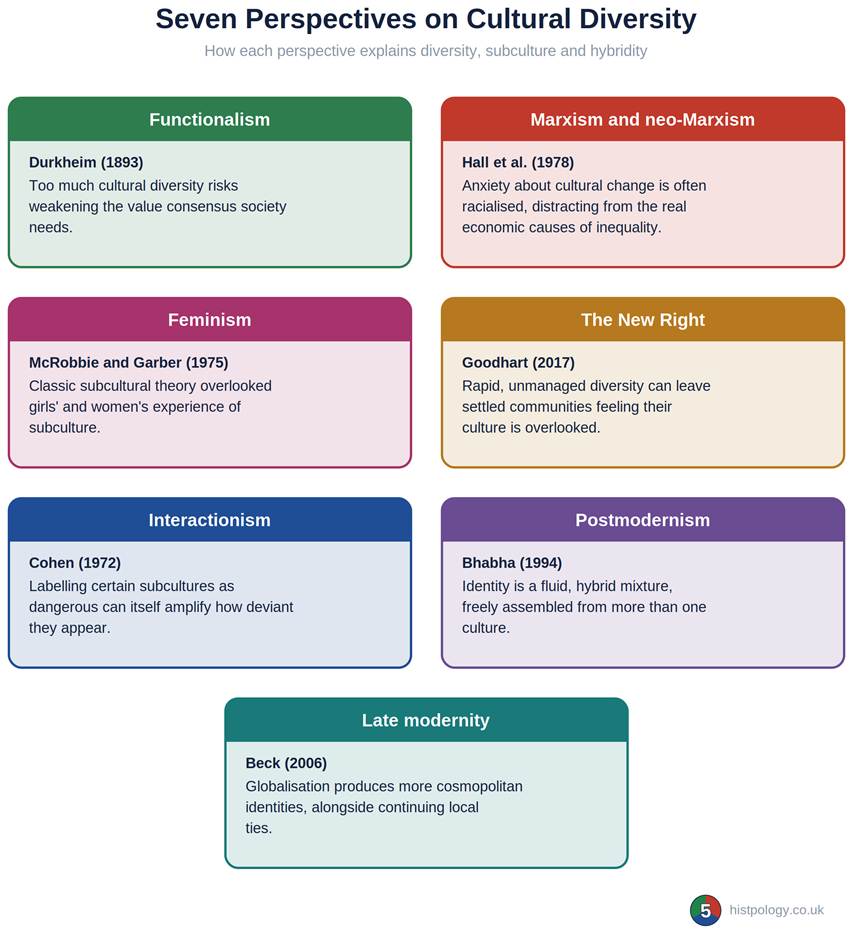
Figure 1: Seven perspectives on cultural diversity and hybridity, compared at a glance.
Evaluating cultural diversity and hybridity, fast
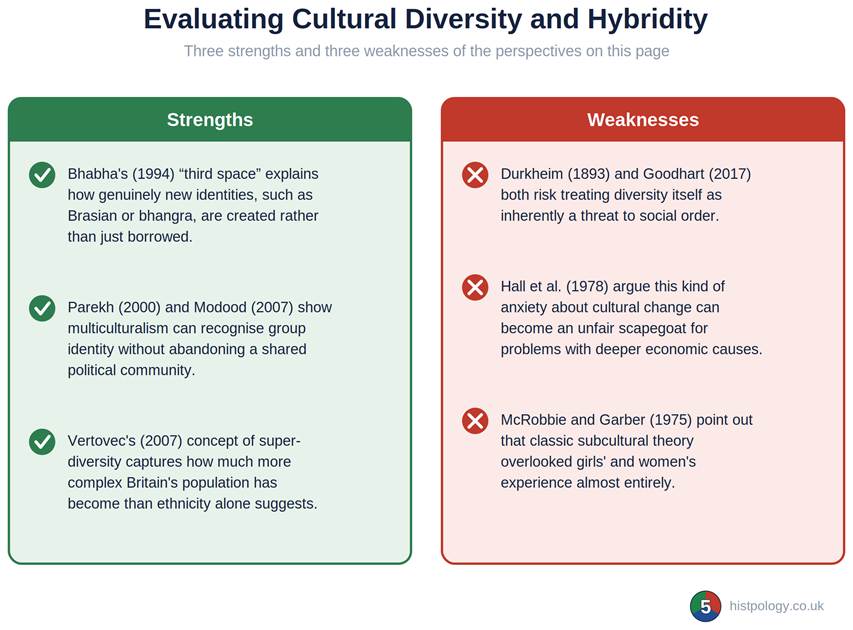
Figure 2: Three strengths and three weaknesses of these perspectives, at a glance.
| ANALYSIS — AO2 | EVALUATION — AO3 |
| Durkheim (1893) and Bhabha (1994) sit at opposite ends of this debate. Durkheim treats shared culture as the basis of social order; Bhabha treats cultural mixing as a positive, creative process. | The most convincing position sits between these extremes. Cultural diversity and hybridity are usually a genuine source of richness, but Hall et al. (1978) and McRobbie and Garber (1975) show real inequalities still shape who benefits from them most. |
| Key Takeaways |
| Cultural diversity is the presence of many different cultures, or subcultures, within one society. |
| A subculture shares some, but not all, norms and values with the dominant culture (Hebdige, 1979). |
| Multiculturalism keeps cultures side by side; cultural hybridity blends them into something new (Bhabha, 1994). |
| Diversity is not politically neutral: Goodhart (2017) and Hall et al. (1978) reach opposite conclusions about the same underlying tension. |
| Check your understanding |
| 1. Explain what sociologists mean by a “subculture”, using one named example. You could: define subculture in your own words, then choose one concrete example from this page, such as punks or UK drill. |
| 2. “Cultural diversity is more of a threat to society than a benefit.” To what extent do sociologists agree with this view? You should: use Durkheim (1893) or Goodhart (2017) to support the claim and Bhabha (1994) or Parekh (2000) to challenge it, before reaching a judgement. |
Quick Quiz
Ten quick-recall questions to test yourself on this page, before moving on to the fuller check your understanding questions above.
| Quick Quiz |
| 1. What is a “subculture”? |
| 2. What is the difference between “multiculturalism” and “cultural pluralism”? |
| 3. What is “cultural hybridity”? |
| 4. Which sociologist studied punks and argued subcultural style is a form of resistance? |
| 5. Which sociologist argued subcultures give working-class boys an alternative status system to solve “status frustration”? |
| 6. What did Bhabha (1994) call the space in which new hybrid identities are created? |
| 7. Which journalist split Britain into “Anywheres” and “Somewheres”? |
| 8. What is a “diaspora”? |
| 9. What did Vertovec (2007) call Britain’s increasingly complex diversity? |
| 10. Which 1959 event, born from a response to racist violence, opened this page? |
Specification links: AQA 7192 3.2.1 (Culture and Identity). Also links to Theory and Methods (3.1.3 and 3.3.2).