

A 5-minute read | high, popular and mass culture, condensed
Full study notes: L13: The Concept of Culture — High, Popular and Mass Culture
In 1599, Shakespeare’s plays were performed at the Globe Theatre in London to a mixed audience of dockworkers and wealthy patrons. Today, a ticket to see the Royal Shakespeare Company can cost over £70, and the same plays are studied as high culture.
This page asks what actually separates high culture from popular culture and mass culture, and who gets to decide where that boundary lies.
In a nutshell
Culture means a group’s whole shared way of life: its norms, values, beliefs and customs, learned through socialisation rather than inherited biologically. Sociologists split it into three broad types.
High culture belongs to a small, educated elite, defended by Leavis (1930) as morally and artistically superior.
Mass culture is standardised and mass-produced, criticised by Adorno and Horkheimer (1944) as a tool that keeps audiences passive.
Bourdieu (1984) argued the boundary is really about power, not taste. A liking for high culture works as cultural capital (cultural knowledge and taste that brings real social advantage), passed down through wealthier families and rewarded by schools and employers.
Postmodernists such as Strinati (1995) argue the boundary is breaking down altogether, as people mix cultural styles freely. Globalisation adds a further twist: global culture now cuts across all three types, shaped by both cultural imperialism (Schiller, 1976) and glocalisation (Robertson, 1995).
| Key terms |
| Culture: the whole shared way of life of a group or society, including its norms, values, beliefs, customs, knowledge and language, learned through socialisation. |
| High culture: cultural products associated with a small, educated and often wealthy elite, seen by supporters as showing exceptional artistic skill or lasting value. |
| Popular culture: cultural products and activities widely enjoyed across many different groups in society, rather than by a small elite alone. |
| Mass culture: cultural products that are mass-produced, standardised and sold to as large an audience as possible, usually for profit. |
| Cultural capital: cultural knowledge, skills and tastes that bring social advantage, passed on by wealthier families and rewarded by schools and employers. |
| Perspective | View on culture | Key thinker | Main criticism |
| Functionalism | Culture creates value consensus that holds society together. | Durkheim (1893) | Assumes too much shared agreement across different subcultures. |
| Marxism and neo-Marxism | Culture, especially mass culture, spreads ruling-class ideology to keep the working class passive. | Adorno and Horkheimer (1944) | Underestimates people’s ability to reject or reinterpret what they’re given. |
| Feminism | Popular culture aimed at women reproduces patriarchal ideas about how they should look and behave. | McRobbie (1978) | Focuses on a narrow, mostly white and heterosexual, version of femininity. |
| Interactionism | “High culture” isn’t fixed, it’s a label negotiated by critics, curators and audiences. | Becker (1982) | Says little about the structural inequalities shaping who gets to negotiate. |
| Postmodernism | The boundary between high and popular culture has broken down; people mix styles freely. | Strinati (1995) | May exaggerate how much freedom people really have. |
Table 1: Five perspectives on culture, condensed from the full page’s Perspectives table.
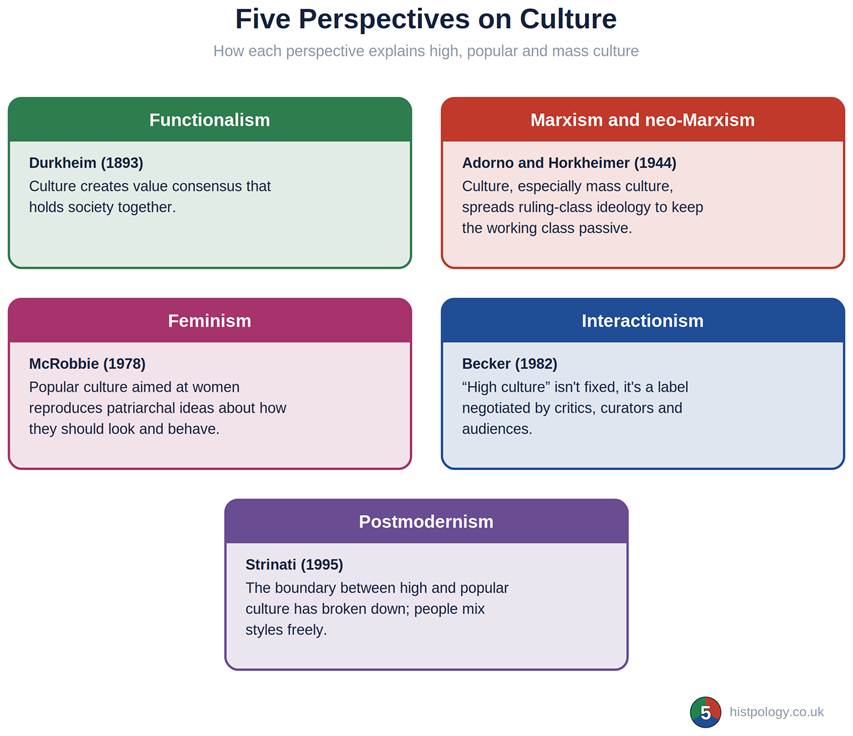
Figure 1: Five perspectives on culture, compared at a glance.
Evaluating high, popular and mass culture, fast
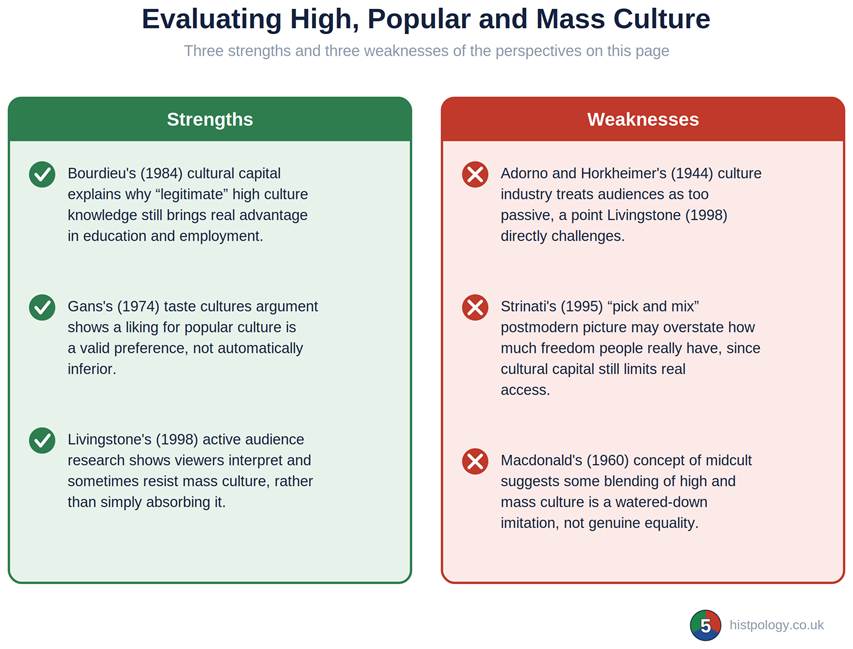
Figure 2: Three strengths and three weaknesses of these perspectives, at a glance.
| ANALYSIS — AO2 | EVALUATION — AO3 |
| Leavis (1930) and Strinati (1995) sit at opposite ends of this debate. Leavis defended a fixed, superior high culture; Strinati argued, decades later, that postmodern society has dissolved the distinction almost entirely. | The most convincing position sits between these extremes. The boundary has blurred, as the Shakespeare and Warhol examples both show, but Bourdieu (1984) and Macdonald (1960) show it has not disappeared, and who benefits from the blurring remains unequal. |
| Key Takeaways |
| Culture means a group’s whole shared way of life, not just “the arts” in the everyday sense of the word. |
| The boundary between high culture, popular culture and mass culture is socially constructed, not fixed by nature, and has shifted throughout history. |
| Bourdieu‘s (1984) cultural capital shows the boundary still carries real advantage, even as it blurs. |
| Globalisation adds a further layer: global culture cuts across all three types, shaped by both cultural imperialism (Schiller, 1976) and glocalisation (Robertson, 1995). |
| Check your understanding |
| 1. Explain what sociologists mean by “high culture”, using one named example. You could: define high culture in your own words, then choose one concrete example from this page, such as opera or classical literature. |
| 2. “The boundary between high culture and popular culture has now disappeared.” To what extent do sociologists agree with this view? You should: use Strinati’s (1995) postmodernist argument to support the claim and Bourdieu’s (1984) concept of cultural capital to challenge it, before reaching a judgement. |
Quick Quiz
Ten quick-recall questions to test yourself on this page, before moving on to the fuller check your understanding questions above.
| Quick Quiz |
| 1. What does “high culture” mean? |
| 2. What does “mass culture” mean? |
| 3. Which writer defended high culture as morally and artistically superior? |
| 4. Which two Frankfurt School thinkers coined the term “culture industry”? |
| 5. What is “cultural capital”? |
| 6. Which sociologist argued popular taste splits into several equally valid “taste cultures”? |
| 7. Which postmodernist argued the boundary between high and popular culture has broken down? |
| 8. What does “cultural imperialism” mean? |
| 9. What does “glocalisation” mean? |
| 10. Which artist’s Campbell’s Soup Cans became an example of mass-culture imagery becoming high culture? |
Specification links: AQA 7192 3.2.1 (Culture and Identity). Also links to Theory and Methods (3.1.3 and 3.3.2).