
Scotland has used FPTP instead of AMS in 2026?
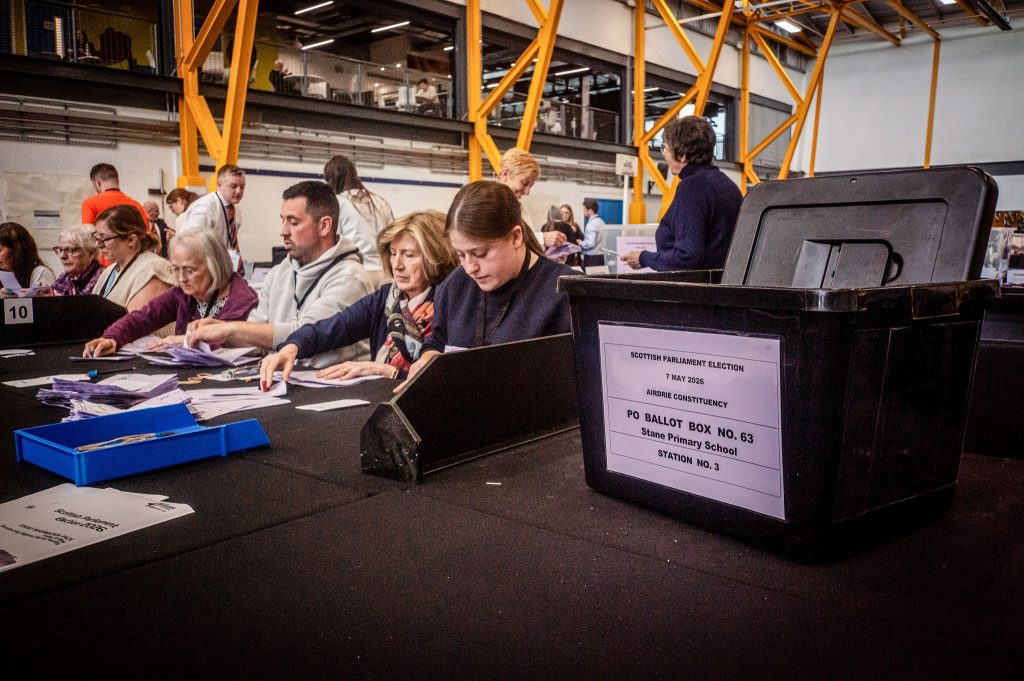
Scottish Parliament Elections 2026: AMS vs First Past the Post Analysis
An analytical comparison of the 2026 Scottish Parliament election results highlights the dramatic contrast between the actual Additional Member System (AMS) and a hypothetical First Past the Post (FPTP) model.
1. Executive Summary & Seat Comparison
The 2026 Holyrood election under AMS resulted in a fragmented, highly proportional parliament with six parties represented, forcing the Scottish National Party (SNP) to form a minority administration.
Under FPTP, the exact same constituency voting patterns would have produced a landslide SNP majority, virtually wiping out major opposition parties in the chamber.
Seat Breakdown Comparison
| Party | Actual AMS Result (129 Seats) | FPTP Result (73 Constituencies) | FPTP Seat Share (%) | Actual Vote Share (%) (Constituency) | ||
| Scottish National Party (SNP) | 58 | 57 | 78.1% | 38.2% | ||
| Scottish Liberal Democrats | 10 | 7 | 9.6% | ~10.0% | ||
| Scottish Conservative Party | 12 | 4 | 5.5% | ~12.0% | ||
| Scottish Labour Party | 17 | 2 | 2.7% | 19.2% | ||
| Scottish Green Party | 15 | 2 | 2.7% | ~2.3% | ||
| Reform UK | 17 | 0 | 0.0% | 15.8% |
2. Key Analytical Differences
A. Majority Government vs Minority Governance
- AMS Outcome: The SNP won 58 seats, leaving them 7 seats short of an overall majority (65 needed). This required First Minister John Swinney to lead a minority government dependent on cross-party negotiation.
- FPTP Alternative: The SNP would have secured 57 out of 73 constituency seats (78.1% of total seats) despite winning under 39% of the constituency vote.
- FPTP would have granted the SNP absolute legislative control and an unassailable 21-seat majority in a 73-seat chamber.
B. Severe Disproportionality & Electoral Distortion
- Reform UK: Under AMS, Reform UK secured a major breakthrough, winning 17 regional list seats to become joint second-largest party alongside Labour. Under FPTP, despite taking 15.8% of the constituency vote nationwide, they won 0 constituency seats due to their vote being evenly dispersed rather than concentrated.
- Scottish Labour: Under AMS, Labour took 17 seats (15 coming via regional top-up lists). Under FPTP, despite capturing nearly a fifth of the popular vote, Labour would have been reduced to just 2 seats (Na h-Eileanan an Iar and Edinburgh Southern).
- Scottish Liberal Democrats: The Lib Dems were the primary beneficiary of geographical concentration among non-SNP parties. By winning 7 local constituency seats (e.g. in the Highlands, Islands, and East Dunbartonshire), FPTP would have made them the main official opposition party in Holyrood, despite placing fifth in national vote share.
C. Urban Concentration & Third-Party Breakthroughs
- Scottish Greens: The Greens achieved their strongest Holyrood result in history under AMS with 15 seats. Crucially, they won two direct constituency seats (Glasgow Southside and Edinburgh Central). Under FPTP, while they would have retained representation via those two seats, they would have lost 13 list seats, curtailing their parliamentary influence.
3. Political Implications
Summary: The choice of electoral system fundamentally shifts Holyrood from a consensual, coalition-driven parliament into a winner-takes-all institution.
- Democratic Legitimacy: FPTP creates a huge “manufactured majority” for the leading party. The SNP’s 38.2% vote share translating into 78.1% of seats would have heightened debate around electoral fairness.
- Opposition Realignment: Under AMS, right-of-centre opposition fragmented between Reform UK (17 seats) and Conservatives (12 seats). Under FPTP, this split vote benefited the SNP across central and north-east Scotland, suppressing conservative representation altogether.
- Policy Dynamics: AMS compels the government to negotiate budgets and key legislation with other groups. FPTP would have allowed single-party rule, enabling the SNP to execute its legislative agenda unimpeded.
4. Concluding Judgement: Which System Produced the More Democratic Outcome?
When evaluating democratic legitimacy and representativeness, the Additional Member System (AMS) unequivocally produced a more democratic and representative outcome for the 2026 election than First Past the Post (FPTP) would have done.
The Case for AMS as the Superior Model
- Alignment Between Votes and Power
- Under AMS, the composition of the Scottish Parliament closely reflects the actual choices of the electorate. Parties securing substantial nationwide support (such as Labour with 19.2% and Reform UK with 15.8%) receive parliamentary representation proportional to their popular mandate.
- Under FPTP, over 35% of the total vote cast for Labour and Reform UK combined would have yielded just 2 seats out of 73 (less than 3% of the parliament), creating a massive “democratic deficit”.
- Prevention of Unearned Dominance
- FPTP would have granted the SNP an absolute majority of nearly 80% of seats on less than 39% of the constituency vote. A system that translates a minority of votes into an overwhelming, uncheckable majority undermines the principle of equal vote value.
- AMS ensures that a party must win broad, majority approval across the nation before gaining total legislative control.
- Pluralism and Voter Engagement
- By ensuring that almost every vote contributes towards electing a representative (either at the local constituency level or through the regional list), AMS prevents millions of “wasted votes” in safe seats.
- This multi-party setup encourages consensus-building, negotiation, and cross-party coalition, which better aligns with the constitutional ethos envisaged for devolved government in Scotland.
Final Conclusion: While FPTP delivers decisive single-party government, it does so by distorting the popular will. AMS produced the significantly more democratic and representative outcome, ensuring Holyrood reflects the true political diversity of the Scottish electorate.
WHAT IF . . . Wales had used FPTP instead of Closed List in 2026?