

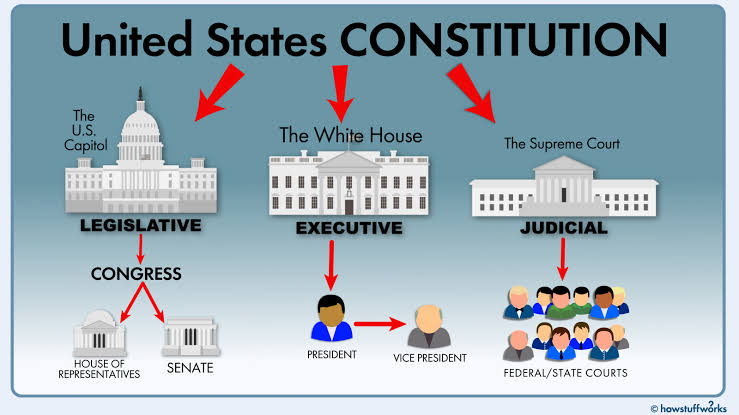
The United States Congress is the national legislature (law-making body) established under Article I of the Constitution. Congress is bicameral, meaning it is divided into two chambers: the House of Representatives and the Senate. This structure was the outcome of the Great Compromise (also called the Connecticut Compromise) of 1787, which reconciled the competing demands of larger states, who wanted representation based on population, and smaller states, who wanted equal representation regardless of size. The two chambers differ significantly in their size, term length and basis of representation, and elections to each follow a different rhythm. Understanding these differences is essential background before considering how congressional election campaigns are fought and funded.
| Key terms Bicameral: having two legislative chambers. In Congress, these are the House of Representatives and the Senate. Single-member plurality system: an electoral system (also known as first-past-the-post) in which the candidate with the most votes in a district wins the seat outright, even without an overall majority. Midterm election: a congressional election held halfway through a president’s four-year term, when the presidency itself is not on the ballot. |
The structure of Congress
Congress’s two chambers differ sharply in size, term length and the way they represent the population. The House of Representatives is the larger chamber and is meant to reflect the population directly, while the Senate gives every state, however small, an equal voice. This balance between population-based and state-based representation remains the defining feature of Congress’s structure.
| Feature | House of Representatives | Senate |
| Number of members | 435 voting members, plus six non-voting delegates from US territories and Washington, DC | 100 members |
| Basis of representation | Population: seats allocated between states by apportionment and redrawn after each census | Equal representation: two senators per state, regardless of population |
| Length of term | Two years; the whole House is re-elected at every congressional election | Six years, staggered across three classes, so roughly one-third of seats are contested at each election |
| Current composition (August 2026) | 218 Republicans, 214 Democrats, 3 vacancies | 53 Republicans, 45 Democrats, 2 independents who caucus with the Democrats |
| Presiding officer | Speaker of the House: Mike Johnson (Republican, Louisiana) | President of the Senate: Vice President JD Vance (a largely ceremonial role); day-to-day floor management by Majority Leader John Thune (Republican, South Dakota) |
| Minimum age and citizenship | At least 25 years old; a US citizen for at least seven years | At least 30 years old; a US citizen for at least nine years |
Figures on party composition and leadership verified as of August 2026; see Congress.gov and Ballotpedia in Sources.
| Check your understanding 1. Explain what is meant by describing Congress as bicameral. 2. Why do the House of Representatives and the Senate use different bases of representation? 3. To what extent does the Senate’s six-year, staggered term serve a different purpose from the House’s two-year term? |
The election process
House elections use a single-member plurality system: each of the 435 districts elects one representative, and the candidate with the most votes wins the seat outright, even without an overall majority. Senate elections work on the same basis, but statewide, since each state elects its own senators individually. Before the general election in November, candidates must first win their own party’s nomination, usually through a primary election held earlier in the year. How district boundaries themselves are drawn, and the disputes this creates, is covered separately in a later section on electoral issues.
| Check your understanding 1. Outline the stages a candidate goes through to be elected to the House of Representatives. 2. Explain the difference between a primary election and a general election. |
The election cycle and midterm elections
Congressional elections are held on a fixed day, the first Tuesday after the first Monday in November, in every even-numbered year. Every second cycle coincides with a presidential election; the cycle in between is a midterm election, so called because it falls midway through the president’s four-year term. All 435 House seats are contested at every cycle, alongside roughly a third of Senate seats. The table below shows which party held the presidency, and which party controlled each chamber, at every congressional election since 2000.
| Year | Election type | President in power | House control (after election) | Senate control (after election) |
| 2000 | Presidential election | Bill Clinton (Democrat) | Republicans, 221–212 (2 independents) | Split 50–50 (Republicans controlled via Vice President Dick Cheney’s tie-breaking vote) |
| 2002 | Midterm election | George W. Bush (Republican) | Republicans, 229–205 (1 independent) | Republicans, 51–49 (48 Democrats plus 1 independent caucusing with Democrats) |
| 2004 | Presidential election | George W. Bush (Republican) | Republicans, 232–202 (1 independent) | Republicans, 55–45 (44 Democrats plus 1 independent caucusing with Democrats) |
| 2006 | Midterm election | George W. Bush (Republican) | Democrats, 233–202 | Democrats, 51–49 (49 Democrats plus 2 independents caucusing with Democrats) |
| 2008 | Presidential election | George W. Bush (Republican) | Democrats, 257–178 | Democrats, 59–41 (57 Democrats plus 2 independents caucusing with Democrats) |
| 2010 | Midterm election | Barack Obama (Democrat) | Republicans, 242–193 | Democrats, 53–47 (51 Democrats plus 2 independents caucusing with Democrats) |
| 2012 | Presidential election | Barack Obama (Democrat) | Republicans, 234–201 | Democrats, 55–45 (53 Democrats plus 2 independents caucusing with Democrats) |
| 2014 | Midterm election | Barack Obama (Democrat) | Republicans, 247–188 | Republicans, 54–46 (44 Democrats plus 2 independents caucusing with Democrats) |
| 2016 | Presidential election | Barack Obama (Democrat) | Republicans, 241–194 | Republicans, 52–48 (46 Democrats plus 2 independents caucusing with Democrats) |
| 2018 | Midterm election | Donald Trump (Republican) | Democrats, 234–201 | Republicans, 53–47 |
| 2020 | Presidential election | Donald Trump (Republican) | Democrats, 222–213 | Split 50–50 (Democrats controlled via Vice President Kamala Harris’s tie-breaking vote) |
| 2022 | Midterm election | Joe Biden (Democrat) | Republicans, 222–213 | Democrats, 51–49 |
| 2024 | Presidential election | Joe Biden (Democrat) | Republicans, 220–215 | Republicans, 53–47 |
| 2026 | Midterm election | Donald Trump (Republican) | Not yet known (election on 3 November 2026) | Not yet known (election on 3 November 2026) |
Final seat counts after each election, verified via Ballotpedia and Wikipedia; figures can shift slightly after special elections and party switches. See Sources.
- In every midterm election shown except 2002, the president’s party lost House seats; in four of these seven midterms, 2006, 2010, 2018 and 2022, this cost it control of the chamber outright.
- The Senate has been decided by the narrowest possible margin, a 50–50 split resolved only by the Vice President’s tie-breaking vote, twice in this period, after the 2000 and 2020 elections.
- 2002 remains the only midterm election since 2000 in which the president’s party, the Republicans under George W. Bush, gained seats in both chambers, a result widely linked to Bush’s high approval ratings after the September 2001 terrorist attacks.
The reasons why the president’s party so often loses ground at a midterm election, illustrated by the results above, are analysed in more detail in a separate section.
| Check your understanding 1. Using the table, identify which type of election, presidential or midterm, produced the largest swing against the president’s party. 2. Explain why the same party does not always control the presidency, the House and the Senate at the same time. 3. Explain what is meant by a midterm election, and why 2026 is a midterm year. |
Sources
Primary sources
US Constitution, Article I.
Seventeenth Amendment to the US Constitution (1913).
Secondary sources
Ballotpedia, “United States Congress elections, 2026”.
Ballotpedia, “Election results” pages for the 2000, 2002, 2004, 2006, 2008, 2010, 2012, 2014, 2016, 2018, 2020, 2022 and 2024 U.S. Congress elections.
Congress.gov, Congressional Research Service, “Membership of the 119th Congress: A Profile”.
Pew Research Center, “Republican Gains in 2022 Midterms Driven Mostly by Turnout Advantage” (2023).
Pew Research Center, “Democrats Made Gains From Multiple Sources in 2018 Midterm Victories” (2020).
Wikipedia, “107th” through “119th United States Congress” (used for cross-checking party composition figures).