
1: Broad Foreign Policy Aims & The Nature of the Anglo-Scottish Threat (1485 – 1495)
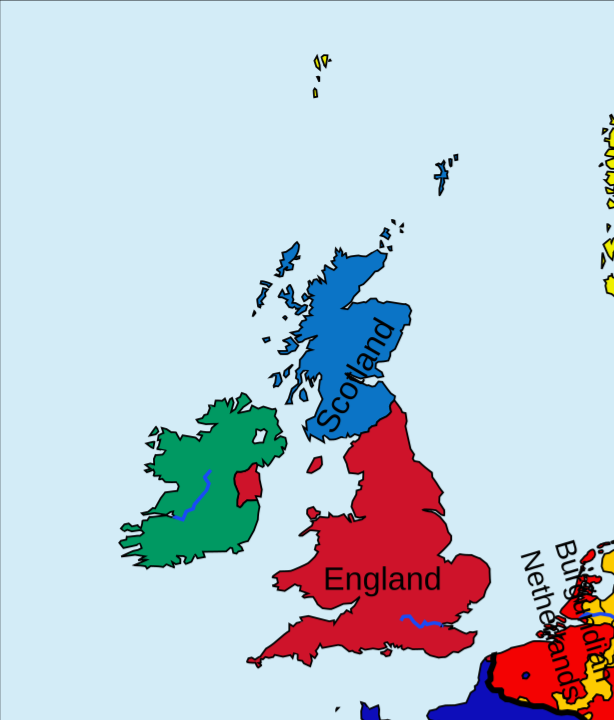
Henry VII’s European Foreign Policy Framework
Having seized the English throne at the Battle of Bosworth Field in 1485, Henry VII’s foreign policy was fundamentally defensive and dynastic. His overarching objectives across Continental Europe were fourfold:
- Dynastic Security: Neutralising foreign support for Yorkist claimants and pretenders.
- Recognition: Securing official recognition of the fragile Tudor dynasty from major European powers (France, Spain, the Holy Roman Empire, and the Papacy).
- Financial Economy: Avoiding expensive, prolonged foreign wars that could bankrupt the Crown or force unpopular domestic taxation.
- Commercial Expansion: Protecting English trading interests, particularly the cloth export trade to the Low Countries.
The Nature of Anglo-Scottish Relations & The Border Problem
Scotland was a fully independent kingdom governed by the House of Stuart. The Anglo-Scottish border – stretching from the Solway Firth in the west to the River Tweed in the east – was a lawless, volatile region divided into Marcher territories (the East, Middle, and West Marches).
Cross-border raiding, cattle rustling, and feuding by Border Reivers were endemic.
Administering this region was a constant security nightmare for Henry VII, as law enforcement depended on northern magnates (such as the Earl of Northumberland and the Earl of Surrey) whose loyalty could not always be guaranteed.
The Auld Alliance: The Scotland – France Connection
| Feature | Details |
| What was it? | The Auld Alliance (Vieille Alliance): A mutual defensive military pact between Scotland and France first formalised in 1295. |
| How it worked | If England invaded France, Scotland was bound to invade northern England to force a two-front war (and vice versa). |
| Why it threatened England | Shared a land border with Scotland, leaving northern English counties constantly vulnerable to French-subsidised Scottish invasions. |
| Impact on Henry VII | Prevented Henry from intervening in Continental Europe without securing his northern border first. |
Henry’s Basic Aims & Objectives Regarding Scotland
Henry VII’s core aims regarding Scotland were:
- To secure the northern border against cross-border raids and full-scale invasions.
- To sever, or at least neutralise, the strategic partnership between Scotland and France.
- To prevent the Scottish monarch from offering sanctuary or military aid to Yorkist pretenders.
- To establish a long-term diplomatic accommodation, ideally sealed by a dynastic marriage.
Should Henry Have Been Concerned in 1485?
Henry had every reason to be deeply concerned in 1485. The Scottish King, James III, had supported the Yorkist regime of Richard III, and the Scottish court harboured anti-Tudor sentiment. Relations during the first decade (1485 – 1495) posed a constant potential threat for several reasons:
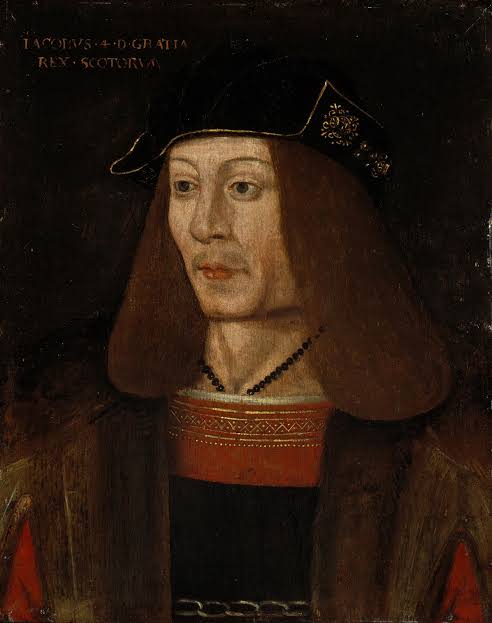
- Political Instability in Scotland: In 1488, rebellious Scottish nobles assassinated James III at the Battle of Sauchieburn and placed his 15-year-old son, James IV, on the throne. James IV was an ambitious, martial monarch eager to assert Scottish prestige and actively hostile towards England.
- Auld Alliance Renewal: James IV renewed the Auld Alliance with France in 1492, signalling a willingness to exploit English vulnerabilities.
- Yorkist Plotting: The northern border remained a haven for Yorkist sympathisers, making Scotland an ideal staging ground for any foreign-backed invasion designed to topple the Tudor dynasty.

2: James IV’s Support for Perkin Warbeck (1495–1496)
In November 1495, Perkin Warbeck – a pretender from Tournai, claiming to be Richard, Duke of York (the younger of the “Princes in the Tower”) – arrived at the court of James IV after being expelled from France and the Netherlands.
Analysis of Warbeck as a Major Threat
James IV embraced Warbeck’s cause enthusiastically. He granted Warbeck a royal welcome, an annual pension of £1,200, and arranged his marriage to Lady Catherine Gordon, a cousin of the Scottish king. This was a critical threat to Henry VII for two reasons:
- Royal Legitimation: By marrying Warbeck into the Scottish high nobility and treating him as the rightful King of England, James IV gave international credibility to the Yorkist pretender.
- Military Invasion: In September 1496, James IV led a Scottish army of 1,400 men across the border into Northumberland, with Warbeck marching alongside him under the royal banner of England.
The Progression & Escalation of the Warbeck Threat (1495 -1497)
| Event / Stage | Description & Strategic Impact |
| 1. Reception at Scottish Court (Nov 1495) | James IV welcomed Warbeck as “Richard, Duke of York”, granting him an annual pension of £1,200 and establishing royal legitimation. |
| 2. High-Status Dynastic Marriage | James IV arranged Warbeck’s marriage to his cousin, Lady Catherine Gordon, tying the pretender directly to the Scottish royal bloodline. |
| 3. Invasion of Northumberland (Sep 1496) | James IV led an army of 1,400 men across the border with Warbeck to trigger a Yorkist uprising. The invasion failed when English locals refused to support Warbeck. |
| 4. Henry VII’s Financial Response (Jan 1497) | Henry VII summoned Parliament to grant £120,000 in extraordinary taxation to fund a punitive invasion of Scotland. |
| 5. Domestic Backlash: Cornish Revolt (May 1497) | Heavy taxation triggered a revolt of 15,000 Cornishmen who marched on London, exposing Henry VII’s vulnerability to internal rebellion. |
Henry VII’s Response
The invasion itself was a military failure – the local English population refused to rise in support of Warbeck, and the Scots retreated when local forces mobilized. However, Henry’s strategic response was decisive:
- Parliamentary Taxation: In January 1497, Henry summoned Parliament and secured extraordinary taxation (two subsidies and two tenths/fifteenths, totaling around £120,000) to equip a massive invasion fleet and army to punish Scotland.
- Diplomatic Pressure: Simultaneously, Henry instructed Bishop Richard Fox to open diplomatic channels with James IV, offering peace terms while brandishing the threat of full-scale war.
3: The Cornish Rebellion & The Treaty of Ayton (1497)
Implications of the Cornish Rebellion
Henry’s attempt to raise funds for the Scottish war triggered a major domestic crisis. In May 1497, the people of Cornwall revolted against the parliamentary subsidy, arguing that a northern border dispute was irrelevant to the southwest and that taxation was excessive.
An army of 15,000 Cornish rebels marched virtually unopposed across England, reaching Blackheath outside London before being crushed by royal forces at the Battle of Deptford Bridge on 17 June 1497.
The rebellion exposed a stark vulnerability: Henry could not afford to wage an expensive foreign war against Scotland without risking internal revolution in his own kingdom.
Link to the Treaty of Ayton
The Cornish Rebellion made peace imperative for both kings.
Henry VII needed to stabilise his kingdom, while James IV was alarmed by the scale of English military mobilization and frustrated by Warbeck’s lack of English popular support.
Realising Warbeck was more liability than asset, James IV ordered him to leave Scotland in July 1497.
Mediated by the Spanish ambassador Don Pedro de Ayala, negotiations culminated in the Truce of Ayton on 30 September 1497.
4: Post-1498 Improvement & Neutralisation of Warbeck
Following the Truce of Ayton, Anglo-Scottish relations improved rapidly. The diplomatic settlement fundamentally altered the threat landscape for Henry VII:
- Isolation of Warbeck: Deprived of Scottish military backing, Warbeck landed in Cornwall in September 1497 in a desperate attempt to reignite the rebellion. Lacking noble support and fleeing Henry’s approaching forces, he was captured at Beaulieu Abbey.
- Execution of the Pretender: Warbeck was imprisoned in the Tower of London. Following an alleged escape plot alongside Edward, Earl of Warwick, Warbeck was hanged in November 1499.
- Border Normalisation: Formal mechanisms were established under the oversight of Bishop Richard Fox and local Marcher Wardens to resolve cross-border disputes and curb Reiver raids without escalating into full-scale war.
5: The Treaty of Perpetual Peace & Dynastic Alliance (1501–1503)
The Marriage of James IV and Princess Margaret
To transform a temporary truce into a durable peace, Henry VII negotiated the marriage of his eldest daughter, Princess Margaret Tudor, to King James IV.
- Sanction: The treaty was formally ratified in 1502 and the wedding took place at Holyrood Abbey in Edinburgh in August 1503.
- Cultural Significance: Celebrated by Scottish court poet William Dunbar in The Thrissil and the Rois, the marriage allegorically united the Scottish Thistle and the Tudor Rose.
Significance of the Treaty of Perpetual Peace (31 January 1502)
The Treaty of Perpetual Peace was a historic diplomatic milestone:
- First Peace Treaty Since 1328: It was the first formal, lasting peace treaty between England and Scotland since the Treaty of Northampton 174 years earlier.
- Mutual Non-Aggression: Both monarchs swore not to make war upon each other or harbor each other’s rebels.
- Formal Recognition: It represented explicit Scottish recognition of the Tudor dynasty’s legitimacy.
- Dynastic Legacy: While it did not permanently end Anglo-Scottish conflict (James IV would invade England in 1513 during Henry VIII’s reign), the marriage directly led to the Union of the Crowns in 1603, when Margaret Tudor’s great-grandson, James VI of Scotland, succeeded Elizabeth I as James I of England.
Summary Matrix: Problems Posed by Scotland & Henry VII’s Responses
| Problem Posed by Scotland | Severity | Henry VII’s Countermeasures | Degree of Success |
| Auld Alliance (France-Scotland) | High | Signed Treaty of Redon (1489) and Treaty of Étaples (1492) with France; negotiated Truce of Ayton (1497) to isolate Scotland. | Mostly Successful: Neutralised French diplomatic leverage in Edinburgh during his reign. |
| Volatile Border & Reiver Raids | Moderate | Strengthened Marcher Wardens; appointed loyal nobles (Earl of Surrey); included border justice protocols in treaties. | Partially Successful: Raids continued, but were successfully contained from escalating into war. |
| Support for Perkin Warbeck (1495 – 97) | Critical | Raised parliamentary taxes for war; applied military pressure; offered diplomatic backchannels via Pedro de Ayala. | Highly Successful: Forced James IV to expel Warbeck and abandon Yorkist support. |
| Domestic Unrest (Cornish Revolt 1497) | Critical | Crushed rebels at Deptford Bridge; pivoted immediately to diplomacy with Scotland to avoid a two-front crisis. | Highly Successful: Ended domestic rebellion and secured a Scottish truce in the same year. |
| Long-term Dynastic Instability | High | Negotiated Treaty of Perpetual Peace (1502); arranged marriage of Princess Margaret to James IV (1503). | Highly Successful: Secured royal recognition and established a decade of northern border peace. |
Conclusion & Final Judgment
“In the period 1485 to 1509 Henry VII was mostly successful in dealing with the problems posed by Scotland.” IS THIS AN ACCURATE JUDGEMENT?
Henry VII was mostly successful in managing the Scottish threat during his reign. His success can be evaluated through the following summary points:
- Effective Neutralisation of Pretenders: Henry successfully forced James IV to abandon Perkin Warbeck in 1497, eliminating the most dangerous foreign-backed threat to his throne.
- Pragmatic Diplomatic Pivot: When the 1497 Cornish Rebellion demonstrated the internal dangers of high taxation for war, Henry flexibly abandoned his military invasion plans in favour of skilled diplomacy.
- Landmark Peace Treaty: By securing the Treaty of Perpetual Peace (1502), Henry achieved something no English medieval monarch had done since 1328 – a formal, ratified peace treaty with Scotland.
- Dynastic Validation: The marriage of Princess Margaret to James IV in 1503 elevated Tudor prestige internationally and secured Scottish recognition of Henry’s dynastic legitimacy.
- Border Containment: Although cross-border Reiver raids were never eradicated completely, Henry successfully prevented them from sparking full-scale Anglo-Scottish wars for over a decade.
- Strategic Limitation: While the peace did not survive into the reign of Henry VIII (culminating in the Battle of Flodden in 1513), Henry VII fully achieved his own lifelong objectives: northern border stability, financial economy, and the survival of the Tudor dynasty.