
“The personal is political.”
— title given to Carol Hanisch’s 1970 essay by editors Shulamith Firestone and Anne Koedt
This phrase became one of the best-known slogans of the women’s liberation movement.
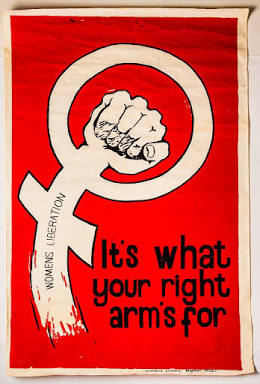
Hanisch’s original 1970 essay argued that problems women experienced privately, such as an unequal division of housework or a controlling husband, were not individual failings but the shared, structural product of a society organised around men’s interests. That argument is the thesis this document tests: is women’s disadvantage best explained as a private matter of individual choices, or as a public, structural problem that sociology must explain?
Feminism is a structural, conflict perspective (see “How Sociological Perspectives Are Grouped” for this classification framework).
Like Marxism, it argues that society is organised to benefit one group, in this case men, at the expense of another, women, rather than resting on shared values that benefit everyone equally. Unlike Marxism, feminism identifies patriarchy, a system of male domination operating through the family, work, culture, religion and the state, as the primary structure to be explained, not simply an effect of class inequality.
Feminism is not one unified theory. This page treats it as four distinct strands, liberal, radical, Marxist and difference/black feminism, which agree that gender inequality is real and needs explaining, but disagree sharply about its cause and the solution.
The main sections of this page.
- What Is Feminism?
- Liberal Feminism
- Radical Feminism
- Marxist Feminism
- Difference and Black Feminism
- Evaluating Feminism
- Applying Feminism Across the A Level
- Summary
What Is Feminism?
All four strands of feminism share two starting points. First, that women have historically been, and in most respects remain, disadvantaged relative to men. Second, that this disadvantage is not natural or inevitable but socially constructed, and can therefore be changed. Where they disagree is on what causes the disadvantage, and how radical the solution needs to be.
| Key terms |
| Patriarchy: a system of social structures and practices in which men dominate, oppress and exploit women, first popularised in this sense by Kate Millett in Sexual Politics (1970). |
| Sex and gender: sex refers to biological differences between men and women; gender refers to the socially constructed roles, behaviours and identities attached to being masculine or feminine. Feminists generally argue gender, not sex, explains most inequality. |
| Second-wave feminism: the feminist movement of the 1960s-1980s, focused on legal equality, reproductive rights and challenging patriarchy in both public and private life, the period from which most of the theory in this document is drawn. |
Table 1 below compares the four strands covered in this document. Each is developed as its own Heading 1 section, since each has its own account of the cause of women’s oppression, its own key thinkers and its own proposed solution.
| Strand | Core claim | Key thinker or study | Main criticism |
| Liberal feminism | Inequality is caused by outdated laws, socialisation and prejudice, and can be removed through legal reform, education and changing attitudes. | Somerville (2000) | Too optimistic. Ignores deeper structural causes such as capitalism or patriarchy itself. |
| Radical feminism | Patriarchy is the primary and most fundamental form of oppression, rooted in men’s control of women’s bodies and sexuality, and operating in every society. | Millett (1970); Firestone (1970) | Accused of treating “men” and “women” as fixed, homogenous groups, ignoring differences of class and race. |
| Marxist feminism | Women’s oppression serves capitalism, not just men: unpaid domestic labour reproduces the workforce free of charge and women act as a reserve army of labour. | Benston (1969); Barrett (1980) | Cannot explain why patriarchy also existed in pre-capitalist and non-capitalist societies. |
| Difference / black feminism | Mainstream feminism has generalised from the experience of white, middle-class Western women, ignoring how race, class and gender combine to shape oppression differently. | Collins (1990); Mirza (1997) | Risks fragmenting feminism into so many separate standpoints that collective political action becomes difficult. |
Table 1: The four strands of feminism at a glance.
The table shows a pattern worth noting before the strands are examined individually: as the rows move from liberal to radical to Marxist to difference feminism, the explanation moves from individual attitudes and law, to a universal system of patriarchy, to capitalism specifically, to the intersection of several structures at once. Each strand is, in part, a reaction against the strand before it.
- Liberal feminism is the least radical strand, seeking reform within existing institutions rather than their overthrow.
- Radical feminism was a direct reaction against liberal feminism’s gradualism, arguing legal equality alone leaves patriarchy in the private sphere untouched.
- Marxist feminism was a reaction against radical feminism’s focus on men as a group, arguing capitalism, not men as such, is the root cause.
- Difference and black feminism emerged from the 1980s onward as a reaction against all three, arguing they had each generalised from the experience of one group of women.
| Key Takeaways |
| Feminism is a structural, conflict perspective: it explains gender inequality through society’s structure, organised in men’s interests, not through individual choice. |
| The term “patriarchy” was popularised by Millett in Sexual Politics (1970) and remains the central concept across every strand of feminism. |
| The four strands (liberal, radical, Marxist, difference/black) agree inequality is real but disagree on its cause and the depth of change required. |
| Each later strand developed partly as a critical reaction to the strand before it, a useful way to remember the order they are usually taught in. |
Liberal Feminism
Liberal feminism has its roots in the work of Mary Wollstonecraft in the eighteenth century and the campaign for legal and political rights that followed. It argues that gender inequality is caused by outdated laws, unequal access to education and employment, and prejudiced attitudes, all of which can be reduced through reform rather than revolution.
Jennifer Somerville (2000), in Feminism and the Family, argues that real progress has been made: women have far greater access to paid work, education and divorce than a century ago. She is critical of more radical feminists for underplaying this progress, but also notes that many young women still feel a sense of grievance, suggesting reform is real but incomplete.
| Area | Evidence of progress | Key thinker or study | Remaining limitation |
| Employment law | The Equal Pay Act 1970 and Sex Discrimination Act 1975 made unequal pay and workplace discrimination illegal in the UK. | Somerville (2000) | The UK’s median gender pay gap for full-time employees was still 6.9% in April 2025 (ONS), showing law alone has not closed it. |
| Education | Girls now consistently outperform boys at GCSE and A Level across most subjects nationally. | Sharpe (1976, 1994) | Sharpe still found girls in the 1990s expecting to enter lower-paid “women’s work” such as clerical or care roles. |
| Workplace culture | The Employment Rights Act, given Royal Assent on 18 December 2025, will make equality action plans mandatory for large employers from 2027. | Somerville (2000) | Voluntary publication only begins April 2026, so the effect on the pay gap will not be visible in data for several years. |
Table 2: Liberal feminist evidence of legal and social progress, and its limits (ONS, April 2025; UK Parliament, 2025-26).
Liberal feminism is often criticised by radical and Marxist feminists as too optimistic, because it treats law and attitudes as the whole problem, leaving deeper structures such as patriarchy and capitalism unexamined.
- Its strength is that its predictions are testable: has legal reform actually narrowed measurable gaps such as pay?
- Its weakness is explaining why gaps persist even where formal legal equality has existed for fifty years, as with UK pay law.
| ANALYSIS — AO2 | EVALUATION — AO3 |
| Liberal feminism explains why the gender pay gap has narrowed since the Equal Pay Act 1970, from a much larger gap in the 1970s to 6.9% for full-time workers by 2025, a pattern consistent with its claim that legal reform reduces inequality over time. | This is only a partial account. Radical feminists would argue a 6.9% gap persisting fifty-five years after the Equal Pay Act 1970 shows law cannot remove patriarchy from areas such as unpaid domestic labour and violence, which liberal feminism has little to say about. |
| Key Takeaways |
| Liberal feminism traces inequality to law, education and attitudes, and favours reform over revolution. |
| Somerville (2000) is the key modern liberal feminist thinker on the family, noting real but incomplete progress. |
| The Equal Pay Act 1970 and Sex Discrimination Act 1975 are liberal feminism’s clearest UK policy successes. |
| The gender pay gap standing at 6.9% for full-time workers in 2025 (ONS) is strong exam evidence for evaluating how far liberal feminist reform has actually gone. |
| Check your understanding |
| Explain, using one named study, why liberal feminists are optimistic about progress towards gender equality. You could: use Somerville (2000) and name one specific piece of legal or social change she points to. |
| To what extent has legal reform removed gender inequality in the UK? You should: make a claim, use the 2025 pay gap figure and the Employment Rights Act 2025 as evidence both ways, then reach a judgement rather than just listing points. |
Radical Feminism
Radical feminism argues that patriarchy, not capitalism or outdated law, is the deepest and most universal form of oppression, predating capitalism and present in virtually every known society. Kate Millett’s Sexual Politics (1970) argued men’s power over women is institutionalised through culture, the family, religion and intimate relationships, not just formal politics.
Shulamith Firestone, in The Dialectic of Sex (1970), went further, arguing women’s oppression is rooted in the biological fact of childbearing itself. She controversially argued technology could eventually free women from this biological burden. Sylvia Walby’s Theorizing Patriarchy (1990) later systematised these ideas, arguing patriarchy operates through six linked structures rather than one single cause.
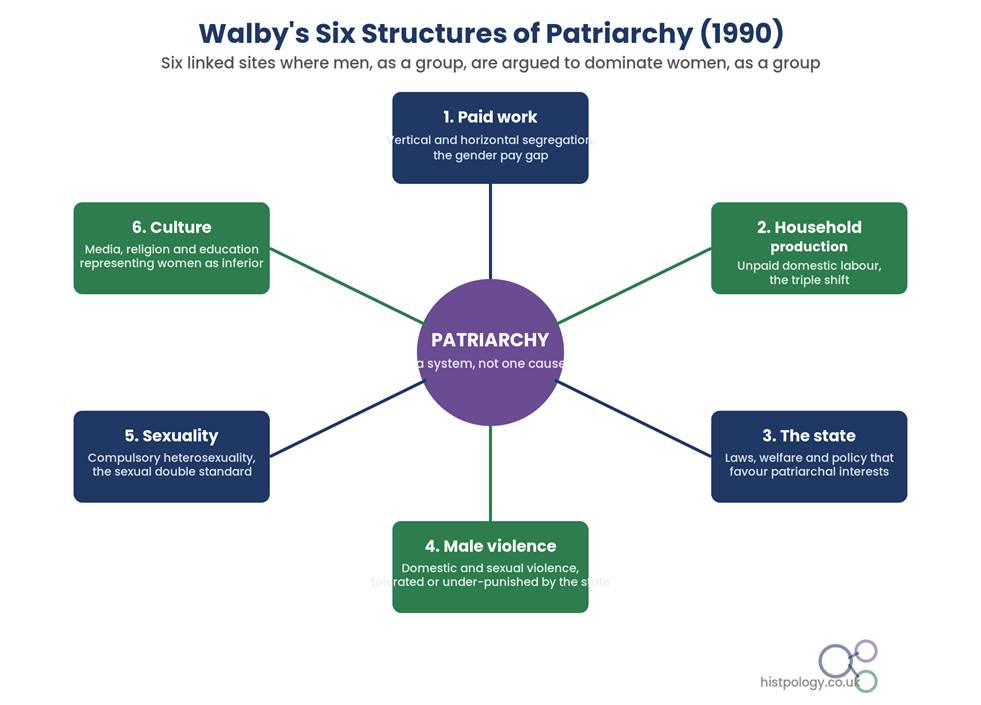
Figure 1: Walby’s (1990) six structures of patriarchy, applied together rather than as a single cause.
| Concept | What it means | Key thinker or study | Applied example |
| Patriarchy | A system of structures through which men as a group dominate women as a group. | Millett (1970) | Family, work, culture, sexuality, violence and the state, per Walby (1990). |
| Biological oppression | Women’s subordination is rooted in the burden of childbearing itself, not just social roles. | Firestone (1970) | Firestone argued reproductive technology could remove this root cause. |
| Control theory of conformity | Patriarchal control over women’s time and movement, not law-abidingness, explains their low offending rates. | Heidensohn (1985) | Girls supervised more closely than brothers, restricting opportunities to offend. |
Table 3: Core radical feminist concepts.
- Radical feminism’s strength is explaining why patriarchy persists across very different economic systems, capitalist and non-capitalist alike.
- Its weakness is a tendency to treat “men” and “women” as uniform groups, a point difference feminists develop further below.
- Some radical feminists have argued for separatism, women organising independently of men, a solution liberal and Marxist feminists both reject as impractical.
| ANALYSIS — AO2 | EVALUATION — AO3 |
| Radical feminism explains patterns liberal feminism cannot, such as why domestic violence and unequal domestic labour persisted even after fifty years of equality legislation, since these operate in the private sphere law rarely reaches. | Its account is less convincing when applied evenly across all women. Black feminists such as Collins (1990) argue that treating patriarchy as a single system experienced identically by all women overlooks how race and class change that experience. |
| Key Takeaways |
| Radical feminism treats patriarchy, not capitalism, as the most fundamental structure of oppression. |
| Millett (1970) coined the modern political sense of patriarchy; Firestone (1970) traced it to biological reproduction; Walby (1990) systematised it into six linked structures. |
| Heidensohn’s (1985) control theory is a key radical feminist explanation of low female crime rates. |
| The main criticism is treating women as a single, undifferentiated group, a gap difference feminism was developed to address. |
| Check your understanding |
| Outline two of Walby’s (1990) six structures of patriarchy. You could: pick any two boxes from Figure 1 and explain briefly what each one means in practice. |
| Evaluate the radical feminist claim that patriarchy is more fundamental than social class. You should: set radical feminism against Marxist feminism directly, use a named thinker from each side, and reach a clear judgement. |
Marxist Feminism
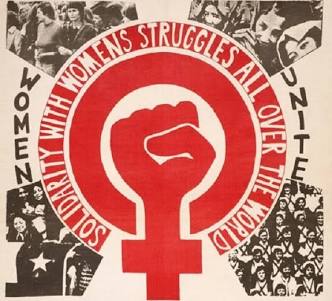
Marxist feminism combines Marxist class analysis with feminist concerns about gender, arguing women’s oppression serves capitalism specifically, not men as an undifferentiated group. Its roots lie in Friedrich Engels’ The Origin of the Family, Private Property and the State (1884), which linked the modern nuclear family to the rise of private property.
Margaret Benston (1969) argued that women’s unpaid domestic labour, cooking, cleaning and childcare, reproduces the workforce at no cost to employers, subsidising capitalism directly. Fran Ansley extended this, describing the emotional support wives were expected to provide as absorbing the frustrations capitalism produces in men, redirecting anger away from employers and toward the home.
Michele Barrett, in Women’s Oppression Today (1980), attempted to reconcile Marxist and feminist analysis more carefully, arguing capitalism and patriarchy are distinct but mutually reinforcing systems, an early version of the “dual systems” approach Walby later developed for radical feminism.
| Concept | What it means | Key thinker or study | Applied example |
| Domestic labour debate | Whether unpaid housework should be understood as producing real economic value for capitalism. | Benston (1969) | Housework reproduces tomorrow’s workforce free of charge, subsidising employers. |
| Reserve army of labour | Women are drawn into paid work when capitalism needs extra workers, and pushed back into the home in a downturn. | Barrett (1980) | Women’s wartime factory work followed by post-war pressure back into housewife roles. |
| Emotional and ideological labour | Wives absorb the psychological strain capitalism places on male workers, protecting the system from unrest. | Ansley (1972) | Frustration from a stressful job is managed at home rather than directed at an employer. |
Table 4: Core Marxist feminist concepts.
- Marxist feminism explains why women’s participation in paid work rises and falls with the economy, something liberal feminism’s focus on law and attitudes cannot fully explain.
- It is criticised for implying gender inequality would disappear if capitalism did, ignoring the evidence of patriarchal societies that were never capitalist.
| ANALYSIS — AO2 | EVALUATION — AO3 |
| Marxist feminism links gender inequality directly to economic structure, explaining why unpaid domestic labour, not just legal status, remains central to women’s disadvantage even in wealthy capitalist economies. | This is weakened by the historical evidence radical feminists point to: patriarchal control of women predates capitalism and persists in non-capitalist societies, suggesting capitalism intensifies rather than causes patriarchy. |
| Key Takeaways |
| Marxist feminism sees women’s oppression as functional for capitalism, not simply a product of men’s attitudes. |
| Benston (1969) argued unpaid domestic labour subsidises capitalism by reproducing the workforce for free. |
| Barrett (1980) developed an early “dual systems” account, treating capitalism and patriarchy as separate but linked. |
| The main weakness is explaining patriarchal societies that existed before, or without, capitalism. |
Difference and Black Feminism
From the 1980s onward, some feminists argued that liberal, radical and Marxist feminism had all generalised from the experience of white, Western, middle-class women, presenting that experience as if it applied to all women. Difference feminism and black feminism developed to correct this, arguing race, class and gender combine to shape oppression differently for different groups of women.
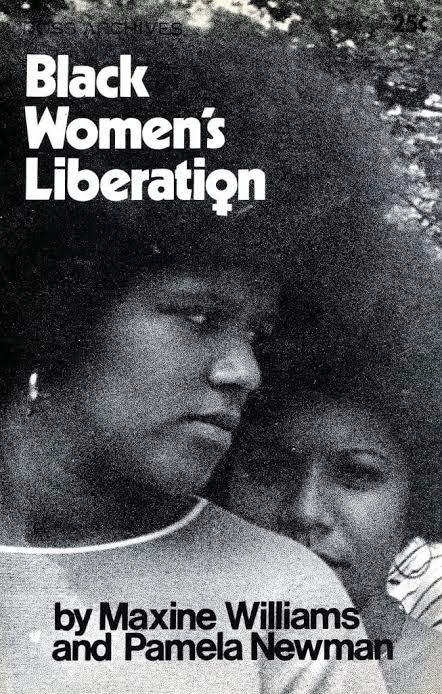
Patricia Hill Collins, in Black Feminist Thought (1990), introduced the idea of a “matrix of domination”: oppressions such as race, gender and class do not stack in a simple hierarchy but interact in a shifting grid, so a Black working-class woman’s experience cannot be understood by adding gender oppression to race oppression separately. Collins also developed the concept of the “outsider within” (1986), describing Black women’s distinctive standpoint as both part of, and excluded from, dominant institutions.
In Britain, Heidi Safia Mirza’s edited collection Black British Feminism: A Reader (1997) argued Black British women’s experience of gendered and racialised exclusion has been shaped by Britain’s specific colonial history, distinct from the American context Collins and bell hooks were writing about. bell hooks (1994) criticised feminist theory that had become too abstract and disconnected from Black women’s everyday political struggles.
| Concept | What it means | Key thinker or study | Applied example |
| Matrix of domination | Race, gender and class interact in a shifting grid of oppression rather than a simple hierarchy. | Collins (1990) | A Black working-class woman’s experience cannot be read off gender or race alone. |
| Outsider within | A distinctive standpoint from being simultaneously inside and excluded from dominant institutions. | Collins (1986) | Black women domestic workers observing white households from close up, but never belonging to them. |
| Black British feminism | Britain’s specific colonial history shapes a distinct experience of race, gender and identity. | Mirza (1997) | British Black and South Asian women’s experience differs from the American context of Collins and hooks. |
Table 5: Core difference and black feminist concepts.
- This strand’s strength is capturing real differences between women’s experiences that a single, universal theory of patriarchy risks flattening out.
- Its risk, noted even by sympathetic critics, is fragmenting feminism into so many separate standpoints that collective political action becomes harder to organise.
| ANALYSIS — AO2 | EVALUATION — AO3 |
| Difference and black feminism corrects a genuine gap in earlier feminist theory, showing that radical feminism’s account of a single, shared patriarchy does not fit every woman’s experience equally. | Taken to its logical end, however, this critique risks undermining the basis for a shared feminist movement altogether, since if every woman’s experience is different, it becomes harder to identify what, if anything, unites feminism’s aims. |
| Key Takeaways |
| Difference and black feminism argue race, class and gender interact rather than simply adding together. |
| Collins’ (1990) “matrix of domination” and (1986) “outsider within” are the key concepts to name in an exam answer. |
| Mirza (1997) applies this specifically to Britain’s colonial history, distinct from the American focus of Collins and bell hooks. |
| The main criticism is that emphasising difference can fragment feminism’s political unity. |
| Check your understanding |
| Explain what Collins (1990) means by a “matrix of domination”. You could: contrast it with a simple model where oppressions just add together, then explain why Collins rejects that simpler model. |
| To what extent is difference feminism a strength rather than a weakness for the feminist movement as a whole? You should: weigh the gain (a more accurate account of different women’s experiences) against the cost (political fragmentation), citing Mirza (1997) or Collins (1990). |
Evaluating Feminism
Feminism as a whole faces two further challenges beyond the disagreements between its own strands: a postmodern challenge to the idea of “women” as a coherent category, and a claim, associated with postfeminist media culture, that formal equality has already been substantially achieved.
Judith Butler, in Gender Trouble (1990), argued gender is not a fixed identity but a repeated performance, a stylised set of acts that create the appearance of a stable identity rather than expressing one. This challenges every strand of feminism above, since each assumes “women” is a meaningful, shared category to organise around.
Angela McRobbie, in The Aftermath of Feminism (2009), argued popular culture increasingly presents gender equality as already achieved, a stance she calls postfeminist, while media continues to recycle traditional ideas of femininity through fashion and beauty culture, echoing Naomi Wolf’s earlier argument in The Beauty Myth (1990) that beauty standards intensified precisely as women gained more formal power.
The case for feminism
- Concrete legal change, such as the Equal Pay Act 1970 and Sex Discrimination Act 1975, followed directly from feminist campaigning, not spontaneous social change.
- Measurable inequalities persist: the UK’s median gender pay gap for full-time employees was 6.9% in April 2025 (ONS), evidence patriarchy has not simply disappeared.
- Feminist concepts such as the triple shift (Duncombe and Marsden, 1995) and the matrix of domination (Collins, 1990) identify real patterns other perspectives had overlooked entirely.
The case against feminism
- Butler (1990) argues the very category “women” feminism organises around is itself a social construction, undermining the basis for a single, unified theory.
- McRobbie (2009) suggests some feminist goals have been absorbed into mainstream culture so thoroughly that younger women increasingly see feminism itself as unnecessary or outdated.
- Postmodernists more broadly reject any single grand narrative, including patriarchy, as an over-simplified account of a much more varied and fragmented set of power relations.
Reaching a judgement
| ANALYSIS — AO2 | EVALUATION — AO3 |
| Comparing the strands, radical and Marxist feminism offer the most fundamental structural explanations, while liberal feminism’s reforms have produced real, measurable change without removing inequality entirely, and difference feminism corrects both for ignoring how race and class change the picture. | On balance, the persistence of a 6.9% full-time gender pay gap in 2025, fifty-five years after the Equal Pay Act 1970, suggests feminism’s central claim, that gender inequality is structural rather than a matter of outdated attitudes alone, remains well supported by current evidence, even where its internal strands disagree on the exact mechanism. |
| Key Takeaways |
| Butler’s (1990) idea of gender performativity is the sharpest postmodern challenge to feminism’s own foundations. |
| McRobbie (2009) describes a postfeminist culture in which equality is presented as achieved while traditional femininity is recycled through media. |
| The persistence of the gender pay gap (6.9% for full-time workers, ONS 2025) is strong, current evidence for feminism’s continued relevance. |
| No single strand of feminism fully answers the postmodern critique that “women” is not a fixed, unified category. |
| Check your understanding |
| Explain Butler’s (1990) concept of gender performativity and why it challenges feminism. You could: define performativity first, then explain specifically why a fixed category of “women” matters to feminist theory. |
| To what extent is feminism still a relevant perspective in explaining gender inequality today? You should: use the 2025 pay gap statistic as current evidence, address the postfeminist critique directly, and reach an explicit judgement rather than ending on the criticism. |
Applying Feminism Across the A Level
Feminism is examinable well beyond Families and Households, its most obvious “home” topic. The table below applies feminism to six major A Level Sociology topics, with at least three named, verified examples per topic, to demonstrate this breadth.
Read the table as evidence that feminist concepts recur across the specification: several thinkers below, such as Sharpe and Collins, appear under more than one topic, because their core concepts were designed to travel across different areas of social life.
| A Level topic | How feminism applies | Key thinkers |
| Education (3.1.1) | Sharpe’s (1976, 1994) comparison found girls’ aspirations shifted from marriage and family toward careers, while Kelly (1987) showed science classrooms remained coded as a “boy subject” through teacher attention and curriculum content. | Sharpe (1976, 1994); Kelly (1987) |
| Education (3.1.1) | Skelton, Francis and Valkanova (2007), in a report for the Equal Opportunities Commission, found working-class “laddish” anti-school subcultures undermine achievement for some boys and girls alike, cautioning against a simple boys-versus-girls narrative. | Skelton, Francis and Valkanova (2007) |
| Education (3.1.1) | Francis and Skelton (2005) examined how schools have promoted “caring masculinity” as a response to concern over boys’ underachievement, a feminist-informed critique of policy that risks treating girls’ success as the problem to be solved. | Francis and Skelton (2005) |
| Families and Households (3.2.2) | Oakley (1974) documented the invisible, undervalued nature of housework, while Delphy and Leonard (1992) argued men are the chief beneficiaries of women’s unpaid domestic labour within marriage. | Oakley (1974); Delphy and Leonard (1992) |
| Families and Households (3.2.2) | Duncombe and Marsden (1995) developed the concept of the triple shift, arguing women perform paid work, housework and emotional labour, based on interviews with forty married couples. | Duncombe and Marsden (1995) |
| Families and Households (3.2.2) | Somerville (2000) argues incremental legal reform is closing the gap in family life, while Firestone (1970) argues the biological family structure itself, not just law, remains the root problem, a direct liberal-versus-radical contrast. | Somerville (2000); Firestone (1970) |
| Culture and Identity (3.2.1) | Butler (1990) argued gender identity is performative, constructed through repeated acts, while Mirza (1997) showed identity construction is also shaped by race and Britain’s colonial history, not gender alone. | Butler (1990); Mirza (1997) |
| Culture and Identity (3.2.1) | Collins (1990) argued Black women’s identity sits at the intersection of a “matrix of domination”, while bell hooks (1994) argued feminist theory itself needed to stay rooted in everyday political practice rather than abstraction. | Collins (1990); bell hooks (1994) |
| Culture and Identity (3.2.1) | Sharpe’s (1976, 1994) longitudinal comparison of girls’ changing self-image and aspirations across two generations is direct evidence of how gender identity itself has shifted, not just girls’ opportunities. | Sharpe (1976, 1994); McRobbie (2009) |
| The Media (3.2.7) | Ferguson (1983) analysed women’s magazines as promoting a “cult of femininity” centred on beauty and domesticity, while Wolf (1990) argued beauty standards intensified as a backlash precisely as women gained more formal power. | Ferguson (1983); Wolf (1990) |
| The Media (3.2.7) | McRobbie (2009) argued postfeminist media, films such as those she analyses, present equality as already achieved while quietly reinforcing traditional femininity, extending Butler’s (1990) idea that gender is constructed through repeated cultural performance. | McRobbie (2009); Butler (1990) |
| The Media (3.2.7) | Mirza (1997) and Collins (1990) both argue mainstream feminist media critique, focused on white, middle-class beauty ideals, has historically ignored the specific stereotyping of Black women in media representation. | Mirza (1997); Collins (1990) |
| Beliefs in Society (3.2.5) | De Beauvoir (1949) argued religion has historically confined women to a domestic, subordinate role by sacralising their exclusion from public life, while El Saadawi (1980) argued patriarchal, not religious, custom explains practices such as the veil and FGM in the Arab world. | de Beauvoir (1949); El Saadawi (1980) |
| Beliefs in Society (3.2.5) | Heelas and Woodhead’s (2005) Kendal Project found women significantly outnumbered men within the holistic, New Age spiritual milieu they studied, linked to women seeking religious authority outside male-led mainstream churches. | Heelas and Woodhead (2005) |
| Beliefs in Society (3.2.5) | Woodhead’s concept of “religious feminism” argues some women use religious practice, such as choosing to wear a hijab, as a source of empowerment and identity, a more complex picture than religion as simply oppressive, a point Mirza (1997) develops for British Muslim women specifically. | Woodhead; Mirza (1997) |
| Crime and Deviance (3.3.1) | Heidensohn (1985) argued patriarchal control over women’s time and movement explains low female offending rates, while Carlen (1988) found working-class women who did offend had often broken an unwritten “gender deal” that had failed to reward their conformity. | Heidensohn (1985); Carlen (1988) |
| Crime and Deviance (3.3.1) | Smart (1977) criticised criminology for being gender-blind, treating male experience as the norm, while Walklate (1995) showed female rape complainants faced a court system that demanded proof of “respectability” rather than genuine chivalry. | Smart (1977); Walklate (1995) |
| Crime and Deviance (3.3.1) | Pollak (1950) argued male chivalry explains women’s lower conviction rates, a claim Smart (1977) rejected as resting on unevidenced stereotypes about female deceptiveness rather than genuine leniency. | Pollak (1950); Smart (1977) |
Table 6: Feminism applied across six A Level sociology topics.
A lead-in point before the bullets below: two thinkers recur across more than one topic in this table.
- Sharpe (1976, 1994) appears under both Education and Culture and Identity, since her longitudinal study captures changing aspirations and changing gender identity together.
- Collins (1990) and Mirza (1997) both recur across Culture and Identity, The Media and Beliefs in Society, since the matrix of domination and Black British feminism were designed as general frameworks, not topic-specific theories.
- Beliefs in Society stretches feminist theory furthest here, since it must account for feminists such as Woodhead who argue religion can empower as well as oppress, a more complicated claim than the table’s other rows.
| ANALYSIS — AO2 | EVALUATION — AO3 |
| The breadth of this table shows feminism is not confined to Families and Households, its most familiar topic, but supplies a working explanatory framework across education, culture, media, religion and crime alike. | This breadth is also a limitation: applying one perspective this widely risks stretching some applications thin, as with Woodhead’s more equivocal account of religious feminism, which sits less comfortably with feminism’s core claim than the clearer cases above. |
| Key Takeaways |
| Feminism applies across all three papers, not just Families and Households. |
| Sharpe (1976, 1994) and Collins (1990) are the two thinkers in this table that recur across more than one topic. |
| Beliefs in Society is the topic where feminist theory is stretched furthest, since religion can be a source of empowerment as well as oppression. |
| Naming a specific, dated study for each application, not just the perspective’s name, is what separates a strong exam answer from a generic one. |
| Check your understanding |
| Choose one topic from the table above and explain, using a named study, how feminism applies to it. You could: pick any single row, name the thinker and year, and explain the point in your own words rather than quoting the table directly. |
| To what extent can feminism be applied convincingly to a topic outside Families and Households? You should: choose the strongest and the weakest application from the table (Education or Crime and Deviance versus Beliefs in Society), compare them, then reach a judgement. |
Specification links: AQA 7192 3.1.1 (Education), 3.2.1 (Culture and Identity), 3.2.2 (Families and Households), 3.2.5 (Beliefs in Society), 3.2.7 (The Media), 3.3.1 (Crime and Deviance), 3.1.3/3.3.2 (Theory and Methods).
In Summary
This document opened with Hanisch’s 1970 argument that private problems are political problems, and used it as a thesis: is gender disadvantage structural, or a matter of private choice? Tested against the most current evidence available, the median UK gender pay gap for full-time employees stood at 6.9% in April 2025, narrowing slowly from 7.1% the year before (ONS), while the Employment Rights Act, given Royal Assent on 18 December 2025, will make equality action plans mandatory for large employers only from 2027.
That pattern, slow, real, but incomplete progress more than half a century after the Equal Pay Act 1970, supports Hanisch’s original claim more than it undermines it: if gender disadvantage were simply a set of private choices, formal legal equality should have closed the gap already. It has not, which is exactly the kind of structural pattern a sociological perspective, rather than an individual explanation, is needed to account for.
Reaching a judgement
| ANALYSIS — AO2 | EVALUATION — AO3 |
| Across its four strands, feminism offers a structural explanation for gender inequality that ranges from the moderate (liberal feminism’s legal reform) to the fundamental (radical feminism’s patriarchy), while difference feminism corrects both for treating “women” as a single, uniform category. | On the evidence reviewed in this document, principally the persistence of the pay gap decades after key equality legislation, feminism’s core claim that gender inequality is structural rather than incidental remains well supported, even though no single strand offers a complete answer to the postmodern challenge that “women” itself is not a fixed category. |
| Key Takeaways |
| “The personal is political”, the title given to Hanisch’s 1970 essay, remains a fair summary of feminism’s central sociological claim. |
| The UK’s gender pay gap (6.9% for full-time workers, ONS, April 2025) is current, exam-ready evidence that legal equality has not produced full practical equality. |
| No single strand of feminism, liberal, radical, Marxist or difference, offers a complete account on its own; each corrects a gap in the strand before it. |
| Feminism’s biggest unresolved challenge is Butler’s (1990) postmodern argument that the category “women” it organises around is itself socially constructed. |
| Check your understanding |
| Overall, how convincing do you find feminism as an explanation of gender inequality in society today? You should: draw on at least two different strands from this document, use the 2025 pay gap evidence, and end with an explicit, reasoned judgement rather than a list of “for and against” points. |
Feminism in five . . . here