
The US Constitution is a codified document.
Its original text, ratified in 1788, ran to roughly 4,500 words: a Preamble followed by seven Articles.
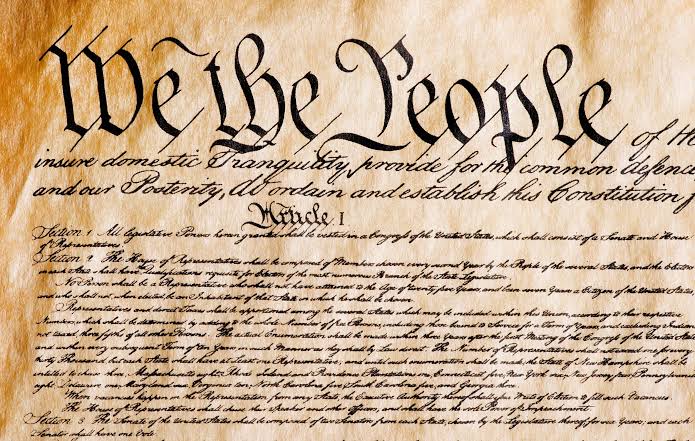
It has since been extended by 27 Amendments, the first ten of which, ratified together in 1791, are known as the Bill of Rights.
Codification gives the Constitution a clear, singular status as the “supreme Law of the Land”, a phrase taken directly from Article VI. Any federal or state law that conflicts with it can, in principle, be struck down by the courts through judicial review.
The Constitution is also heavily entrenched. Article V requires a proposed amendment to pass by a two-thirds majority in both the House of Representatives and the Senate. Alternatively, it can be proposed by a national convention called at the request of two-thirds of state legislatures, a route never yet used. It must then be ratified by three-quarters of the states, currently 38 of 50.
This is a genuinely high bar. According to the Congressional Research Service, close to 12,000 measures to amend the Constitution were introduced in Congress between 1789 and January 2025. Only 27 have ever been ratified.
Alongside codification and entrenchment sits vagueness.
Much of the Constitution’s text is written in broad, open-ended language rather than precise rules, something Madison defended in Federalist No. 37 as an unavoidable feature of political language.
This vagueness gives the document flexibility that a more detailed text would lack, but it also hands considerable interpretive power to the Supreme Court.
| Vague phrase | Where it appears | Why it is open to interpretation | Example of Supreme Court interpretation |
| “Necessary and proper” | Article I, Section 8 | Does not define how closely a law must relate to an enumerated power | McCulloch v Maryland (1819): the Court read the clause broadly, allowing Congress to charter a national bank |
| “Commerce among the several states” (the Commerce Clause) | Article I, Section 8 | Does not define the boundary between interstate and purely local commerce | Wickard v Filburn (1942): the Court read “commerce” broadly enough to cover wheat grown for a farmer’s own use |
| “Cruel and unusual punishments” | Eighth Amendment (1791) | Provides no fixed definition, so standards can shift over time | Roper v Simmons (2005): the Court ruled that executing offenders who were under 18 at the time of their crime is cruel and unusual |
| “High crimes and misdemeanors” | Article II, Section 4 | Does not list which offences count as impeachable (chargeable, as part of the formal process for removing a president from office) | Left to Congress’s own political judgement in each of the four impeachment votes held so far, against three different presidents |
Table 1: examples of deliberately vague constitutional language and how the Supreme Court has interpreted it.
These examples show a clear pattern in how vagueness operates within the Constitution.
- Vague phrases transfer real power to the Supreme Court, since the Court, not Congress or the President, usually has the final word on what they mean.
- The same vague phrase can be read narrowly or broadly by different Courts at different times. This is why interpretations of the Commerce Clause and the Necessary and Proper Clause have shifted across the twentieth and twenty-first centuries.
- Vagueness allows the Constitution to apply to situations the Founding Fathers (the political leaders who wrote and signed the Constitution) could not have foreseen, from federal banking to social media, without needing a formal amendment.
- The same flexibility makes constitutional meaning less predictable, since two reasonable judges can reach opposite conclusions about what a vague phrase requires.
| Analysis | Evaluation |
| Codification fixes the words of the Constitution on the page. Entrenchment then makes those words hard to change formally, through the difficult Article V process. Vagueness gives the Supreme Court room to update the Constitution’s meaning informally, through judicial review, without any change to the text itself. | This combination has let a very short, largely eighteenth-century document survive almost unchanged for over two centuries, longer than most national constitutions written since. However, this stability comes at a cost: the Constitution’s real-world meaning now depends heavily on the ideological balance of an unelected Supreme Court. Critics argue this makes the Constitution’s meaning less democratically accountable than it appears on paper. |
| Check your understanding 1. Define codification and entrenchment in your own words, using one example of each from the US Constitution. You could: anchor each definition in Article V and the 1788 ratification date given above, rather than defining the terms in the abstract. 2. Explain how vagueness in constitutional language increases the political importance of the Supreme Court. You could: use one row from Table 1 above, such as McCulloch v Maryland or Roper v Simmons, to show the causal link between a vague phrase and a specific judicial ruling. 3. Compare the way the US Constitution uses deliberate vagueness with what you already know about the flexibility of the uncodified UK constitution. Which system gives judges more power to shape constitutional meaning, and why? You should: reach a clear judgement rather than just listing differences. UK flexibility comes mainly from Parliament being able to legislate freely, while US flexibility comes mainly from judicial interpretation of a fixed text; decide which form of flexibility hands more power to unelected judges. |
| Key terms Enumerated powers: the specific powers explicitly written down in the Constitution’s text. Congress’s enumerated powers are listed mainly in Article I, Section 8, and include the power to levy taxes, coin money and declare war. Implied powers: powers that are not written down explicitly but are considered reasonably necessary to carry out an enumerated power. These are drawn from the Necessary and Proper Clause (also called the elastic clause) at the end of Article I, Section 8. Necessary and Proper Clause: the clause giving Congress power to make all laws “necessary and proper” for carrying out its enumerated powers. The Supreme Court interpreted it broadly in McCulloch v Maryland (1819). Separation of powers: the constitutional principle that legislative, executive and judicial power are held by three distinct branches with different personnel. Checks and balances: the mechanisms that allow each branch to restrain the actions of the other two, for example through the presidential veto or Senate confirmation of appointments. |