
Overview of and background to the structure of US government
Delegates from twelve of the thirteen states met in Philadelphia in the summer of 1787 to revise the failing Articles of Confederation. Instead, they wrote an entirely new Constitution. James Madison played such a central role in drafting it and defending it afterwards that he is often called the “Father of the Constitution”.
The Constitution was ratified by the states through 1787 and 1788 and took effect in 1789. It created a federal system, meaning that power is legally divided between a national government and individual state governments, each with its own sphere of authority.
At the national level, the Constitution establishes three separate branches: Congress (the legislature, Article I), the presidency (the executive, Article II), and the Supreme Court and federal judiciary (the judicial branch, Article III). This structure rests on two related principles: the separation of powers, meaning each branch has distinct personnel and functions, and checks and balances, meaning each branch can restrain the other two.
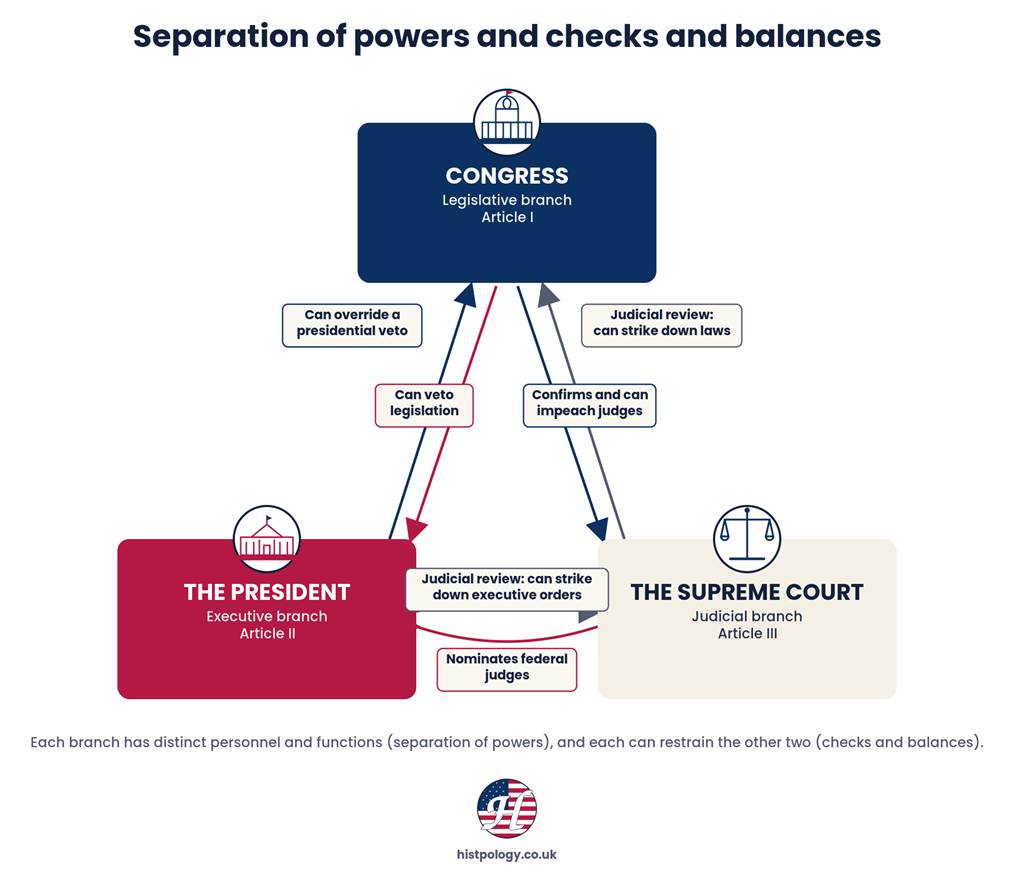
Figure 1: the three branches of federal government and the core checks each holds over the other two.
| Key terms Codification: setting out a constitution’s rules in a single authoritative written document, rather than leaving them scattered across statutes, conventions and common law. The US Constitution has been codified since 1787. Entrenchment: making a constitution deliberately difficult to amend or repeal, usually by requiring a higher threshold than a simple majority. Article V entrenches the US Constitution by requiring supermajorities (thresholds higher than 50% plus one, such as two-thirds) at both the proposal and ratification stages. Vagueness: the use of broad, open-ended or ambiguous language in a constitutional text, which leaves room for later interpretation. The phrase “necessary and proper” in Article I is a well-known example. Judicial review: the power of the courts to strike down a law or executive action that conflicts with the Constitution. The Supreme Court established this power for itself in Marbury v Madison (1803). |