
FOREIGN POLICY OVERVIEW | A LEVEL HISTORY | HISTPOLOGY.CO.UK
On 22 August 1485, Henry Tudor defeated Richard III at Bosworth Field and took the English throne with a claim so thin that almost no European ruler regarded him as secure. For the next twenty-four years, foreign policy was Henry’s main defence against that insecurity: he used treaties, trade and marriage, not conquest, to persuade the great powers of Europe to recognise the Tudor dynasty and to stop sheltering the pretenders who threatened to replace him.
This page brings together Henry’s dealings with five fronts already covered in full elsewhere on histpology.co.uk: Scotland, France, Burgundy and the Netherlands (including the Holy Roman Empire), Spain, and Ireland. Because Henry ran all five relationships at once rather than in sequence, this overview is organised country by country rather than strictly by date. A master timeline is provided immediately below to show how the five fronts overlapped in time.
Contents
The main sections of this page
- Scotland
- France
- Burgundy, the Netherlands and the Holy Roman Empire
- Spain
- Ireland
- Reaching a judgement
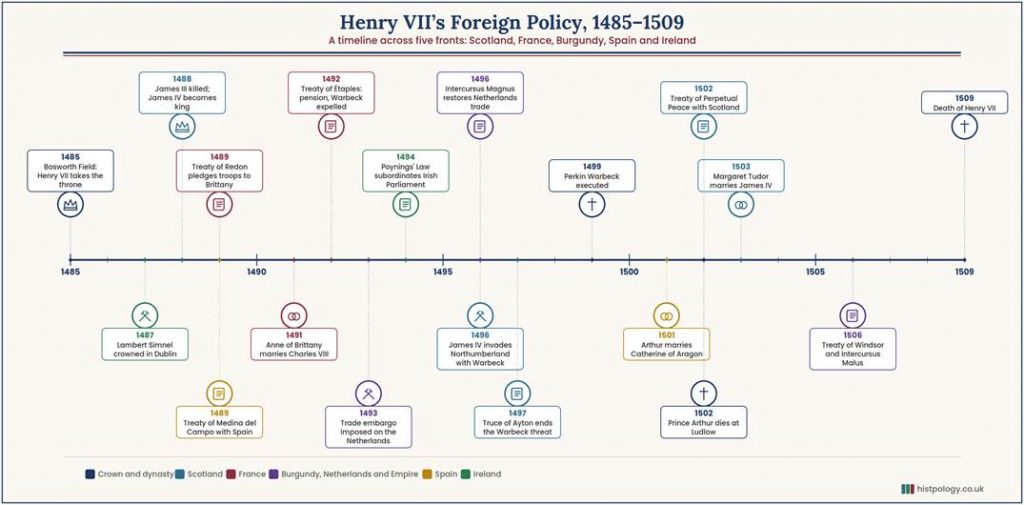
Figure 1: Henry VII’s foreign policy across five fronts, 1485–1509. Compiled from histpology.co.uk’s country-by-country foreign policy pages.
| Key Questions |
| Aims and achievement: how far did Henry achieve his own aims in each of these five relationships? |
| Extent: how successfully did Henry use diplomacy, marriage and trade, rather than war, to secure the Tudor dynasty? |
| Change and continuity: how far had England’s international position changed by 1509 compared with 1485? |
| Key terms |
| Auld Alliance: the treaty binding Scotland and France to invade northern England or France if the other was attacked, first agreed in 1295 and renewed by James IV in 1492. |
| Pretender: someone who claims a throne they do not legally hold; Henry faced two, Lambert Simnel and Perkin Warbeck, both claiming to be Yorkist heirs. |
| Poynings’ Law: an act of 1494 that stopped the Irish Parliament meeting or passing laws without prior approval from the English crown. |
| Intercursus (Magnus and Malus): Latin for “agreement” or “dealing”; the names given to the 1496 and 1506 trade treaties between England and the Netherlands. |
| Dowry: money or property paid by a bride’s family as part of a marriage agreement; Catherine of Aragon’s dowry was never paid in full. |
Scotland
Key Question link: extent (diplomacy replacing war) and change and continuity (the border relationship by 1509).
Scotland’s Auld Alliance with France meant that any Anglo-French quarrel risked a Scottish invasion of northern England at the same time, and after 1495 James IV turned that risk into reality by sheltering Perkin Warbeck.
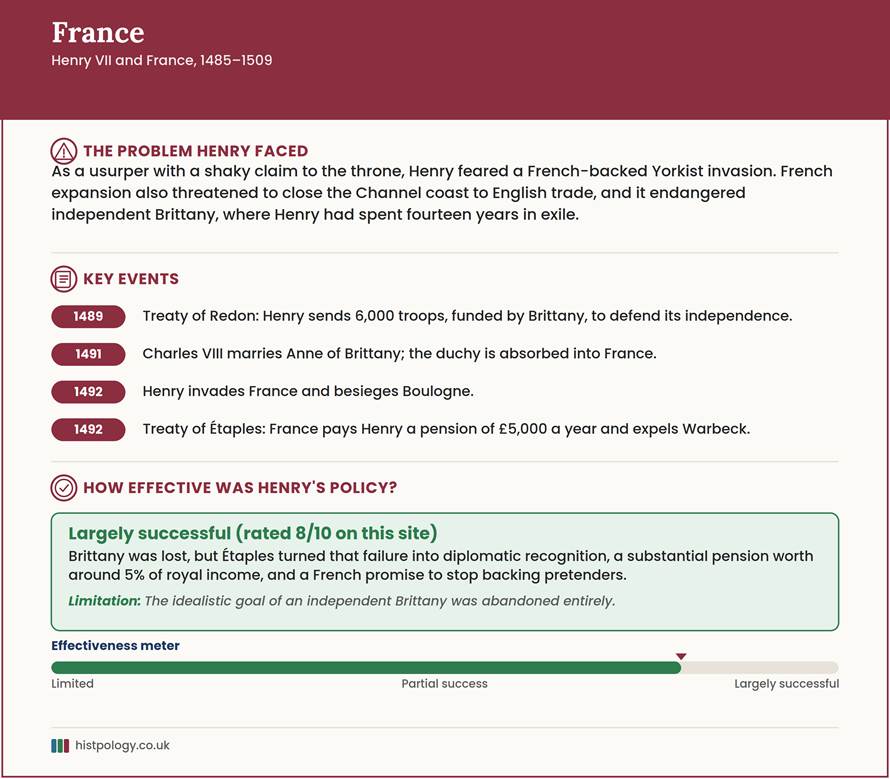
Figure 2: Henry VII and Scotland, 1485–1509. Source: histpology.co.uk, Anglo-Scottish Relations under Henry VII.
Analysis: Henry’s Scottish policy moved from confrontation to accommodation. The failed 1496 invasion and the domestic backlash it produced in the Cornish Rebellion pushed Henry towards Bishop Richard Fox’s diplomatic approach, which delivered the Truce of Ayton, the Treaty of Perpetual Peace, and finally Margaret Tudor’s marriage to James IV.
Evaluation: Judged by Henry’s own aims, this was a strong success: it removed the two-front war threat, ended Scottish support for pretenders, and produced the first lasting Anglo-Scottish peace since 1328. The verdict is qualified only by hindsight, since the peace collapsed into the Battle of Flodden in 1513, four years after Henry’s death.
| Key Takeaways |
| The Auld Alliance made Scotland dangerous mainly because of its French connection, not Scottish strength alone. |
| James IV’s backing of Perkin Warbeck (1495-1497) was the most serious Scottish threat Henry faced. |
| The Treaty of Perpetual Peace (1502) was the first formal, lasting Anglo-Scottish peace treaty since the Treaty of Northampton in 1328. |
| Margaret Tudor’s marriage to James IV (1503) later gave the Stuarts a claim to the English throne, realised in 1603. |
France
Key Question link: aims and achievement (Brittany versus Étaples) and extent (diplomacy over war).
France’s absorption of Brittany, the duchy that had sheltered Henry for fourteen years in exile, threatened both England’s Channel security and Henry’s own sense of obligation, while a hostile France could also back Yorkist claimants.
Figure 3: Henry VII and France, 1485–1509. Source: histpology.co.uk, Henry VII and France.
Analysis: Henry’s Breton policy failed in its original aim: the Treaty of Redon committed English troops to defend Breton independence, but French military strength forced the duchy’s absorption through Charles VIII’s marriage to Anne of Brittany in 1491. Henry then pivoted from a losing war to a negotiated settlement.
Evaluation: This pivot converted failure into gain: the Treaty of Étaples secured a French pension worth around 5% of royal income and, crucially, ended French support for Perkin Warbeck. Rated 8/10 on this site, French policy shows Henry’s pragmatism at its clearest, sacrificing an idealistic goal for a substantial and lasting practical benefit.
| Key Takeaways |
| Brittany’s absorption into France in 1491 was Henry’s clearest single foreign policy failure. |
| The Treaty of Étaples (1492) turned that failure into a pension worth roughly £5,000 a year, about 5% of royal income. |
| Étaples also secured France’s agreement to expel Perkin Warbeck, removing a key source of Yorkist support. |
| Henry avoided a prolonged continental war throughout, in keeping with his general reluctance to spend heavily on foreign campaigns. |
Burgundy, the Netherlands and the Holy Roman Empire
Key Question link: extent (balancing security against trade) and change and continuity (isolation by 1508).
Margaret of Burgundy, sister of the last two Yorkist kings, ran a court at Mechelen that sheltered and coached pretenders, while England’s cloth trade depended on the very markets, Antwerp and Bruges, that her Habsburg relatives controlled.
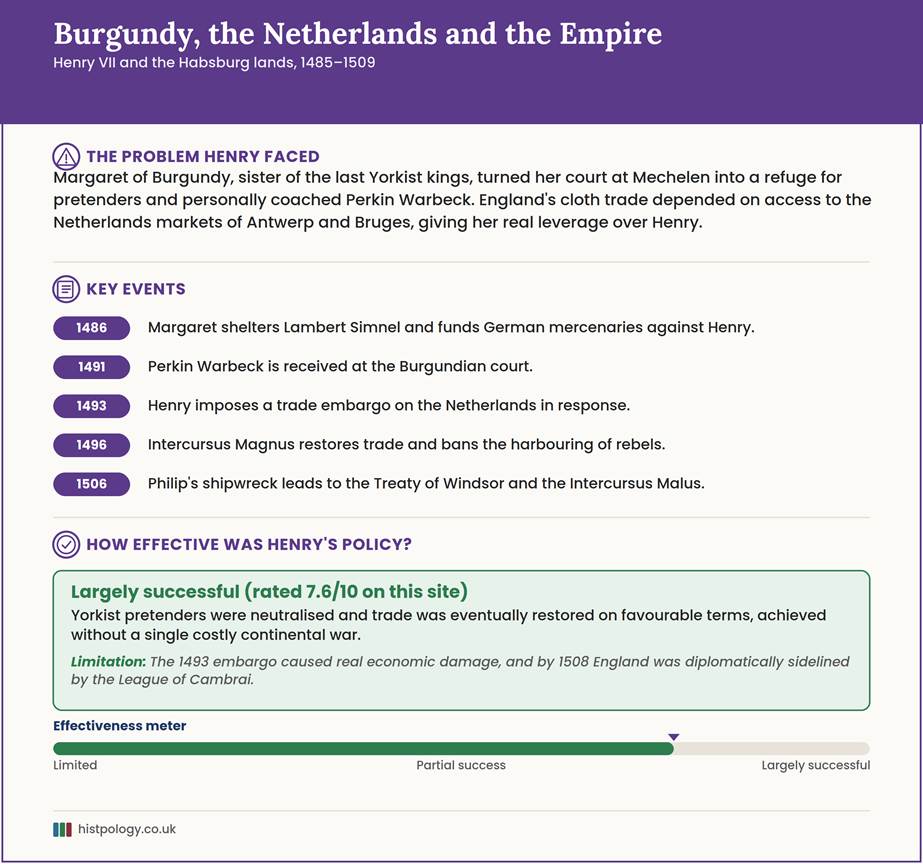
Figure 4: Henry VII and Burgundy, the Netherlands and the Holy Roman Empire, 1485–1509. Source: histpology.co.uk, Burgundy, Netherlands, the Holy Roman Empire.
Analysis: Henry faced a genuine dilemma between security and prosperity, since the same Netherlands markets that funded England’s wool trade also funded Margaret’s plots. His 1493 trade embargo showed he was willing to accept short-term economic damage to punish the sheltering of pretenders, before the Intercursus Magnus of 1496 restored trade on the condition that rebels would no longer be harboured.
Evaluation: Rated 7.6/10 on this site, the policy achieved its central aim: by 1509 Margaret was dead and the Yorkist threat from her court was gone. The cost was real, though, since the embargo damaged trade in the short term, and by 1508 the formation of the League of Cambrai left England diplomatically sidelined from the continent’s leading powers.
| Key Takeaways |
| Margaret of Burgundy, described on this site as “the diabolical duchess,” personally tutored Perkin Warbeck to impersonate Richard, Duke of York. |
| The 1493 trade embargo shows Henry was willing to put security ahead of profit when the two conflicted. |
| The Intercursus Magnus (1496) and Intercursus Malus (1506) show trade being used as both a punishment and a reward in diplomacy. |
| Philip the Handsome’s shipwreck on the English coast in 1506 was opportunism rather than strategy, yet it delivered the Treaty of Windsor. |
Spain
Key Question link: aims and achievement (recognition versus completion) and change and continuity (the position left for Henry VIII).
As a usurper, Henry needed the endorsement of an established royal house more than almost anything else, but Ferdinand and Isabella of Spain made that endorsement conditional on the Tudor regime proving it could actually survive.
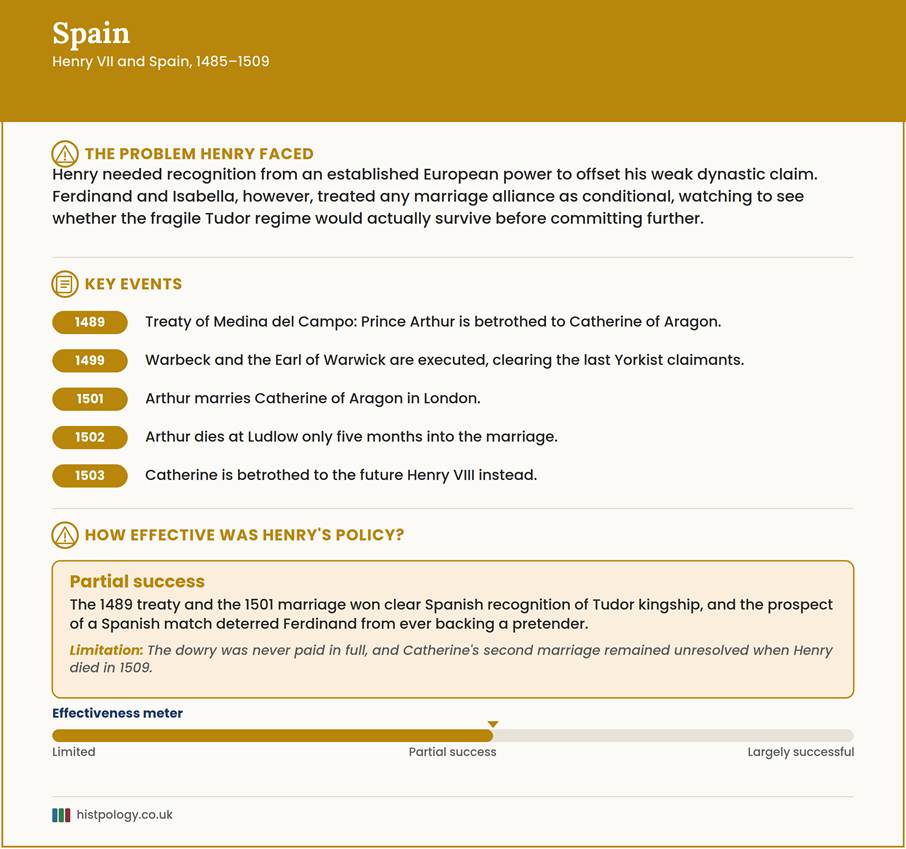
Figure 5: Henry VII and Spain, 1485–1509. Source: histpology.co.uk, Henry VII and Spain.
Analysis: The 1489 Treaty of Medina del Campo betrothed Prince Arthur to Catherine of Aragon, but Spain deliberately spread the marriage out over twelve years, watching Henry survive Yorkist plots before finally allowing the wedding in 1501. Arthur’s sudden death in 1502 then forced Henry to rebuild the whole arrangement around his second son, the future Henry VIII.
Evaluation: This was a genuine but incomplete success. The marriage itself proved Spain accepted Tudor legitimacy, and the prospect of the match discouraged Ferdinand from ever backing a pretender, unlike France and Burgundy at various points. However, the dowry was never paid in full, and Catherine’s second marriage was still unresolved when Henry died in 1509, leaving his son to finish what he could not.
| Key Takeaways |
| The Treaty of Medina del Campo (1489) was Henry’s first major diplomatic recognition from an established European power, only four years into his reign. |
| Spain treated the marriage alliance as conditional throughout, delaying Arthur and Catherine’s wedding from 1489 to 1501. |
| Prince Arthur’s death in 1502, only five months into his marriage, forced Henry to renegotiate the entire alliance around the future Henry VIII. |
| The unpaid dowry and Catherine’s unresolved second marriage were left for Henry VIII to settle after 1509. |
Ireland
Key Question link: extent (direct rule versus indirect control) and aims and achievement (affordability versus authority).
English royal government had never extended much beyond the Pale, the small area around Dublin, leaving the rest of Ireland to Gaelic and Anglo-Irish lords whose loyalty to the Tudor crown could not be assumed.
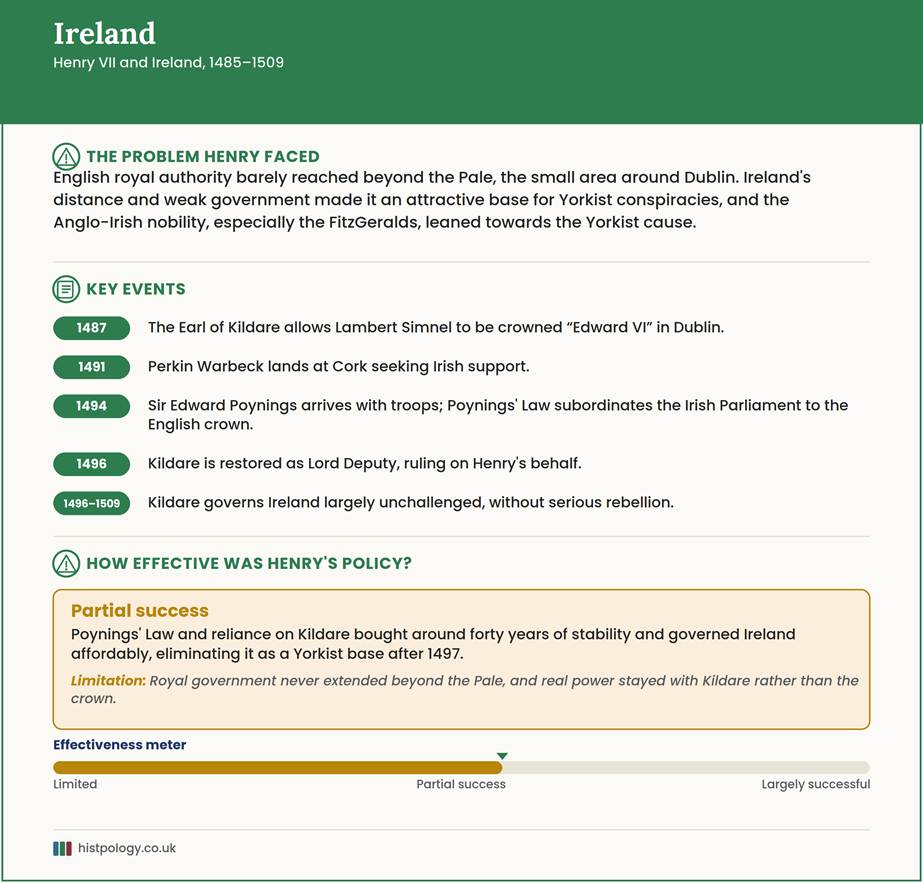
Figure 6: Henry VII and Ireland, 1485–1509. Source: histpology.co.uk, Henry VII and Ireland.
Analysis: Henry’s Irish policy moved through three phases: reluctant tolerance of the Earl of Kildare after Lambert Simnel‘s coronation in 1487, direct intervention through Sir Edward Poynings in 1494-1495, and finally a deliberate return to indirect rule once Poynings’ direct approach proved unaffordable. Poynings’ Law nonetheless gave the crown a permanent check on the Irish Parliament.
Evaluation: On Henry’s own terms, summed up in the attributed remark that “all Ireland cannot rule this Earl, then let this Earl rule all Ireland,” the policy succeeded: Ireland stopped being a usable base for pretenders after 1497, and Kildare delivered roughly forty years of stability at minimal cost to the crown. The trade-off was that royal authority never actually reached beyond the Pale, leaving the deeper problem of Irish governance for Henry’s successors.
| Key Takeaways |
| Lambert Simnel‘s coronation as “Edward VI” in Dublin in 1487 showed how easily Ireland could be used against the Tudor crown. |
| Poynings’ Law (1494) remained the formal basis of the Irish Parliament’s subordination to England until 1782. |
| Reappointing the Earl of Kildare as Lord Deputy in 1496 was a deliberate acceptance of indirect rule, not a defeat. |
| The Pale‘s boundaries were essentially unchanged by 1509, showing the limits of what Henry’s Irish policy actually achieved. |
Reaching a judgement
Henry VII never controlled events on the continent or in Scotland and Ireland; his skill lay in reacting to them in ways that consistently protected the same small set of priorities. The sub-sections below test that claim against each Key Question in turn, before an overall verdict.
Aims and achievement: how far did Henry achieve his own aims?
- Scotland: aim was border security; achieved through the Treaty of Perpetual Peace (1502) and the 1503 marriage.
- France: aim was to keep Brittany independent; this failed, but the fallback aim of dynastic recognition and revenue succeeded through the Treaty of Étaples (1492).
- Burgundy and the Netherlands: aim was to end Yorkist sanctuary while protecting trade; both were achieved by 1509, at the cost of the 1493 embargo.
- Spain: aim was dynastic recognition through marriage; achieved in substance by 1501, though the financial and marital details remained unresolved at Henry’s death.
- Ireland: aim was affordable stability rather than direct control; achieved through reliance on the Earl of Kildare from 1496.
Analysis: In every case except Brittany, Henry’s stated aim was substantially achieved, and even the Breton failure was converted into a different kind of success through the Treaty of Étaples.
Evaluation: This consistency suggests real strategic judgement rather than luck: Henry repeatedly chose achievable, modest aims (recognition, stability, revenue) over ambitious ones (continental conquest, direct rule), and then achieved almost all of them.
Extent: how far did diplomacy, marriage and trade replace war?
Henry fought only two brief, limited campaigns in this period: the 1492 invasion of France, ended within weeks by the Treaty of Étaples, and the defensive response to James IV’s 1496 invasion, which Henry met with taxation and diplomacy rather than a counter-invasion. Every other episode covered on this page, the Truce of Ayton, the Treaties of Medina del Campo, Étaples, Redon, Windsor, and the Intercursus agreements, was a negotiated settlement, backed in three cases by a royal marriage.
Analysis: This pattern is unusual for a fifteenth-century monarch: Edward III and Henry V had pursued glory and territory in France through war, while Henry VII pursued solvency and security through negotiation.
Evaluation: Measured against his own priorities, this was highly effective. Avoiding costly wars kept taxation low enough to prevent repeated rebellion (with the exception of the 1497 Cornish Rebellion) and left Henry VIII a solvent treasury in 1509.
Change and continuity: how far had England’s position changed by 1509?
By 1509, every Yorkist pretender was dead, formal peace existed with Scotland, France paid England an annual pension, trade with the Netherlands operated under negotiated terms, and Ireland was stable under Kildare. Set against 1485, when Henry’s grip on the throne was unproven and every one of these fronts was a live threat, the change is substantial.
Analysis: The continuities matter as much as the changes: England still had no continental territory beyond Calais, still depended on the Netherlands cloth trade, and was still diplomatically weaker than France, Spain or the Habsburg lands.
Evaluation: England’s position had changed from acutely vulnerable to cautiously secure, but not from weak to strong. By 1508 the League of Cambrai excluded England from the continent’s most significant alliance, a reminder that Henry’s foreign policy had secured the dynasty without making England a leading European power.
Overall verdict
Analysis: Across all five relationships, Henry VII pursued the same fixed aims, dynastic security, financial solvency and the avoidance of costly war, through constantly changing methods suited to each country: war followed by diplomacy in Scotland, war followed by a pension in France, embargo followed by trade treaties with Burgundy, patient marriage diplomacy with Spain, and indirect rule in Ireland.
Evaluation: Judged on his own terms, Henry’s foreign policy between 1485 and 1509 was a genuine, if incomplete, success. It secured the Tudor dynasty and left Henry VIII a stable throne and a solvent treasury, but it left unfinished business, an unresolved Spanish marriage, a diplomatically isolated position by 1508, and a Scottish peace that collapsed within four years, for his son to resolve.
Sources
Histpology.co.uk, “Anglo-Scottish Relations Under Henry VII (1485-1509),” https://histpology.co.uk/anglo-scottish-relations-under-henry-vii-1485-1509
Histpology.co.uk, “Henry VII and France,” https://histpology.co.uk/henry-vii-and-france
Histpology.co.uk, “Burgundy, Netherlands, the Holy Roman Empire,” https://histpology.co.uk/burgundy-netherlands-the-holy-roman-empire
Histpology.co.uk, “Henry VII and Spain, 1485-1509,” https://histpology.co.uk/henry-vii-and-spain-1485-1509
Histpology.co.uk, “Henry VII and Ireland, 1485-1509,” https://histpology.co.uk/henry-vii-and-ireland-1485-1509