
Sociological Perspectives: The Complete Overview
A Level Sociology | AQA 7192 | A 20-minute read
“The basic domain of study of the social sciences, according to the theory of structuration, is neither the experience of the individual actor, nor the existence of any form of social totality, but social practices ordered across space and time.”
Anthony Giddens, The Constitution of Society (1984)
Anthony Giddens spent much of his career trying to escape an argument older than sociology itself: whether human behaviour is caused by society’s structure, or by the choices individuals make. Every perspective covered on this site takes a position on that argument, whether it says so explicitly or not.
This page gives a condensed tour of all seven perspectives covered in full elsewhere on histpology.co.uk: Functionalism, Marxism and Neo-Marxism, Feminism, the New Right, Interactionism, Postmodernism and Late modernity. Each section here summarises that perspective’s classification, its core claim, its key thinkers and its main criticism, then points to the full document for depth.
Read start to finish, this page takes about 20 minutes and gives the whole picture: how the perspectives relate to each other, where they agree, and where they disagree most sharply.
Main sections of this page –
- How Perspectives Are Grouped
- Functionalism: Structure, Consensus and Social Order
- Marxism and Neo-Marxism: Class, Ideology and Conflict
- Feminism: Structure, Conflict and Gender
- The New Right: Individual Responsibility and Traditional Values
- Interactionism: Meaning, Labelling and Everyday Life
- Postmodernism: Media, Consumption and the Death of the Grand Narrative
- Late Modernity: Risk, Reflexivity and the Uncertain Self
- Comparing the Perspectives
- Summary
How Perspectives Are Grouped
Sociology explains behaviour in two broad ways. Structural theories explain behaviour mainly through society’s structure acting on the individual, a macro-level view.
Social action theories explain society as built up from small-scale interaction between individuals who actively interpret and negotiate meaning, a micro-level view.
Structural theories split further into consensus and conflict. Consensus theories (Functionalism, the New Right) see society’s structure as based on shared values that broadly benefit everyone. Conflict theories (Marxism, Feminism) see the same structure as serving some groups’ interests over others.
Interactionism is the clearest social action theory covered in this series: it starts with the individual and the meanings people build through everyday interaction, rather than with society’s institutions.
Anthony Giddens‘ structuration theory, quoted above, argues structure and action are not opposites but two sides of the same process, the duality of structure: structure is both the medium through which action happens and the outcome of that action.
Postmodernism and Late modernity sit outside the consensus and conflict split altogether. Postmodernism rejects the idea of a single, knowable social structure. Late modernity, developed from Giddens’ structuration theory, argues structure and agency still interact continuously, just under conditions of rapid, global change. A fuller version of this framework, with a worked example for every perspective, is developed in How Sociological Perspectives Are Grouped elsewhere on histpology.co.uk.
Functionalism: Structure, Consensus and Social Order
Functionalism is the oldest perspective on the core list, tracing back to Auguste Comte‘s original vision of sociology as a science of society in the early 1800s. Comte, Herbert Spencer and Émile Durkheim all wrote as 19th-century Europe was transformed by industrialisation, and all three looked for the source of social order within that change.
Functionalism is a structural, consensus perspective. It treats society as a system in its own right, made up of interconnected institutions, the family, education, religion, the economy, each performing a function that helps meet the whole system’s needs. Durkheim’s organic analogy compared society to a living body: just as organs each keep the body alive, institutions each keep society running.
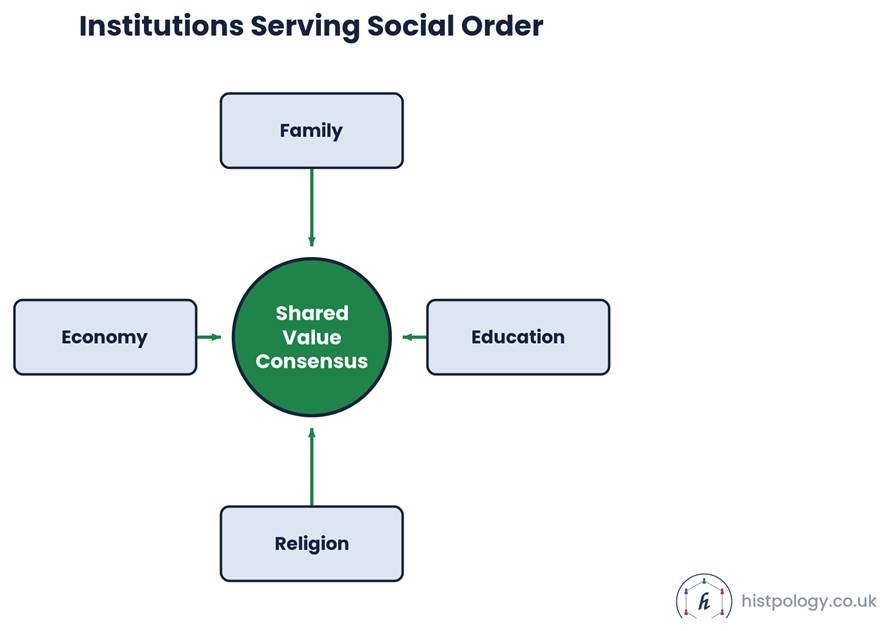
Figure 1: Functionalism’s institutions, each serving shared value consensus.
Talcott Parsons systematised this in the 20th century, arguing every society must meet certain functional prerequisites to survive, and that a shared value consensus, built through socialisation, is what makes cooperation between institutions possible in the first place.
Functionalism‘s main criticism is that it struggles to explain conflict and change. Marxists and feminists argue its value consensus is not shared equally: it primarily reflects the interests of those already best served by the existing structure.
Marxism and Neo-Marxism: Class, Ideology and Conflict
Marxism is a structural, conflict perspective, developed by Karl Marx and Friedrich Engels, most famously in The Communist Manifesto (1848). Where Functionalism sees society’s structure as broadly fair, Marxism sees it as serving one class’s interests over another’s.
Marx argued society’s economic base, who owns the means of production, shapes its superstructure: law, politics, education, religion and culture. Capitalism divides society into two classes, the bourgeoisie, who own the means of production, and the proletariat, who sell their labour to survive. The bourgeoisie’s ruling-class ideology, spread through the superstructure, encourages the proletariat to see this arrangement as natural and fair rather than exploitative.
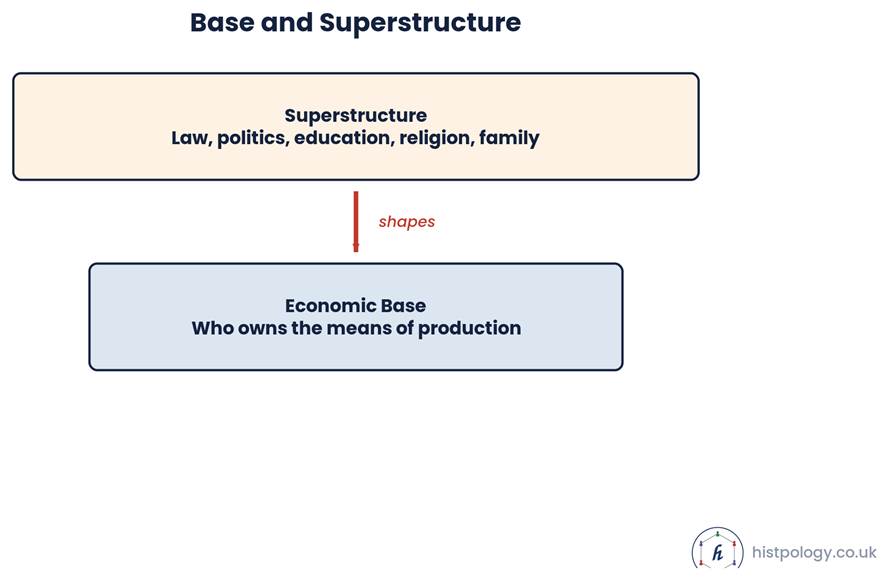
Figure 2: Marx’s base and superstructure model.
Neo-Marxists refined this economic determinism from within. Antonio Gramsci‘s concept of hegemony argued ruling-class dominance depends on winning genuine cultural and ideological consent, not force alone. Louis Althusser‘s ideological state apparatuses, institutions such as schools and the media, described how that consent is manufactured day to day.
Marxism‘s main criticism is empirical: the revolution Marx predicted has not happened in any advanced capitalist society, and class structures have grown more complex and diverse than his two-class model suggests.
Feminism: Structure, Conflict and Gender
Feminism is a structural, conflict perspective concerned with gender rather than class. Sylvia Walby‘s Theorising Patriarchy (1990) defines Patriarchy as a system of interrelated social structures that allow men to exploit women, while Simone de Beauvoir‘s earlier claim that one is not born, but becomes, a woman (The Second Sex, 1949) underpins the sex and gender distinction every strand of Feminism still relies on.
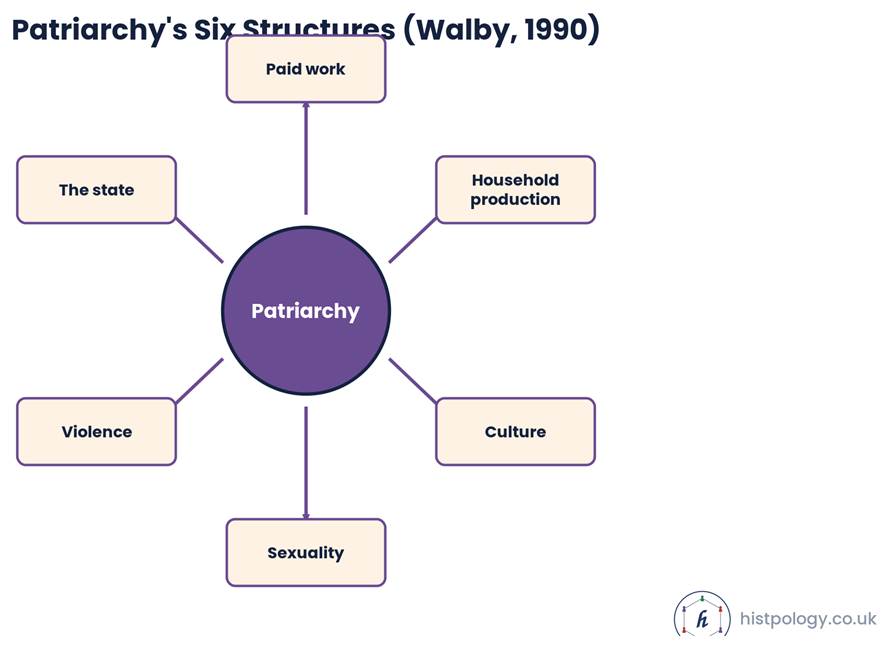
Figure 3: Walby’s six structures of Patriarchy (1990).
Feminism is better understood as a family of strands than one unified theory.
Liberal feminism blames unequal treatment in law and education, and favours reform.
Radical feminism, associated with Kate Millett‘s claim that the personal is political (Sexual Politics, 1970), argues Patriarchy operates through the family and sexuality, not just unequal laws.
Marxist and socialist feminism argues capitalism and Patriarchy work together, a position Heidi Hartmann‘s dual systems theory (1979) developed in detail.
Difference and Black feminism, drawing on bell hooks and Kimberlé Crenshaw‘s concept of intersectionality (1989), argues earlier strands generalised from white, middle-class women’s experience.
Feminism‘s main criticism is that these strands disagree about fundamentals, making it hard to treat as one coherent perspective. Judith Butler‘s Gender Trouble (1990) pushes further still, questioning whether woman is even a stable category. A full treatment of every strand is developed in Sociological Perspectives: Feminism elsewhere on histpology.co.uk.
The New Right: Individual Responsibility and Traditional Values
The New Right is a structural, consensus perspective, like Functionalism, but fuses two distinct traditions: neoliberal economics (Friedrich Hayek, Milton Friedman), which favours free markets and minimal state intervention, and neoconservative social values, which defend traditional institutions such as marriage and the family. Margaret Thatcher‘s government put both traditions into practice in Britain from 1979.
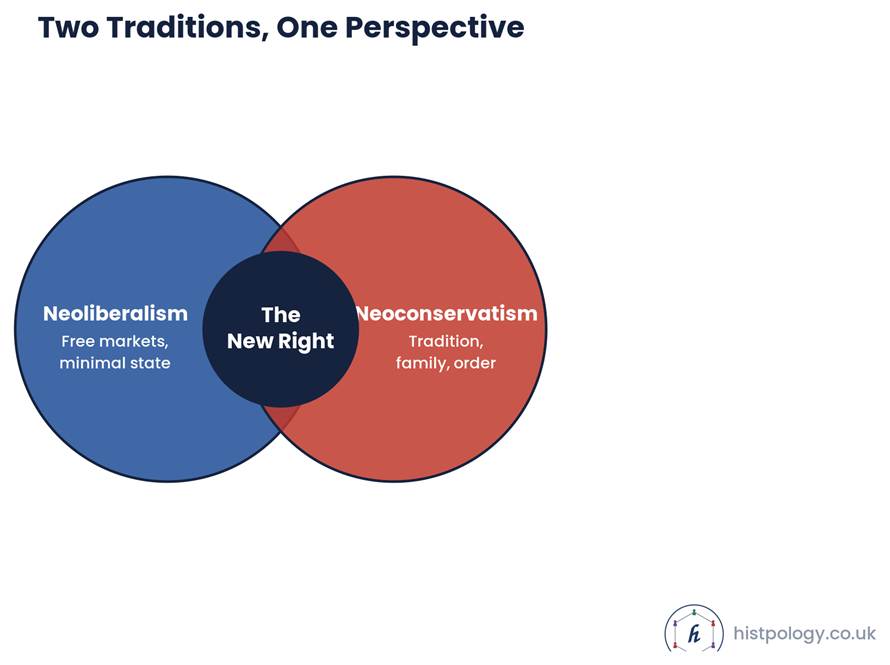
Figure 4: The New Right’s two founding traditions.
Charles Murray‘s concept of an underclass, shaped by long-term welfare dependency, underpins the New Right‘s view of welfare: generous, unconditional benefits are said to create a dependency culture rather than relieve poverty. The same logic extends into education, where John Chubb and Terry Moe argued marketisation and school choice raise standards through competition, and into crime, where James Q. Wilson and George Kelling‘s broken windows theory treats visible disorder as an invitation to further offending.
The New Right‘s main criticism is that it blames individuals for problems with deeper structural causes, and that its policy prescriptions, from welfare reform to zero-tolerance policing, assume rational, self-interested behaviour that does not always match how people actually behave.
Interactionism: Meaning, Labelling and Everyday Life
Interactionism is the core list’s clearest social action theory. Where structural perspectives ask what society’s institutions need to survive, interactionism asks how individuals interpret, negotiate and sometimes resist the situations they find themselves in. It developed at the University of Chicago in the early 20th century, associated first with George Herbert Mead and later systematised as symbolic interactionism by his student Herbert Blumer.
W. I. Thomas and Dorothy Swaine Thomas’s claim that situations defined as real become real in their consequences, the Thomas theorem, sits at interactionism‘s heart: meaning is built through interaction, not fixed in advance. Howard Becker applied this to labelling theory, arguing deviance is created by social reaction to behaviour, not by the behaviour itself, an idea Erving Goffman extended through his dramaturgical model of identity as a performance managed for different audiences.
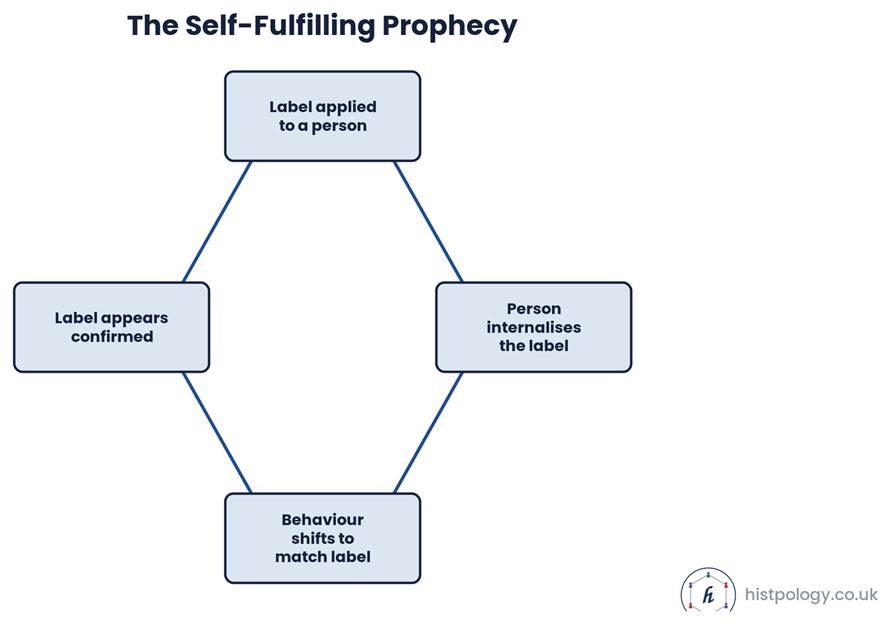
Figure 5: The self-fulfilling prophecy in labelling theory.
Interactionism‘s main criticism is that it says little about wider structural power and inequality, and that its small-scale, qualitative studies are difficult to generalise into claims about society as a whole.
Postmodernism: Media, Consumption and the Death of the Grand Narrative
Postmodernism rejects the structural and social action framework altogether. Jean-François Lyotard defined the postmodern condition as incredulity toward metanarratives (The Postmodern Condition, 1979): grand, all-encompassing stories, whether Functionalism‘s social order, Marxism‘s class struggle, or the Enlightenment’s faith in progress, that people no longer believe.
Jean Baudrillard‘s concepts of simulacra and hyperreality argue media images have become so pervasive that the distinction between representation and reality itself has collapsed. Where earlier perspectives locate identity in class, family or work, postmodernists argue identity is now fluid, built through consumption and media images that can be endlessly reassembled.
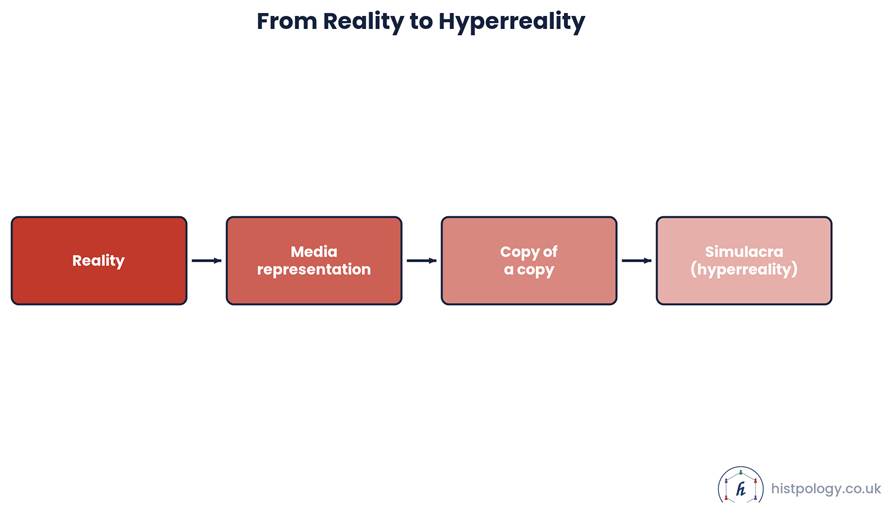
Figure 6: Baudrillard’s collapse of reality into hyperreality.
Postmodernism‘s main criticism is that it is difficult to test or falsify, and that real structural inequalities, in income, health and education, persist regardless of whether grand narratives about them are still believed.
Late Modernity: Risk, Reflexivity and the Uncertain Self
Late modernity, like postmodernism, sits outside the consensus and conflict split, but makes a genuinely different claim. Where postmodernism argues structure has collapsed, late modernity argues structure and agency still interact continuously. Anthony Giddens developed the theoretical foundation for this in The Constitution of Society (1984): his structuration theory’s duality of structure holds that structure is both the medium through which people act and the outcome of that action.
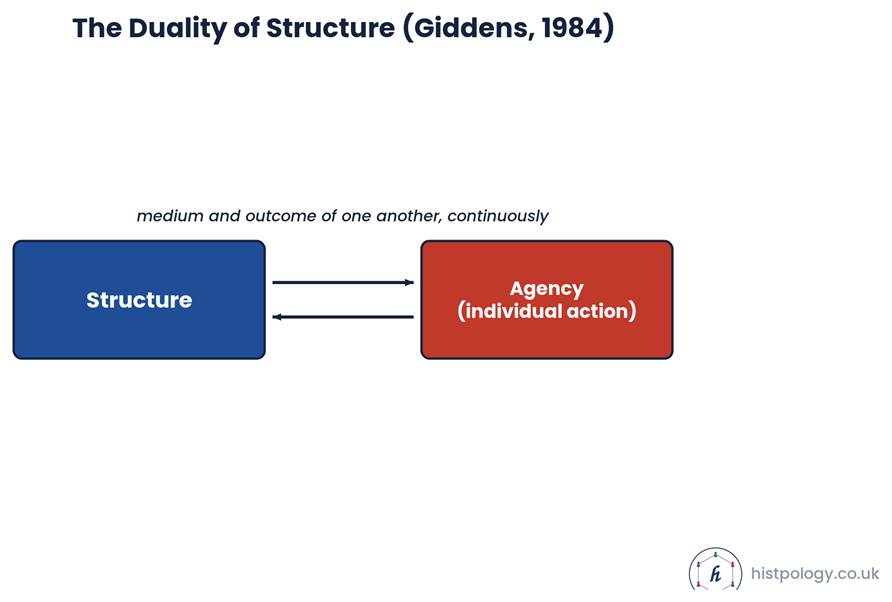
Figure 7: Giddens’ duality of structure.
Ulrich Beck‘s risk society thesis argues modern risks, such as climate change or financial crises, are manufactured and global rather than natural, forcing individuals to constantly assess and manage risk in their own lives, a process of individualisation that leaves people more personally responsible for their own biography than earlier generations. Zygmunt Bauman‘s concept of liquid modernity (2000) describes a world in which social forms, including relationships, melt and change before they can fully solidify.
Late modernity‘s main criticism comes from Margaret Archer‘s morphogenetic approach (1995), which argues Giddens fuses structure and agency so tightly together that it becomes difficult to study, or even separate, their distinct effects on society.
Comparing the Perspectives
The table below brings all seven perspectives together for direct comparison, alongside their classification within the structural, social action and structuration framework set out above.
| Perspective | Core claim and main criticism | Key thinker(s) |
| Functionalism (structural, consensus) | Society is a system of interconnected institutions that each perform a function meeting the whole system’s needs, built on shared value consensus. Criticised for struggling to explain conflict and change. | Durkheim and Parsons (1950s) |
| Marxism and Neo-Marxism (structural, conflict) | Society’s economic base shapes its superstructure, dividing it into an exploiting and an exploited class. Criticised because the predicted revolution has not happened in advanced capitalist societies. | Marx and Engels (1848) |
| Feminism (structural, conflict) | Patriarchy is a system of interrelated structures that allow men to exploit women, though strands disagree sharply on its cause. Criticised for internal disagreement between its strands. | Walby (1990) and Millett (1970) |
| The New Right (structural, consensus) | Free markets and traditional social values together produce the best outcomes, while generous welfare creates dependency. Criticised for blaming individuals for structural problems. | Hayek (1944) and Murray (1984) |
| Interactionism (social action) | Society is built moment by moment through small-scale interaction and shared meaning, not imposed by external structure. Criticised for saying little about wider structural power. | Mead (1934) and Blumer (1969) |
| Postmodernism (rejects structure) | Grand narratives explaining society as a whole have collapsed, and identity is now built through media and consumption. Criticised as difficult to test or falsify. | Lyotard (1979) and Baudrillard (1981) |
| Late Modernity (structuration) | Structure and agency still interact continuously, but under conditions of manufactured risk and constant individual reflexivity. Criticised for fusing structure and agency too tightly to separate. | Giddens (1984) and Beck (1992) |
Table 1: The seven perspectives compared, with their classification, core claim, main criticism and key thinkers.
Reading across the table, several patterns stand out.
- Functionalism and the New Right share a consensus classification but differ sharply in policy prescription, Functionalism describes existing institutions, while the New Right actively argues for reducing the state’s role within them.
- Marxism and Feminism share a conflict classification but disagree about which division, class or gender, matters most, a tension Marxist and socialist feminism‘s dual systems theory tries directly to resolve.
- Postmodernism and Late modernity both reject the consensus and conflict split, but reach opposite conclusions about whether social structure still exists at all.
- Interactionism remains the only perspective here built from the ground up around individual meaning rather than society’s structure, which is exactly why it pairs so naturally with interpretivist research methods.
In Summary
Return to Anthony Giddens‘ claim that sociology should study neither the individual actor alone, nor society as one giant system, but the social practices that connect the two. Having covered all seven perspectives, it is worth testing whether that claim still holds.
Every perspective in this document takes an implicit position in the same argument Giddens was trying to resolve. Functionalism, Marxism, Feminism and the New Right all start from structure, disagreeing chiefly about whether that structure is fair. Interactionism starts from the individual. Postmodernism argues the whole question has become the wrong one to ask. Late modernity, through structuration, tries to hold both structure and agency together at once, exactly as Giddens proposed.
Reaching a judgement
| ANALYSIS — AO2 | EVALUATION — AO3 |
| No single perspective fully resolves the structure and agency debate on its own: each covered in this document answers a genuinely different question, about class, gender, meaning, risk or the collapse of grand narratives, rather than simply contradicting the others. | Giddens’ structuration theory remains the strongest attempt at synthesis, since it is built explicitly to hold structure and agency together, but Margaret Archer‘s morphogenetic critique shows even that synthesis has not fully settled the argument sociology inherited from its 19th-century founders. |
| Key Takeaways |
| Structural theories (Functionalism, Marxism, Feminism, the New Right) explain behaviour mainly through society’s structure, split further into consensus (Functionalism, the New Right) and conflict (Marxism, Feminism). |
| Interactionism is the core list’s clearest social action theory, explaining society as built from individual meaning and interaction rather than imposed structure. |
| Postmodernism and Late modernity both sit outside the consensus and conflict split, but reach opposite conclusions: Postmodernism rejects structure altogether, while Late modernity, through Giddens’ structuration theory, holds structure and agency together. |
| Every perspective in this document takes an implicit position on the same underlying question: whether behaviour is caused by structure, by individual choice, or by both interacting continuously. |
| Check your understanding |
| Explain the difference between a consensus and a conflict perspective, using one named example of each. You could: define both terms first, then pick one perspective for each side (for example Functionalism for consensus, Marxism or Feminism for conflict) and explain what each sees as the basis of society’s structure. |
| ‘Structuration theory successfully resolves the debate between structural and social action theories.’ Evaluate this claim. You should: state Giddens’ claim and the duality of structure, give evidence for it (its ability to combine structure and agency), then evidence against it (Margaret Archer’s morphogenetic critique), before reaching a reasoned judgement rather than simply listing both sides. |
Full-length documents for each perspective, with worked applications across every A Level Sociology topic, are available elsewhere on histpology.co.uk: Functionalism: The Organic Analogy, Value Consensus and Social Order; Marxism: Class, Ideology and the Conflict Theory of Society; Sociological Perspectives: Feminism; Sociological Perspectives: The New Right; Interactionism: Meaning, Labelling and the Social Construction of Everyday Life; Postmodernism: Media, Consumption and the Death of the Grand Narrative; and Late Modernity: Risk, Reflexivity and the Uncertain Self.