
Every state has some form of constitution, in the loose sense of rules governing how it is run.
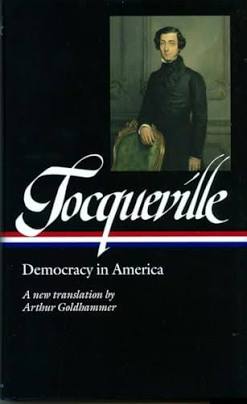
“In England the Parliament has an acknowledged right to modify the constitution; as, therefore, the constitution may undergo perpetual changes, it does not in reality exist.”
Alexis de Tocqueville, Democracy in America (1835)
Alexis de Tocqueville was a French aristocrat who travelled through the United States in the early 1830s to study its system of government.
Comparing what he found there to the situation in England, he made a striking claim: because the English Parliament could change the rules of government at will, England did not really have a constitution at all, at least not in the sense that the United States or France did, where a constitution sat above ordinary law and could not be altered by the everyday legislature.
This is the puzzle at the centre of this topic.
If a constitution can be rewritten by an ordinary Act of Parliament, in what sense is it a constitution?
The pages in this section trace how the UK constitution developed through a series of key historical documents, examines the defining features that make it different from constitutions like that of the United States, and sets out the five sources from which it is drawn. It closes by returning to Tocqueville’s judgement to ask whether it still holds true today.
Defining a constitution
| Key terms The key terms sections of histpology.c.o.uk Edexcel Politics A Level pages are important – they mirror the key terminology list which appears alongside every page of the specification content. Constitution: the body of rules, written and unwritten, legal and non-legal, that establishes the distribution of power within a state and the relationship between the state and its citizens. Codified: collected into a single authoritative document with a status higher than ordinary law, as in the United States. Uncodified: not collected into one document; instead drawn from a number of different sources of varying legal status, as in the UK. Entrenched: protected from being changed or removed by the ordinary law-making process, usually requiring a special procedure such as a supermajority or referendum. Unentrenched: able to be changed by the same simple parliamentary majority used to pass any other law, as in the UK. Unitary state: a state in which ultimate legal sovereignty rests with a single, central government, which may choose to devolve power downwards but retains the legal right to reclaim it. Federal state: a state in which sovereignty is constitutionally divided between a central government and regional governments, neither of which can unilaterally override the other, as in the United States. |
Every state has some form of constitution, in the loose sense of rules governing how it is run.
What varies is whether those rules are codified, entrenched and federal, as in the United States, or uncodified, unentrenched and unitary, as in the UK.
The next section shows how the UK arrived at its particular arrangement through a long process of incremental change, rather than a single founding moment.