
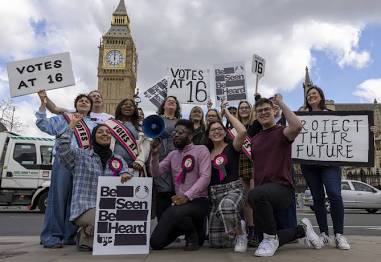
The most active campaign to widen the UK franchise today is the push for votes at 16, which by 2026 has moved from youth-led campaigning into government legislation.
| Group | Position | Evidence / actions |
| UK Youth Parliament | Campaigns for votes at 16 across the whole UK. | Votes at 16 has been one of the top five topics in the Youth Parliament’s annual ‘Make Your Mark’ ballot in multiple years since 2011; over 80,000 young people backed it in 2018. |
| Electoral Reform Society | Long-standing campaigner for votes at 16 as part of wider electoral reform. | Publishes regular parliamentary briefings, including one in February 2026 supporting the Representation of the People Bill 2026. |
| Vote16 UK | Grassroots, youth-led campaign group. | Runs public campaigning and direct lobbying of MPs specifically for UK-wide votes at 16. |
| UK Government | Legislating for votes at 16 in England and Northern Ireland. | Introduced the Representation of the People Bill 2026 (12 February 2026); Scotland and Wales already grant votes at 16 in devolved and local elections. |
The case for votes at 16:
- 16 and 17 year olds can work full-time and pay income tax and National Insurance, giving rise to a ‘no taxation without representation’ argument.
- They can already join the armed forces or marry (with parental consent) in England and Wales, so are treated as capable of major life decisions in other respects.
- Scotland’s experience is used as evidence against the case: turnout among 16 and 17 year olds at the 2014 independence referendum is estimated at around 75 per cent, higher than turnout among 18-24 year olds, suggesting fears of low engagement may be overstated.
The case against:
- 16 and 17 year olds cannot yet stand for election, buy alcohol, or serve on a jury, so critics argue the franchise is being extended ahead of other markers of adult responsibility.
- Opponents raise concerns about political knowledge and about undue influence from parents, teachers or schools on how new young voters would vote.
- Some argue reform should be consistent: the Representation of the People Bill 2026 lowers the voting age but does not lower the candidacy age, leaving 16 and 17 year olds able to elect MPs they still cannot become.
On balance, the Scottish and Welsh precedents provide the strongest evidence available, since they show votes at 16 operating in practice rather than in theory, and turnout data from the 2014 referendum undercuts the claim that younger teenagers will not engage.
The strongest remaining objection is one of consistency rather than capacity: if 16 year olds are trusted to choose a government, the harder question is why the Representation of the People Bill 2026 does not also lower the age at which they may stand as candidates themselves.
| Check your understanding 1. Identify three organisations campaigning for votes at 16 and explain the approach taken by one of them. (Identify and explain, about 100 words: name three straight from the table, then pick one and describe its specific tactics or evidence in a little more depth.) 2. Evaluate the argument that 16 and 17 year olds are not politically mature enough to vote, using evidence from Scotland and Wales. (Evaluate, about 200-250 words: use the 2014 referendum turnout figure as counter-evidence, acknowledge a genuine concern on the other side, for example parental or teacher influence, then reach a judgement.) |