
1. Long-Term Background: The UK and European Integration, 1973 to 2013
The UK joined the European Economic Community in January 1973 under Edward Heath’s Conservative government, having applied for membership twice before and been vetoed by France.
Divisions over Europe surfaced almost immediately: Harold Wilson’s Labour government held a referendum in 1975 on continued membership, partly to manage deep splits within his own party, and the result was a decisive 67.2% vote in favour of staying in, on a turnout of 64.5%.
Divisions over Europe re-emerged more seriously within the Conservative Party from the late 1980s onwards, particularly after the Maastricht Treaty of 1992 deepened European integration and provoked sustained backbench rebellions against John Major’s government.
The UK Independence Party, founded in 1993, gave organisational form to growing Euroscepticism, though for many years it remained electorally marginal. Europe became increasingly entangled with debates over immigration after the 2004 enlargement of the EU, which extended free movement rights to citizens of Poland and other new member states.
By the early 2010s, UKIP’s support had grown substantially, culminating in the party topping the poll in the 2014 European Parliament elections, the first time a party other than Labour or the Conservatives had won a UK-wide election in over a century.
2. Short-Term Background: From Coalition to Referendum, 2010 to 2016
The Conservative-Liberal Democrat Coalition, formed after the 2010 general election, complicated any immediate referendum commitment, since the Liberal Democrats were consistently the most pro-European of the major parties. Pressure built on David Cameron from Eurosceptic backbenchers and from UKIP’s electoral advance.
On 23 January 2013, in a speech at Bloomberg’s London offices, Cameron pledged that, if the Conservatives won a majority at the next general election, his government would renegotiate the terms of UK membership and then hold an in/out referendum by the end of 2017. This pledge was repeated in the Conservative Party’s 2015 general election manifesto.
Having won a majority in May 2015, Cameron’s government secured passage of the European Union Referendum Act 2015, authorising the vote.
Renegotiation talks with EU partners covered four broad areas: economic governance, competitiveness, an exemption from the EU’s commitment to ‘ever-closer union’, and restrictions on welfare payments to EU migrants.
After a European Council summit in Brussels on 18 and 19 February 2016, a deal was agreed, described as a new settlement for the UK within the EU, though widely judged by commentators to be more modest than Cameron had originally sought.
On 20 February 2016, Cameron announced the referendum date, 23 June 2016, and confirmed that Cabinet ministers would, unusually, be free to campaign on either side of the question rather than being bound by collective responsibility.
3. Why Cameron Called the Referendum

- To manage long-standing and deepening divisions within the Conservative Party over Europe, an issue that had troubled every Conservative leader since the late 1980s.
- To neutralise the electoral threat posed by UKIP, which had drawn support and votes away from the Conservatives, most visibly in the 2014 European Parliament elections.
- To fulfil a specific manifesto commitment made in 2015, which had itself been designed to reassure Eurosceptic voters and backbenchers ahead of that election.
- In the hope that a renegotiated settlement, endorsed by a referendum, would settle the European question for a generation, drawing an implicit parallel with the effect of Wilson’s 1975 referendum on Labour’s internal divisions.
- Because he and his closest advisers were confident that the economic risks of leaving would ultimately persuade a majority of voters to back continued membership of a reformed EU.
4. The Campaign: Groups, Messages and Arguments
The campaign groups
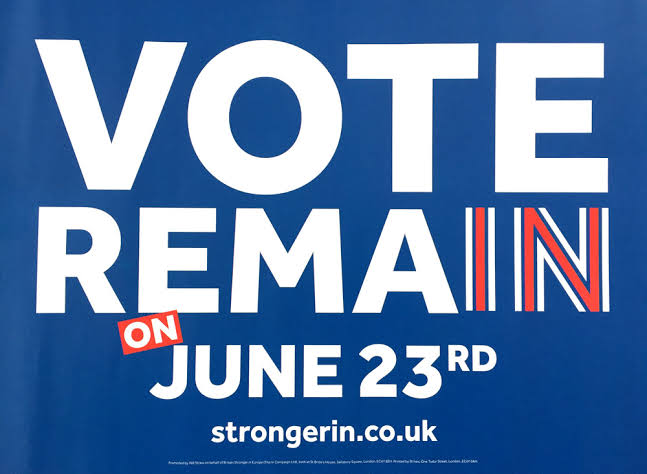
On 13 April 2016, the Electoral Commission designated Vote Leave and Britain Stronger in Europe as the official lead campaigns for Leave and Remain respectively, giving each a higher spending limit of £7 million, a free mailshot to households, referendum broadcasts and public funding.
Vote Leave had been founded in October 2015 by the campaign strategists Matthew Elliott and Dominic Cummings, was chaired by the Labour MP Gisela Stuart, and beat a rival bid for designation from Grassroots Out, a group backed by Nigel Farage and UKIP.
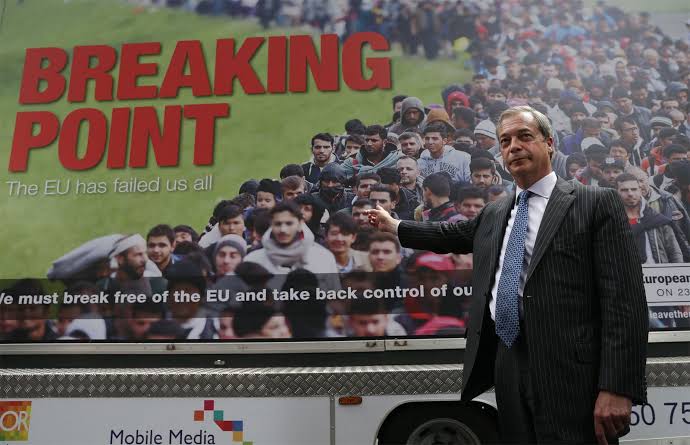
Farage instead continued to campaign through Leave.EU and Grassroots Out, giving the Leave side two distinct strands: Vote Leave’s cross-party, deliberately ‘positive’ message with less emphasis on immigration, and Farage’s more immigration-focused, populist campaigning.
Britain Stronger in Europe, launched in October 2015 and chaired by the businessman Stuart Rose, led the Remain campaign, working closely with the government’s own communications operation and supported by most Labour MPs, organised separately as Labour In for Britain under Alan Johnson, as well as the Liberal Democrats, the SNP, Plaid Cymru and the majority of large business organisations.
The Leave case
- Sovereignty and control: the slogan ‘Take Back Control’ argued that EU membership meant that laws, borders and money were controlled from Brussels rather than by the UK Parliament.
- Immigration: ending the free movement of people within the EU would allow the UK to set its own rules on the number and type of immigrants it admitted.
- Money: the widely publicised claim, displayed on the Vote Leave campaign bus, that the UK sent £350 million a week to the EU which could instead be spent on the National Health Service, a figure disputed by statisticians and the UK Statistics Authority as misleading because it took no account of the rebate and the funds returned to the UK.
- Trade and global prospects: the argument that the UK could prosper outside the EU by negotiating its own trade deals and would remain an attractive trading partner for the remaining EU states.
The Remain case
- Economic risk: warnings, often labelled by opponents as a repeat of ‘Project Fear’ (a term first used during the 2014 Scottish referendum), that leaving the single market would cost jobs, reduce trade and weaken the economy; the Treasury and the Bank of England both published analyses predicting a recession and falling incomes in the event of a Leave vote.
- Influence and security: the UK’s voice within a bloc of 28 states and continued cooperation on security and counterterrorism.
- Market access: unrestricted trade with the EU, by far the UK’s largest single trading partner.
- The risks of withdrawal itself: the difficulty and likely length of negotiating new trading arrangements, and the uncertainty this would create for businesses and investment.
5. Key Figures
David Cameron. Conservative Prime Minister from 2010, who had promised the referendum since 2013 and led the campaign for Remain; he announced his resignation the day after the result.
George Osborne. Chancellor of the Exchequer under Cameron and a prominent Remain campaigner, who warned of an emergency ‘punishment’ Budget of tax rises and spending cuts if the country voted to leave.
Jeremy Corbyn. Labour leader from September 2015, who nominally backed Remain but was criticised, including by some of his own MPs, for campaigning without great enthusiasm given his own long-standing scepticism about the EU.
Boris Johnson. former Mayor of London and Conservative MP, who became the most prominent public face of Vote Leave after declaring for Leave in February 2016, a move widely seen as crucial to the credibility of the Leave campaign.
Michael Gove. Conservative Justice Secretary and a close ally of Cameron, who broke with the Prime Minister to campaign for Leave and provided much of the intellectual and legal case against continued membership.
Nigel Farage. leader of UKIP and the most prominent Eurosceptic politician of the period, who fronted Leave.EU and Grassroots Out rather than the officially designated Vote Leave campaign and focused heavily on immigration.
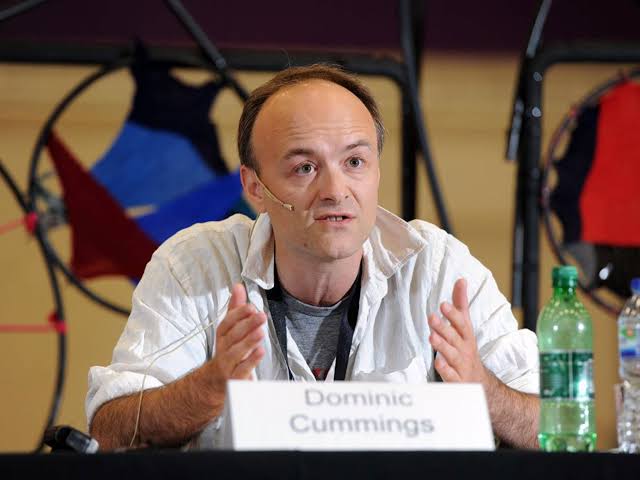
Dominic Cummings. co-founder and campaign director of Vote Leave alongside Matthew Elliott, widely credited as the principal strategist behind the ‘Take Back Control’ slogan and the campaign’s data-led targeting of voters.
Arron Banks. insurance businessman and UKIP donor who provided the bulk of the funding for Leave.EU, the rival Eurosceptic campaign fronted by Farage; the Electoral Commission later fined Leave.EU over its spending return and referred Banks to the National Crime Agency over the source of an £8 million loan, an investigation that concluded in 2019 with no evidence of criminal wrongdoing.
6. Key Events of the Campaign
- 23 January 2013: Cameron’s Bloomberg speech commits a future Conservative majority government to renegotiation and an in/out referendum.
- May 2015: Conservatives win a general election majority; the referendum pledge becomes a firm commitment.
- 17-18 December 2015: EU leaders hold initial discussions on Cameron’s renegotiation demands at a European Council summit.
- 18-19 February 2016: A renegotiation deal is agreed at a European Council summit in Brussels.
- 20 February 2016: Cameron announces the referendum date of 23 June 2016 and frees Cabinet ministers to campaign on either side.
- 13 April 2016: The Electoral Commission designates Vote Leave and Britain Stronger in Europe as the official lead campaigns.
- 15 April 2016: The regulated referendum campaign period formally begins.
- 16 June 2016: The Labour MP Jo Cox is murdered a week before polling day; campaigning is suspended for several days as a mark of respect.
- 23 June 2016: The referendum is held; polls closed at 10pm.
- 24 June 2016: The result is declared in the early hours; Leave has won, and Cameron announces he will resign as Prime Minister.
- 13 July 2016: Theresa May becomes Prime Minister after a shortened Conservative leadership contest.
7. The Result: What Happened and Why

Leave won with 51.9% of the vote (17,410,742 votes) to Remain’s 48.1% (16,141,241 votes), a margin of 1,269,501 votes, on a turnout of 72.2%, higher than any UK general election since 1992.
More people voted Leave than had ever voted for any party or candidate in UK electoral history to that point, giving the result a strong claim to a democratic mandate despite the closeness of the percentage margin.
The result varied sharply across the UK. England and Wales recorded majorities for Leave, while Scotland and Northern Ireland recorded majorities for Remain, and within England London was the only region to vote Remain.
| Nation | Leave | Remain | Turnout |
| England | 53.4% | 46.6% | 73.0% |
| Wales | 52.5% | 47.5% | 71.7% |
| Scotland | 38.0% | 62.0% | 67.2% |
| Northern Ireland | 44.2% | 55.8% | 62.7% |
Analysis of the results also showed strong correlations with age and education:
- Younger voters and graduates were considerably more likely to have voted Remain
- Older voters and those without a degree were considerably more likely to have voted Leave.
- Geographically, large cities, university towns, Scotland, Northern Ireland and London tended towards Remain, while smaller towns, rural England, Wales and post-industrial areas tended towards Leave.
8. The Aftermath: Short-Term and Long-Term Outcomes
Short-term outcomes
David Cameron formally left office on 13 July 2016.
In the Conservative leadership contest that followed, Boris Johnson was initially the favourite but withdrew after Michael Gove announced his own candidacy; the contest was resolved when Andrea Leadsom withdrew, leaving Theresa May to become Prime Minister unopposed.
The UK government notified the European Council of its intention to withdraw under Article 50 of the Treaty on European Union on 29 March 2017, after the Supreme Court’s ruling in the Miller case that Parliament’s authorisation was required first.
May called a snap general election in June 2017 seeking a stronger negotiating mandate but lost her Commons majority and had to govern with the support of the Democratic Unionist Party.
Prolonged parliamentary conflict followed during 2017 to 2019, with MPs rejecting May’s negotiated Withdrawal Agreement on three occasions; she resigned in July 2019 and was succeeded by Boris Johnson, who called a further general election in December 2019, fought substantially on the slogan ‘Get Brexit Done’, which the Conservatives won with an 80-seat majority.
The Withdrawal Agreement was ratified, and the UK formally left the EU on 31 January 2020, with a transition period, during which existing arrangements continued, ending on 31 December 2020 alongside a new Trade and Cooperation Agreement.
Long-term outcomes
The referendum realigned party politics along Leave and Remain lines.
These lines cut across the traditional left-right divide, contributing to the loss of previously safe Labour seats in Leave-voting areas, often termed the ‘Red Wall’, to the Conservatives in 2019, alongside gains for pro-Remain parties such as the Liberal Democrats and the SNP in strongly Remain-voting areas.
The divergence between Scotland’s Remain vote and the UK-wide Leave result fed directly into the Scottish Government’s case for a further independence referendum, an attempt that was tested in the courts and rejected by the UK Supreme Court in November 2022, which ruled that the Scottish Parliament could not legislate for such a referendum without Westminster’s consent.
The need to avoid a hard border between Northern Ireland and the Republic of Ireland produced further and continuing difficulty, addressed first through the Northern Ireland Protocol of 2019 and later through the Windsor Framework of 2023, both of which remained sources of political contention. Managing the practical UK-EU relationship, including periodic trade frictions and renegotiation of specific arrangements, has remained a recurring feature of UK politics for years after the vote itself.
9. Conclusion: Was this the ‘Last’ UK Referendum?
There is a reasonable case that the 2016 referendum may prove to have been the last UK-wide referendum for some time to come, and possibly the last of its kind altogether.
Several features of the Brexit experience point in this direction.
- The campaign exposed depths of division within both main parties and across the country that took years to work through in Parliament and at three subsequent general elections.
- Both sides made claims, most notably the £350 million figure and some of the Treasury’s own economic forecasts, that were later disputed as misleading, damaging public trust in the process itself; the Electoral Commission also later found that Vote Leave had breached campaign spending rules.
- The task of translating a single binary choice into a complex, multi-year negotiated outcome proved far harder than either campaign suggested during the vote, exposing a basic mismatch between the referendum as a device and the kind of question being asked of it.
- The political cost was severe: three changes of Prime Minister within three years, and a decade of continued argument over the practical detail of withdrawal.
In the years since 2016, no further UK-wide referendum has been held, and the Supreme Court’s 2022 ruling has, for now, closed off a further Scottish independence referendum without Westminster’s agreement.
Taken together, this pattern suggests that governments of both main parties have preferred to resolve major constitutional questions since 2016 through general elections and ordinary parliamentary process rather than through further referendums, a marked change from the practice of the two decades before.
This conclusion should, however, be treated as a reasoned judgement rather than a certainty.
Demand for a further Scottish independence referendum has not disappeared, and a future shift in Scotland’s political arithmetic, or a significant change in the UK’s relationship with the EU, could yet revive the case for another UK-wide vote.
Whether 2016 turns out to have been the last UK referendum, or simply the most recent in a sequence that resumes when political conditions allow, remains an open question for students of UK politics to weigh rather than one that can be answered definitively at this stage.